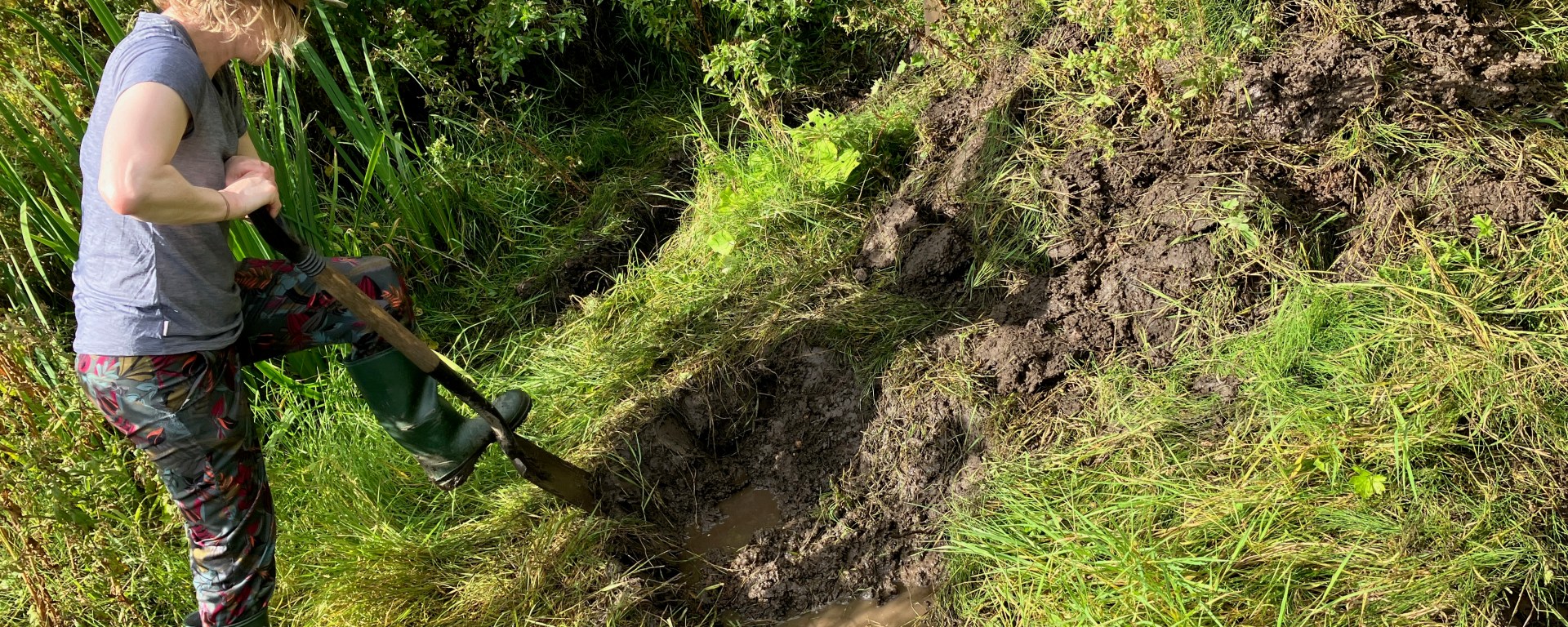
Last November, we dug out some scrapes to help the land hold water more intentionally and to provide an (ephemeral) wetland habitat. When we first dug, the hollow wasn’t that deep but it was definitely a pond.
After the long dry summer and drought this year the scrapes were kind of squelchy to walk in, but definitely no longer ponds – so we knew we would have to make some bits a little deeper in the hope that they’ll stay wet next year. At the moment, there’s a lot about El Niňo in the news, and the predictions are that next summer will be even drier and hotter than this year – so we’ll have to do everything we can to help these spaces stay wet for wildlife.
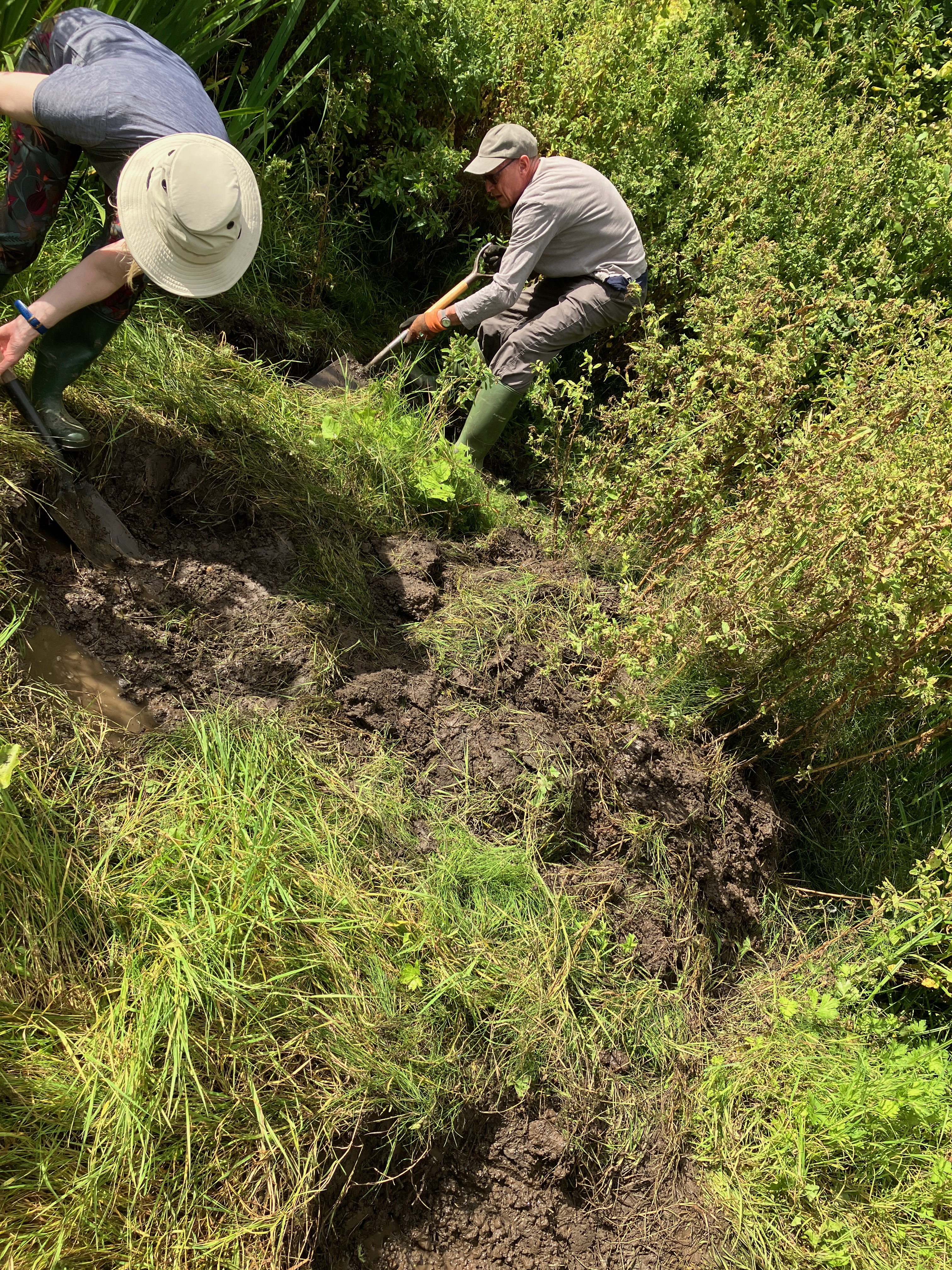
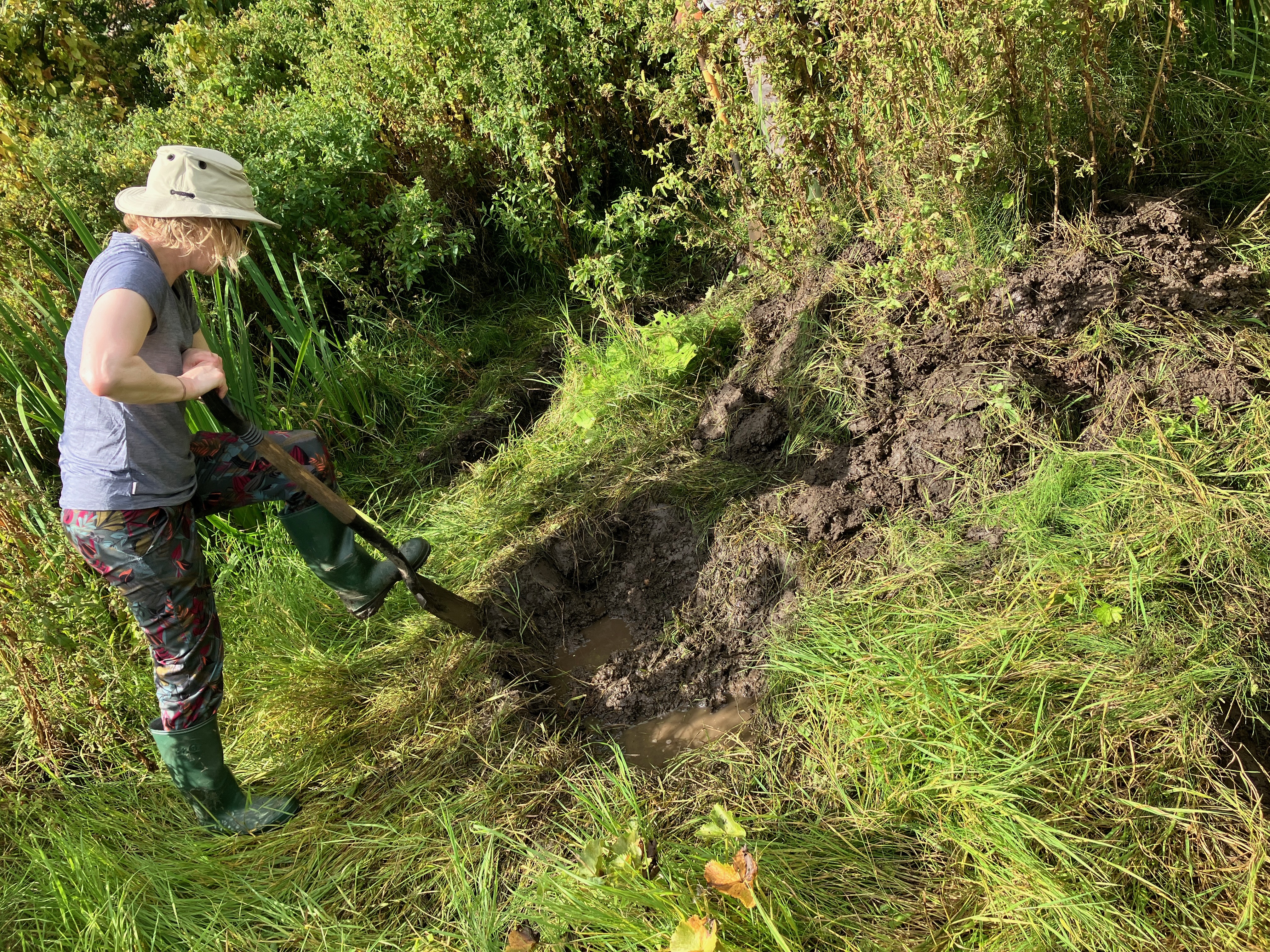
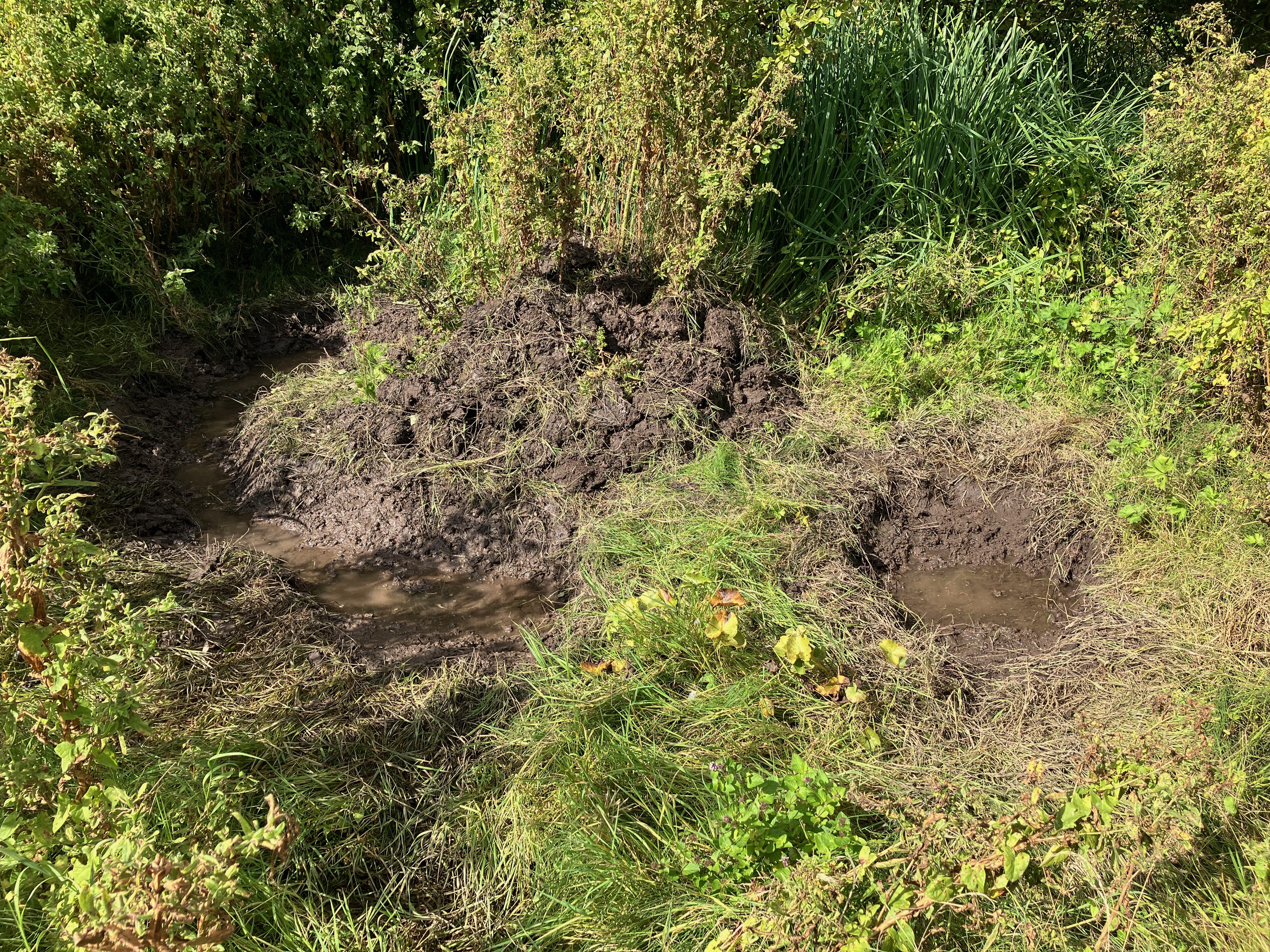
We are only digging by hand and we’re not really sure how far to go, but we struck water. The soil is clearly still reasonably wet here – the young trees in the the food forest haven’t needed watering all summer and are looking really perky; the alder trees planted in the spring have doubled in size and the ancient oak and huge poplar tree on the site boundary don’t look like they’re suffering from the drought.
We’ll see how it goes anyway, we may need to dig a bit more out of the pond next month to give everything better access to water next year. Nature spots this morning included a froglet or two, a couple of dragonflies and lots of the huge garden spiders with their wide webs and striped legs.
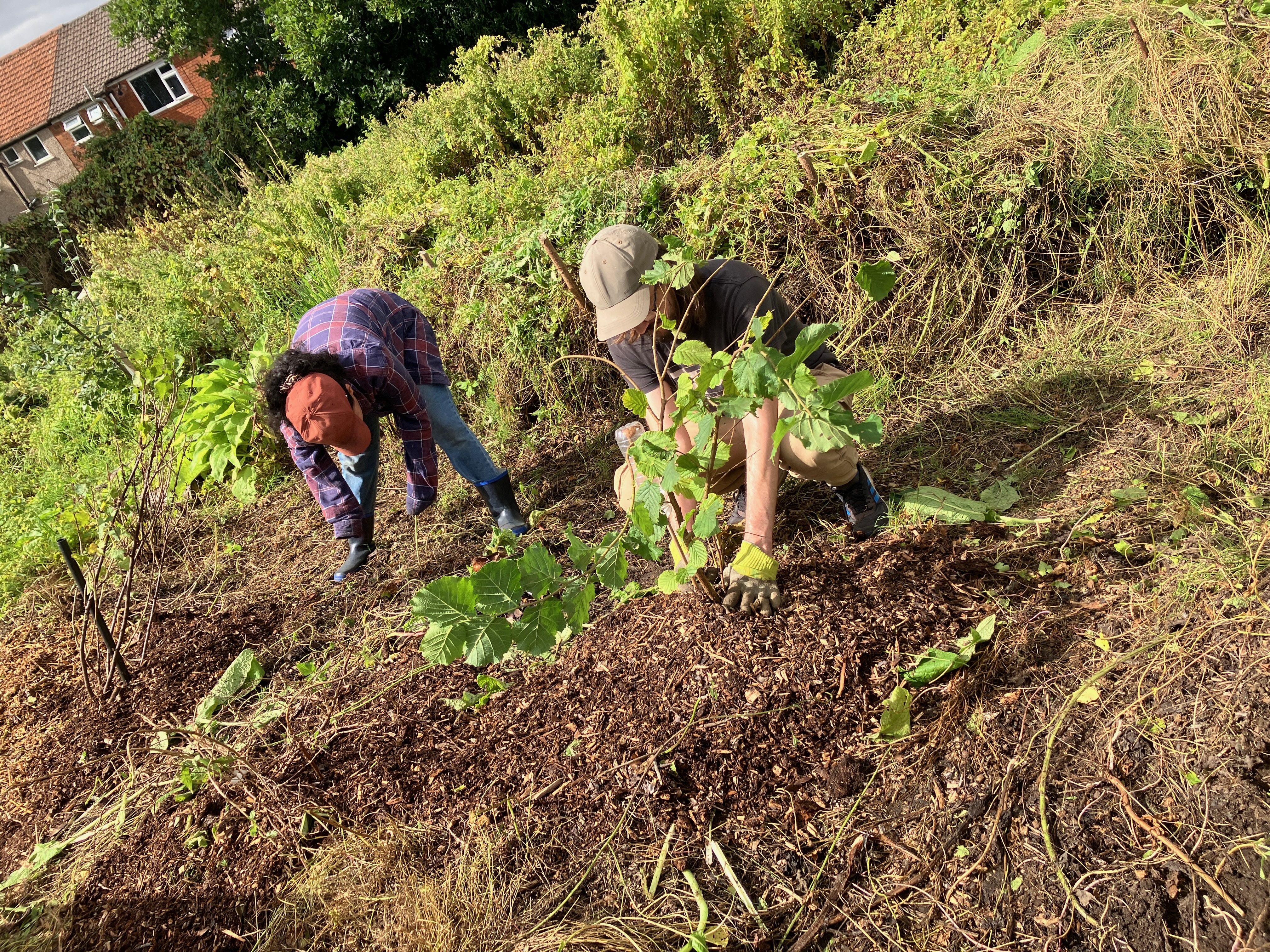
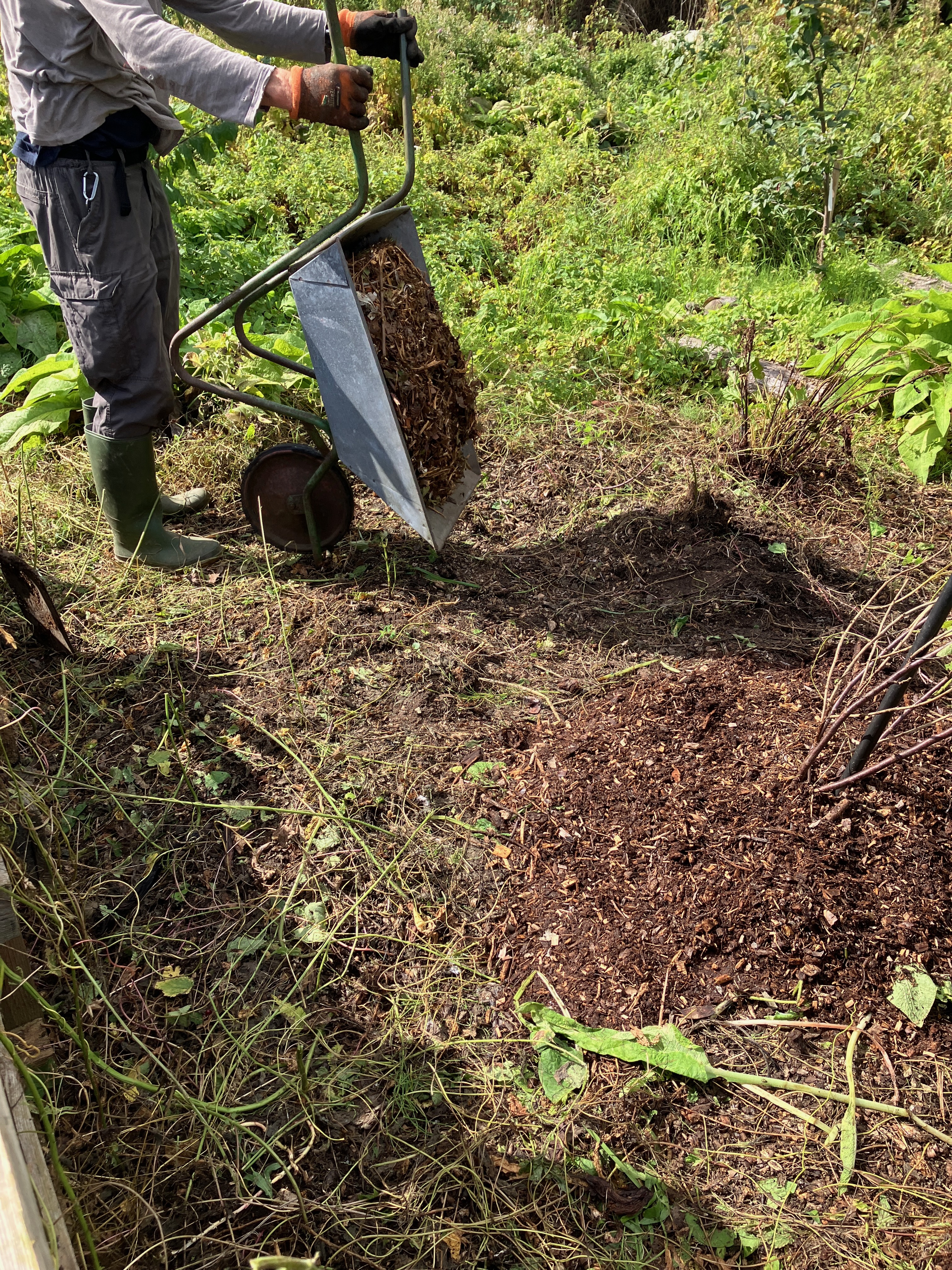
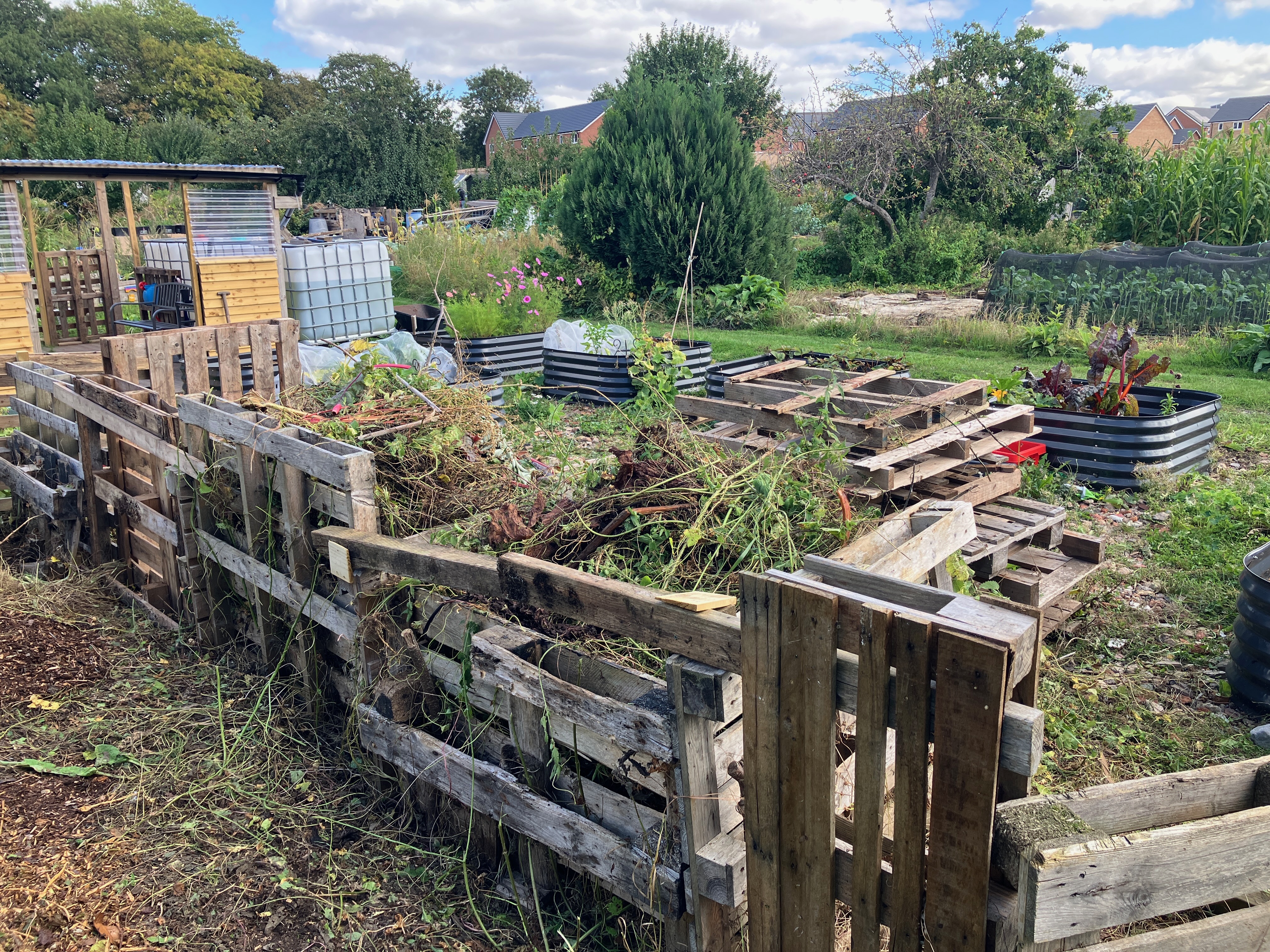
Other jobs today included uncovering the cobnut and fruit bushes that had disappeared in a sea of bindweed, building a couple more compost bays and mowing the main path.
Huge thanks to Jo, Paul, Eloisa, Guillermo, Derek and Janet for today.
 Urban Allotment: climate resilience & community