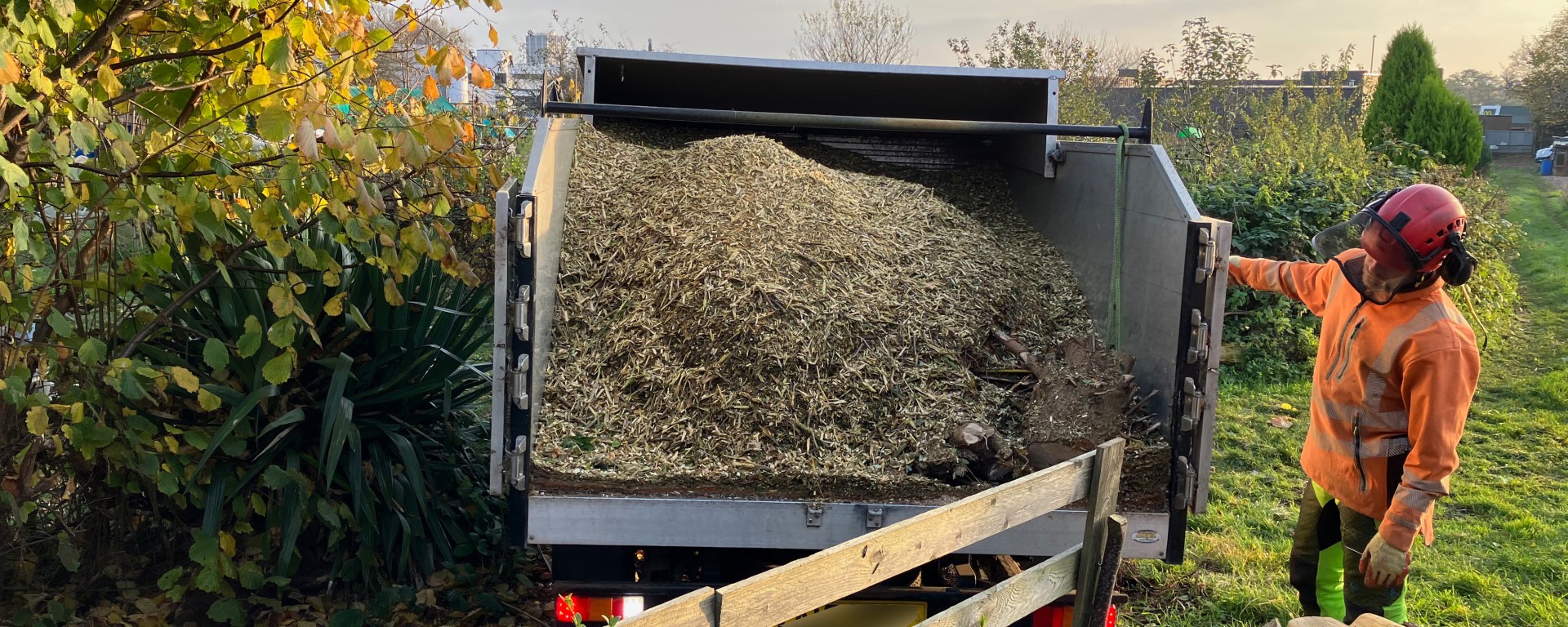
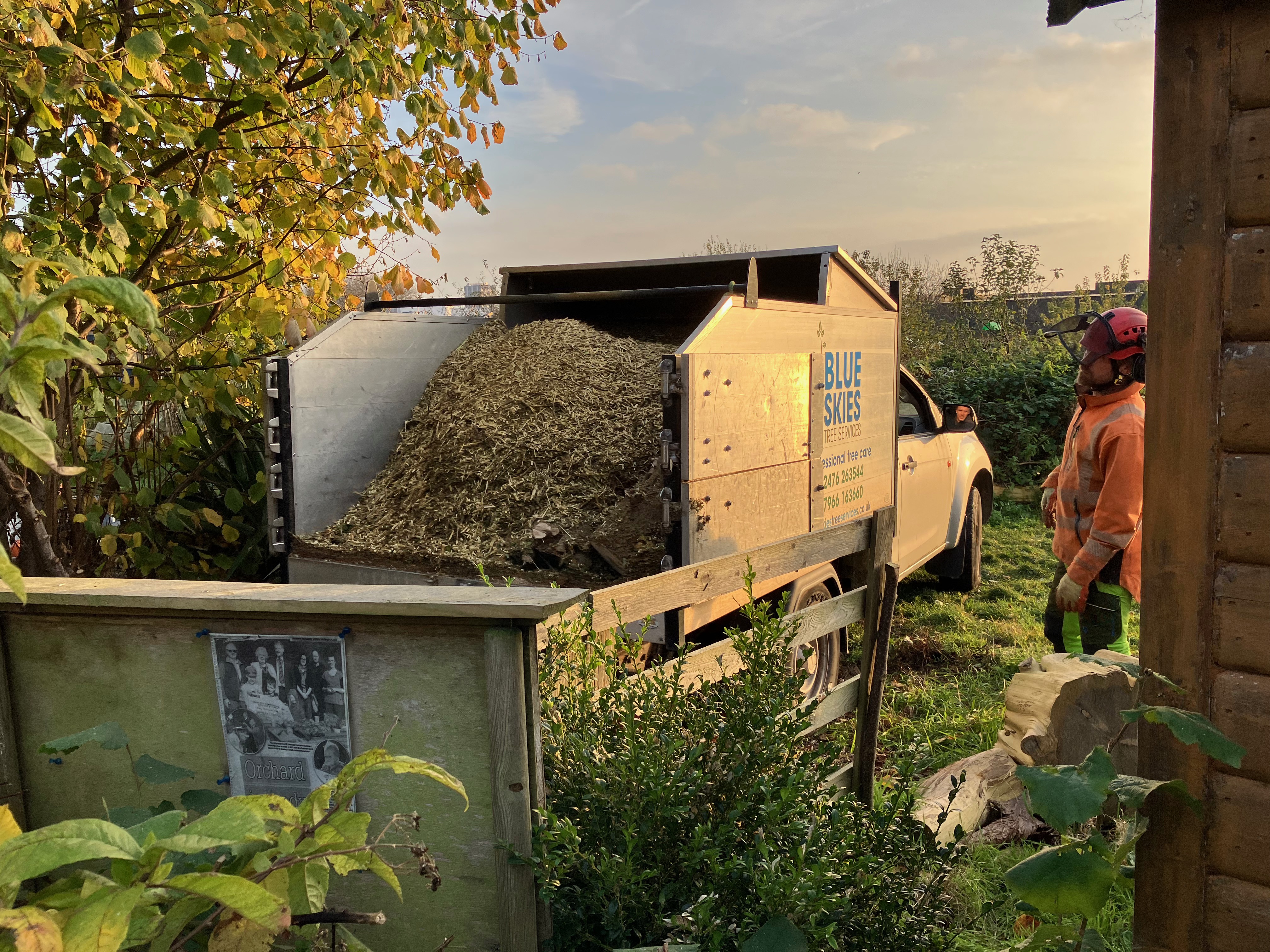
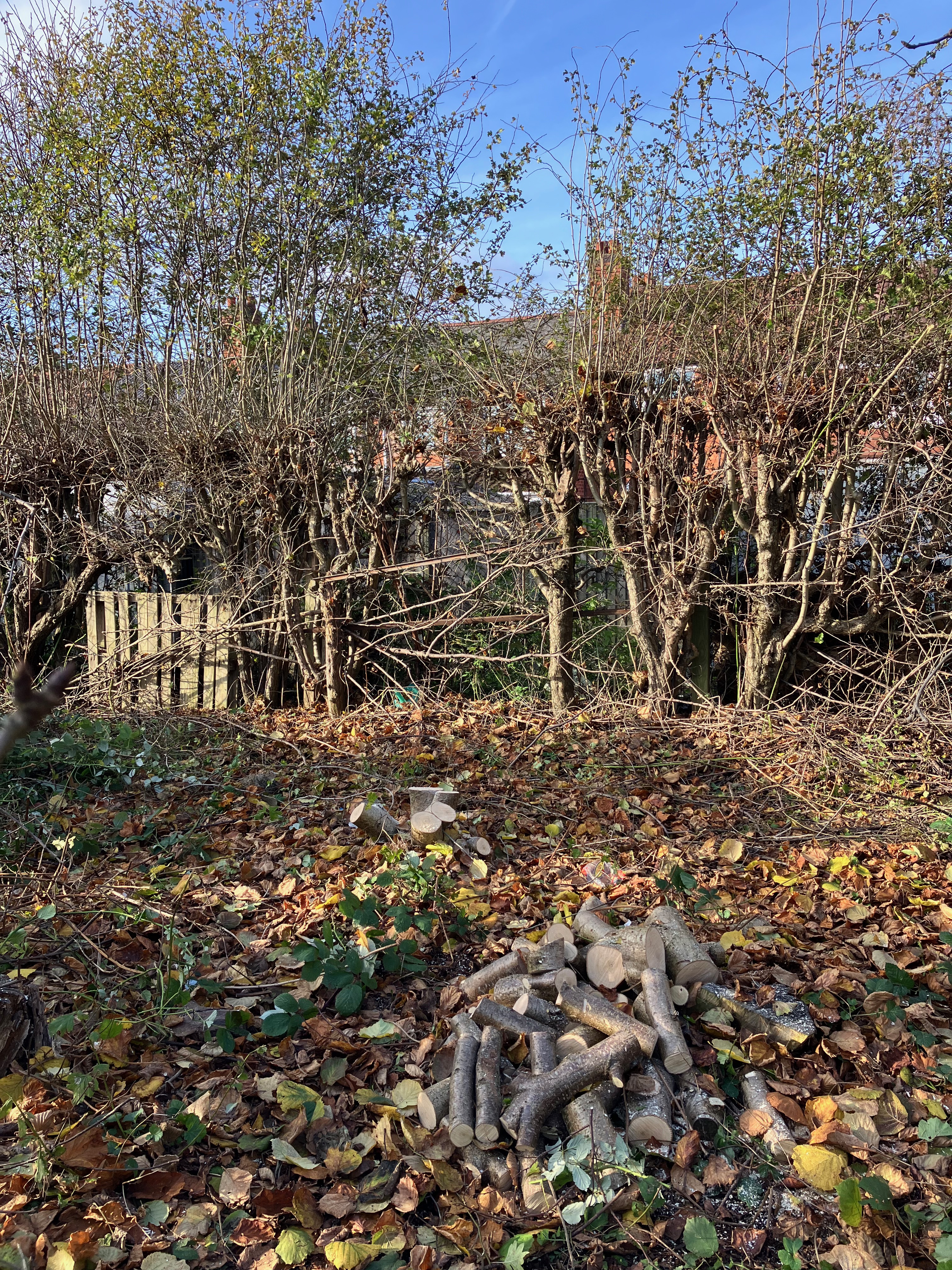
In glorious autumn sunshine, we gathered a working party to assist the tree surgeons with a bit of overdue tree and hedge maintenance. We have a hedge (mostly hawthorn, but mixed with some elder and cherry) down the boundary of the site backing onto the houses. It’s a valuable habitat for small birds, but we haven’t had it trimmed for a couple of years, so it was time to get our local friendly tree surgeons (who also deliver woodchips to us every so often) to come and have a go at it.
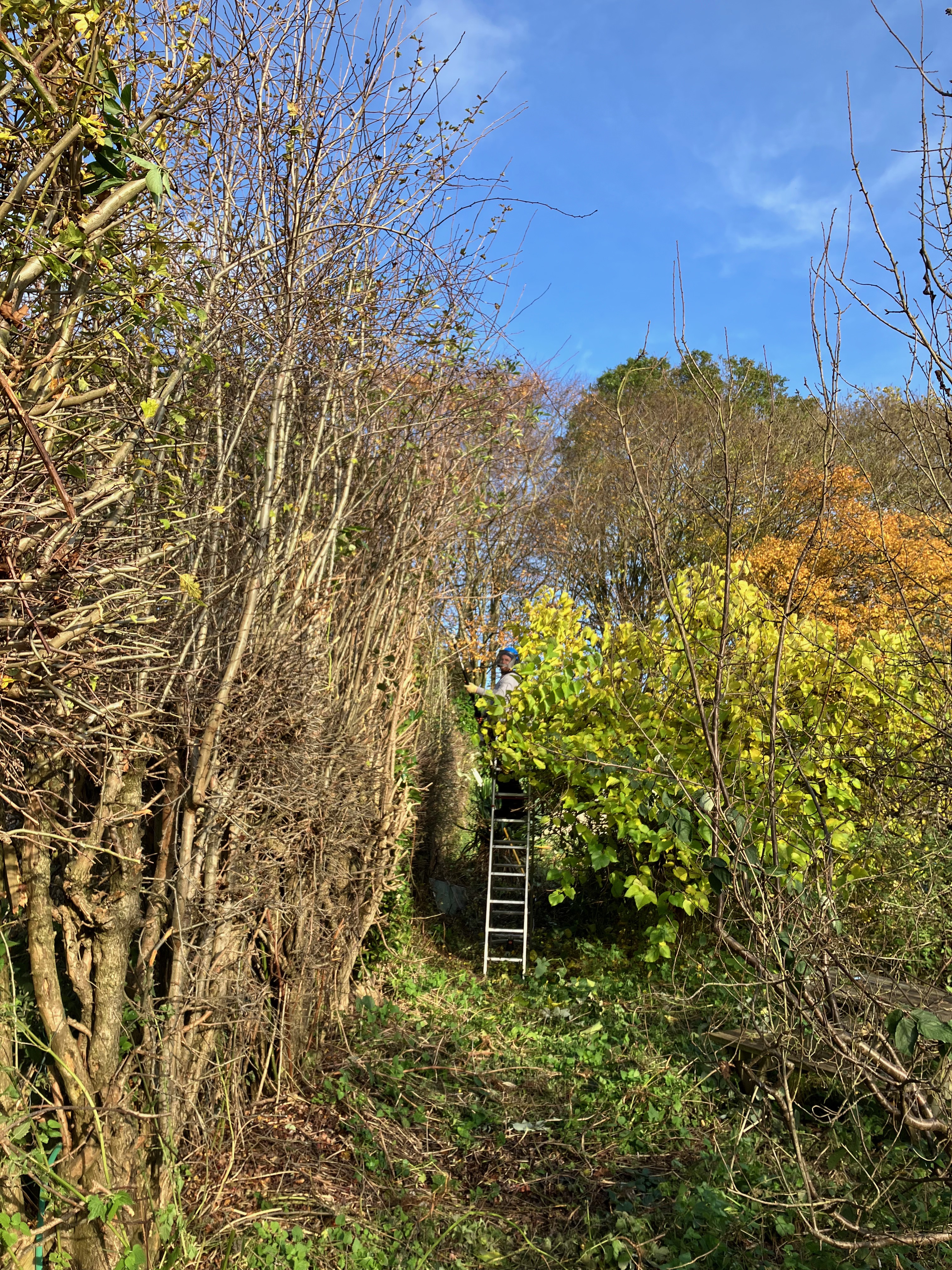
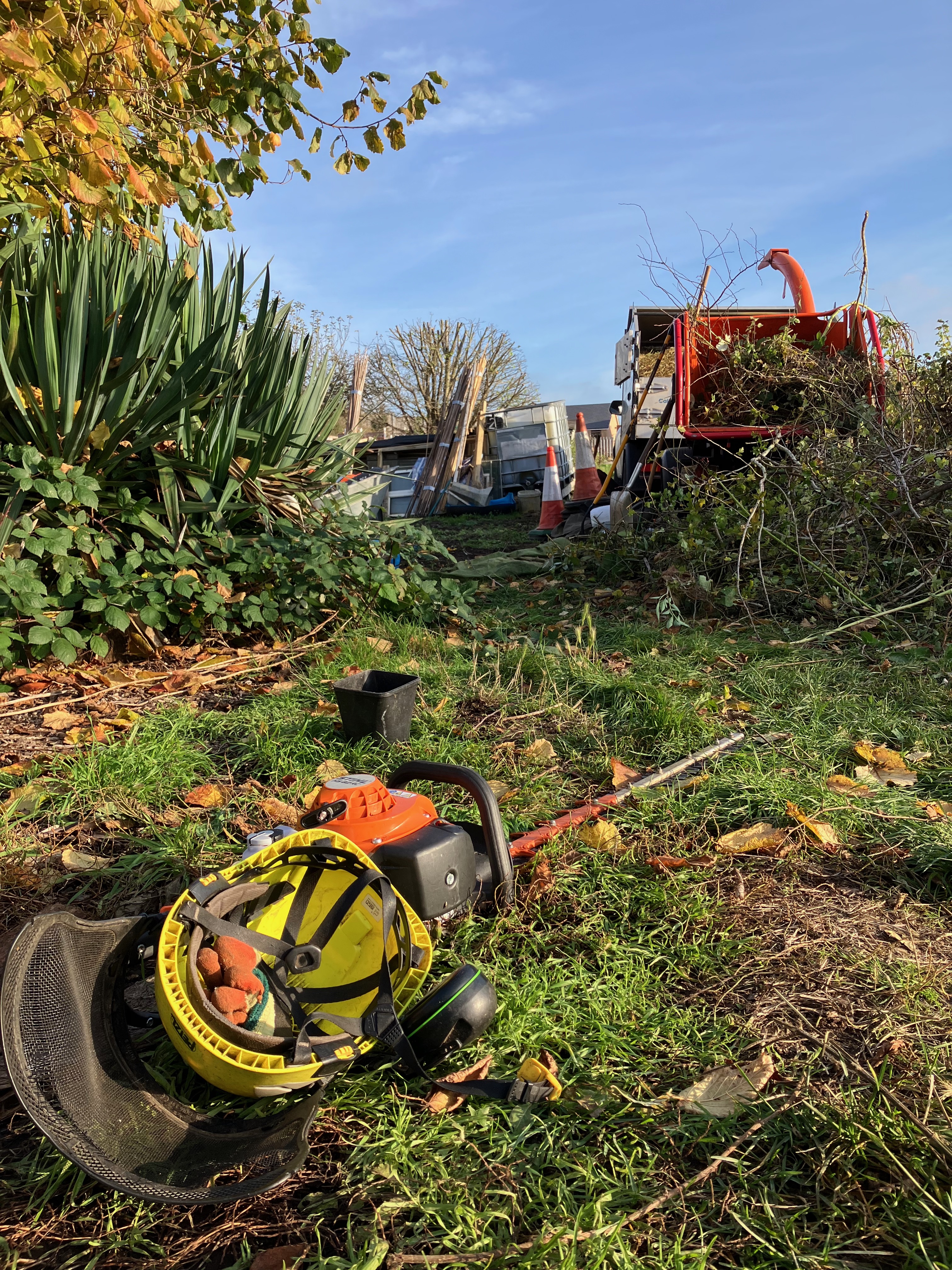
We also needed them to take out an ‘accidental’ willow at the top of the site (that had grown from a neglected willow play structure) and to pollard the young willows on our developing nature reserve to make for easier management going forwards.

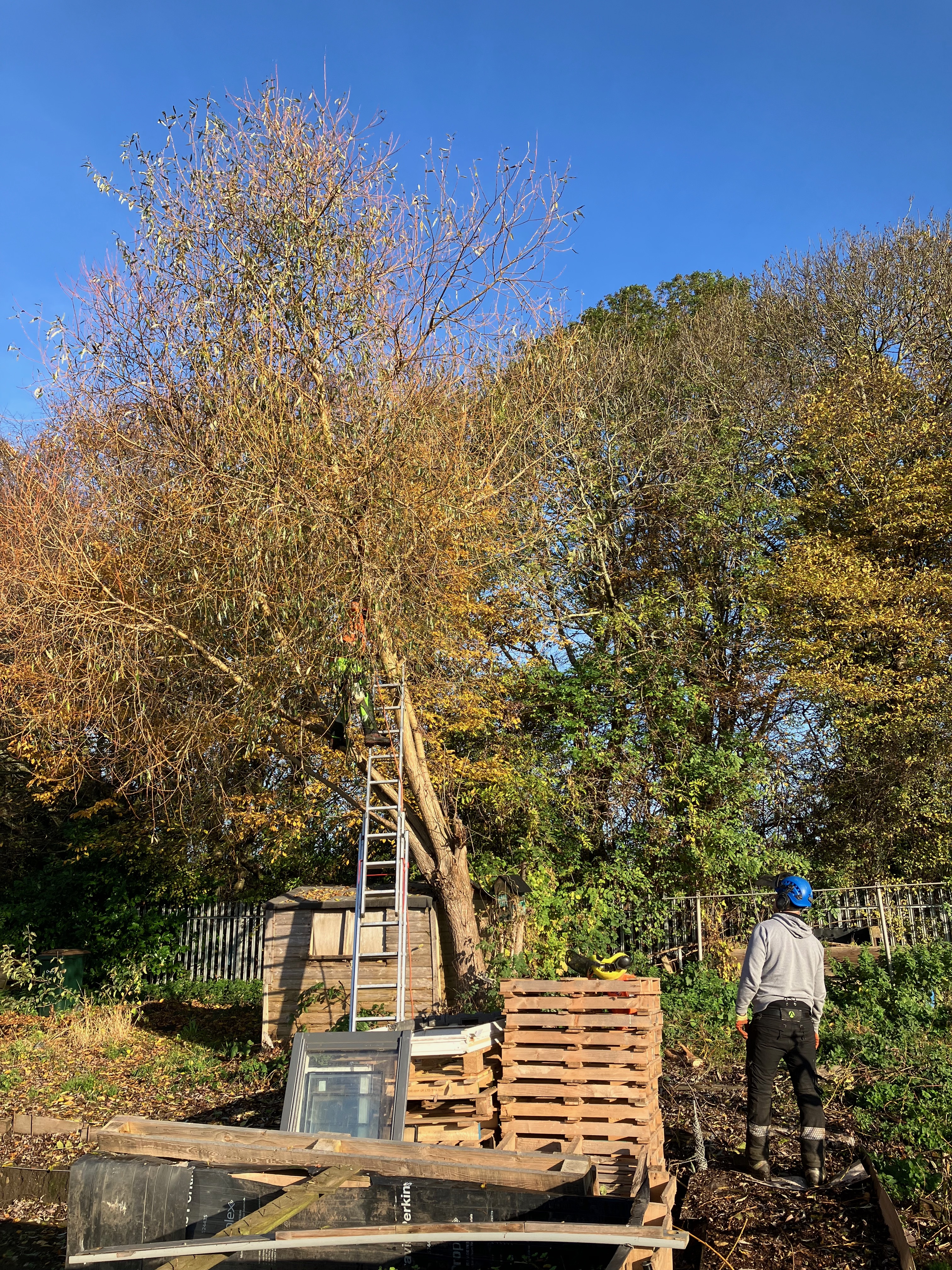
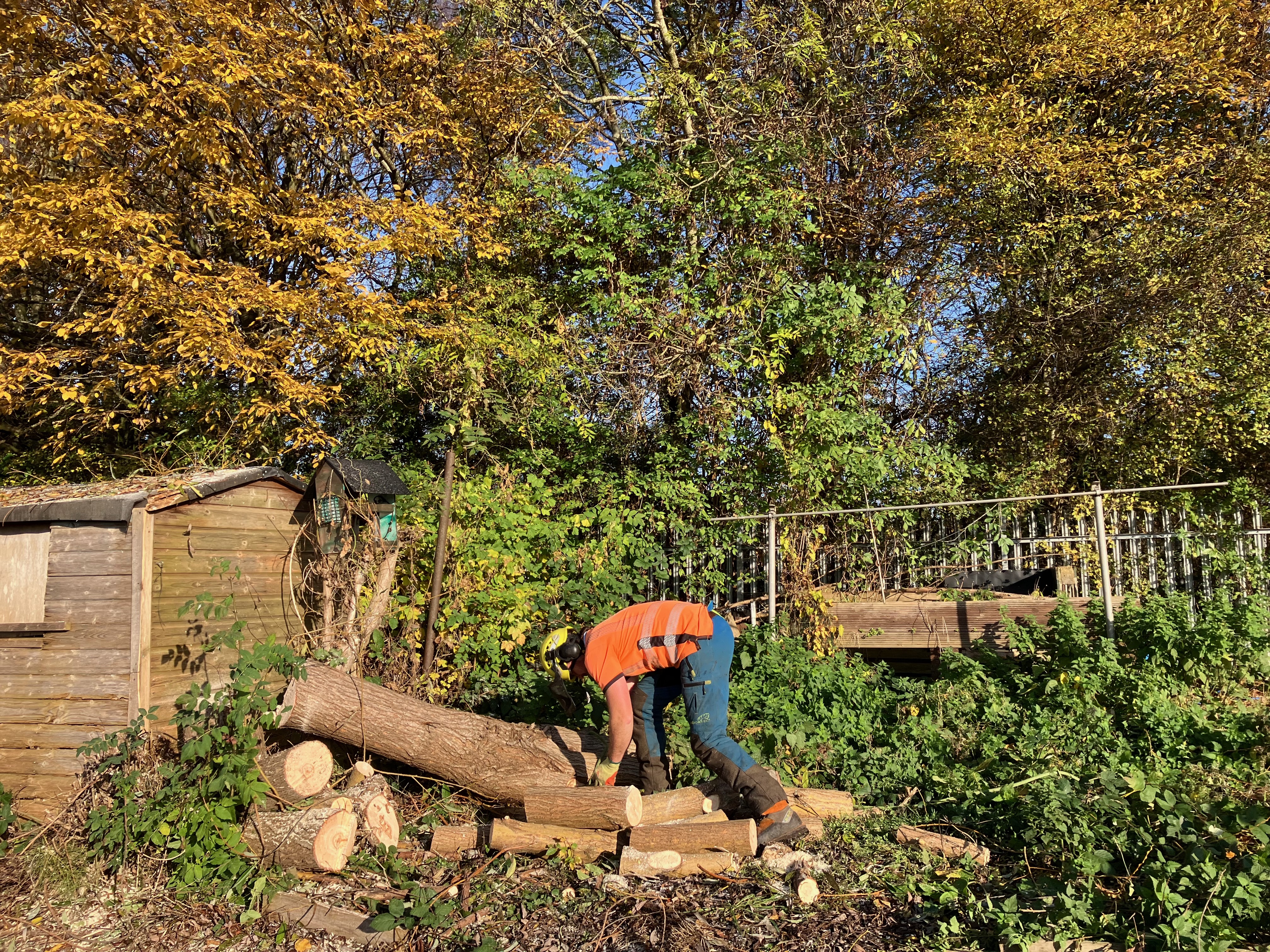
A group of us worked alongside the tree surgeons to haul cut branches away from the trees – some of these we used to complete the dead-hedging on the nature reserve and the rest we dragged to the chipper. The larger pieces of tree trunk have been made into a logpile bug hotel (just in need of some holes drilling into them to provide habitat for solitary bees and other insects) and a seating area.
This cobnut (hazel) tree was planted in 2015 as part of our mini community orchard. To be fair, we never get any cobnuts off it because the squirrels always seem to get to them first!
We decided to have the tree coppiced – cut back to almost ground level – which will prompt it to send up new, long, straight shoots which we can cut for bean-poles in 3 or 4 years time.
Taking out the existing tree growth will also allow light, air and space to the apple and medlar trees, and the hedgerow – all of which are very close to it.
The willows in the nature reserve are self-set, and three of them had grown to a height of 4 metres in less than four years. On the advice of Warwickshire Wildlife Trust, we had these pollarded (trunk and branches all cut off to shoulder/head height) which will allow for easier management in future.
Pollarding encourages the tree to send out a lot of small new shoots from all over the top of the tree, where the trunk and branches have been cut. This means that, instead of being tall and thin, the trees will become more of a lollipop shape.
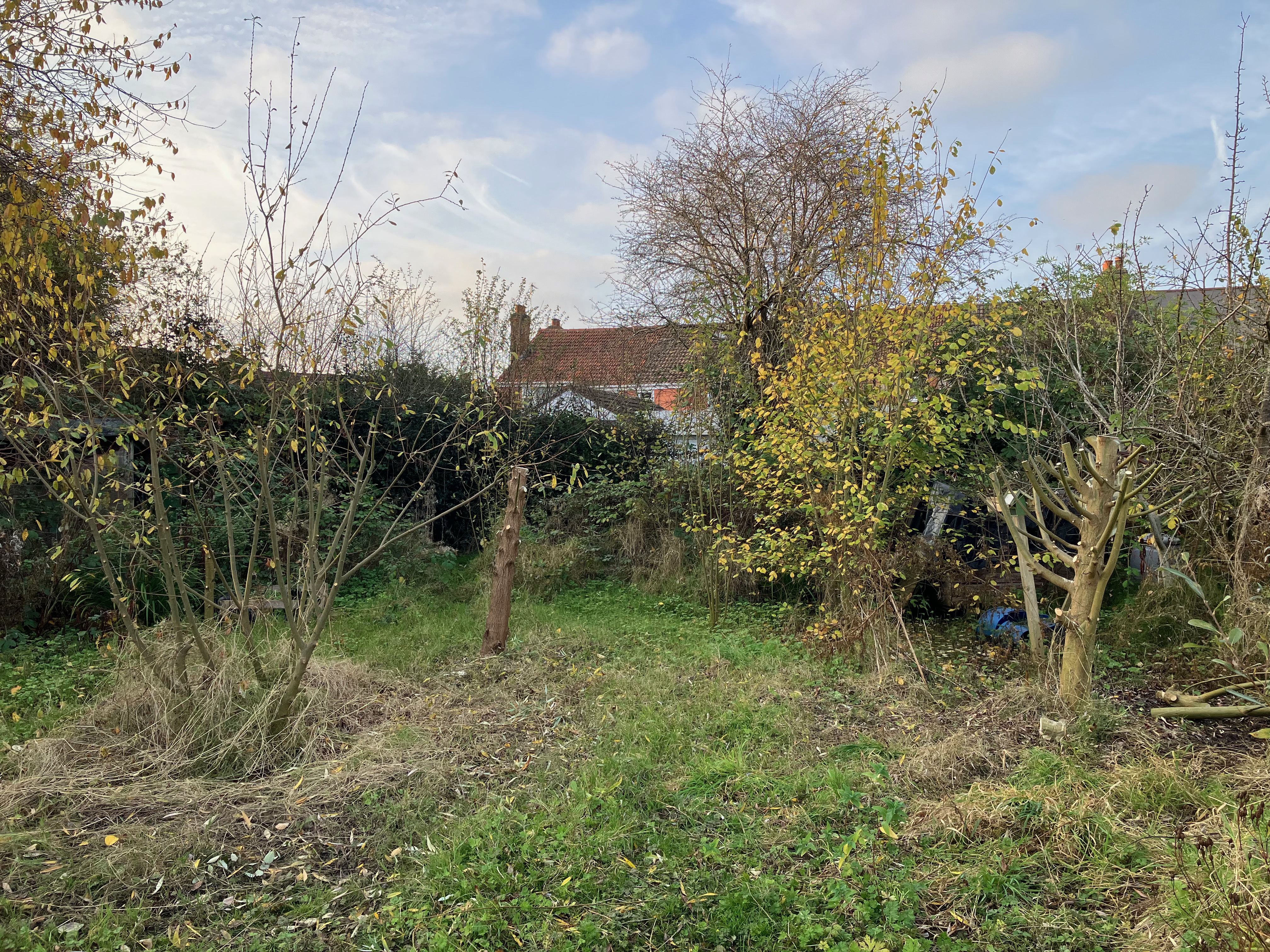
Hopefully, with these trees pollarded at shoulder height, we will be able to keep them in check ourselves – just using loppers – in future.
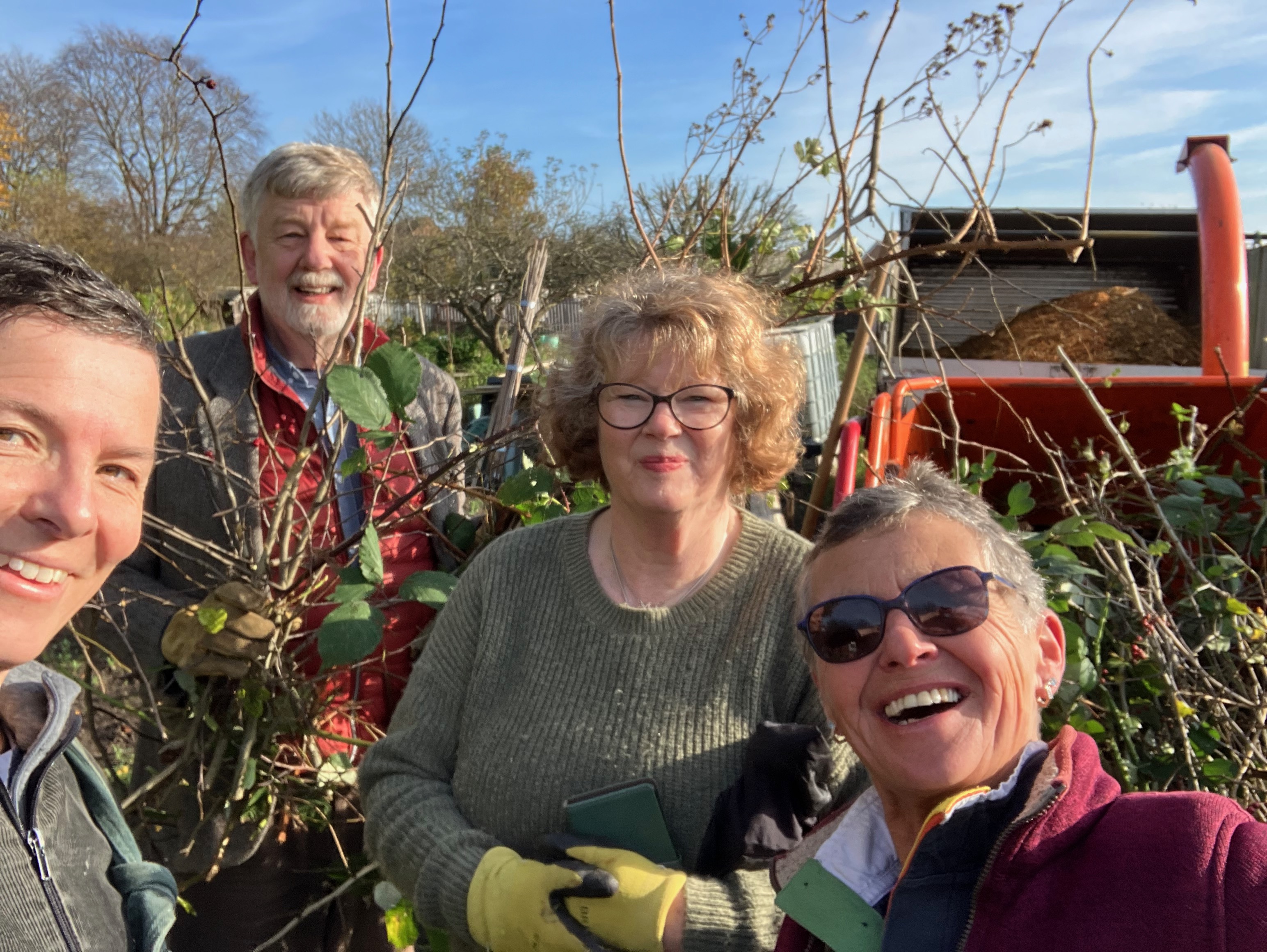
Thanks to Jane, Dave, Rita and Janet for branch-lugging today!
 Urban Allotment: climate resilience & community
One thought on “Working with the tree surgeons”