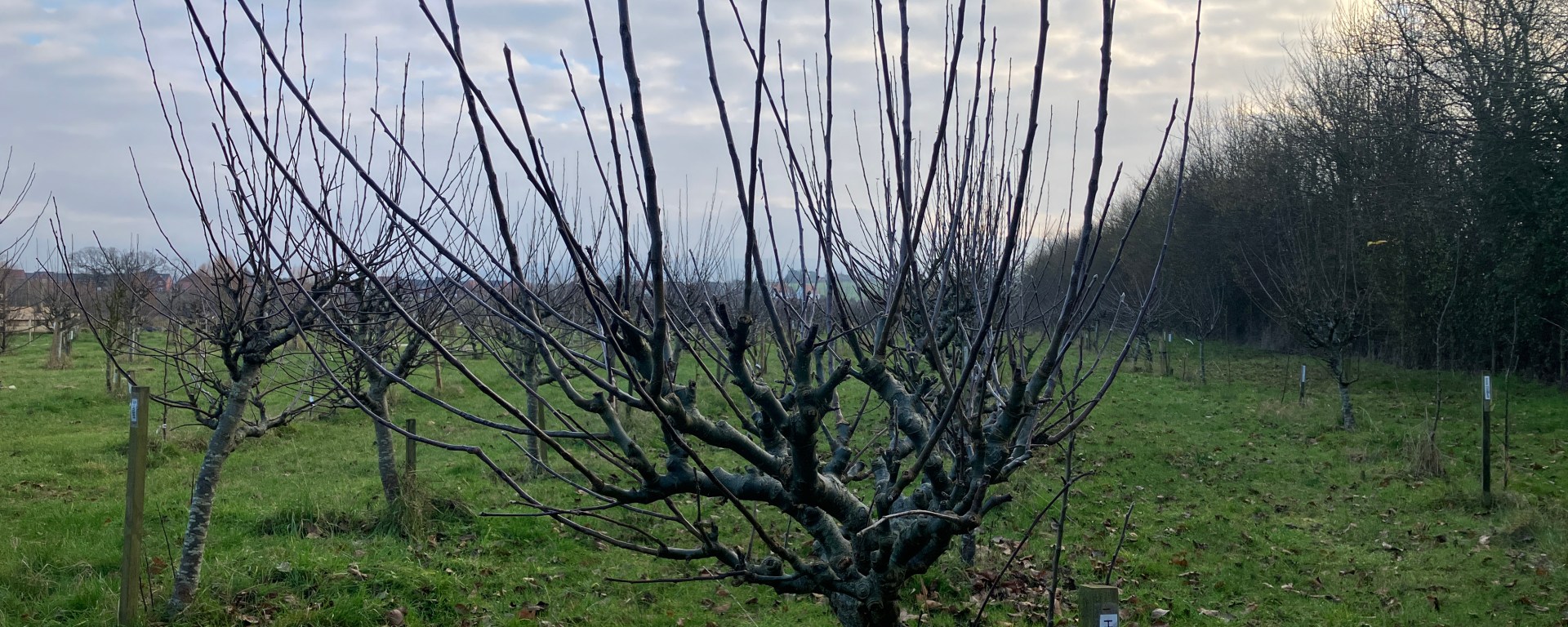
Today a visit to the tree nursery to pick up the fruit trees and bushes (Apples, crab apple, quince, greengage, raspberry, blackberry, blackcurrant, redcurrant, gooseberry) that will make the framework of the mini Food Forest* we’re planting on the project plot.
Food Forests are generally designed to mimic natural systems, with plants growing fairly close together and in ‘layers’ made of different heights of plants – as in naturally occurring forests. These are categorised into roughly six layers: canopy (tall trees), small trees/large shrubs (hazel, crab apple), shrubs (gooseberry, redcurrant), herbaceous perennials (sage, rhubarb, artichokes), ground cover (mint, strawberries) and climbers (beans).
We’ve decided to make part of the project site into a experimental/demonstration mini Food Forest – partly this is because Food Forests are a stable and sustainable system that sequester carbon as they grow and are better able to cope with climate change; the leaf litter and companion planting contribute to soil/plant health and nutrient cycling; it will be relatively low maintenance and the crops produced will be available to all plot-holders (as with the small community orchard we have on another part of the site).
The trees for that orchard came from the fantastic Walcot Organic Nursery, which is where we also ordered the trees and bushes for the Food Forest and, excitingly, we got to have a nose at the nursery when we went to pick the trees up!

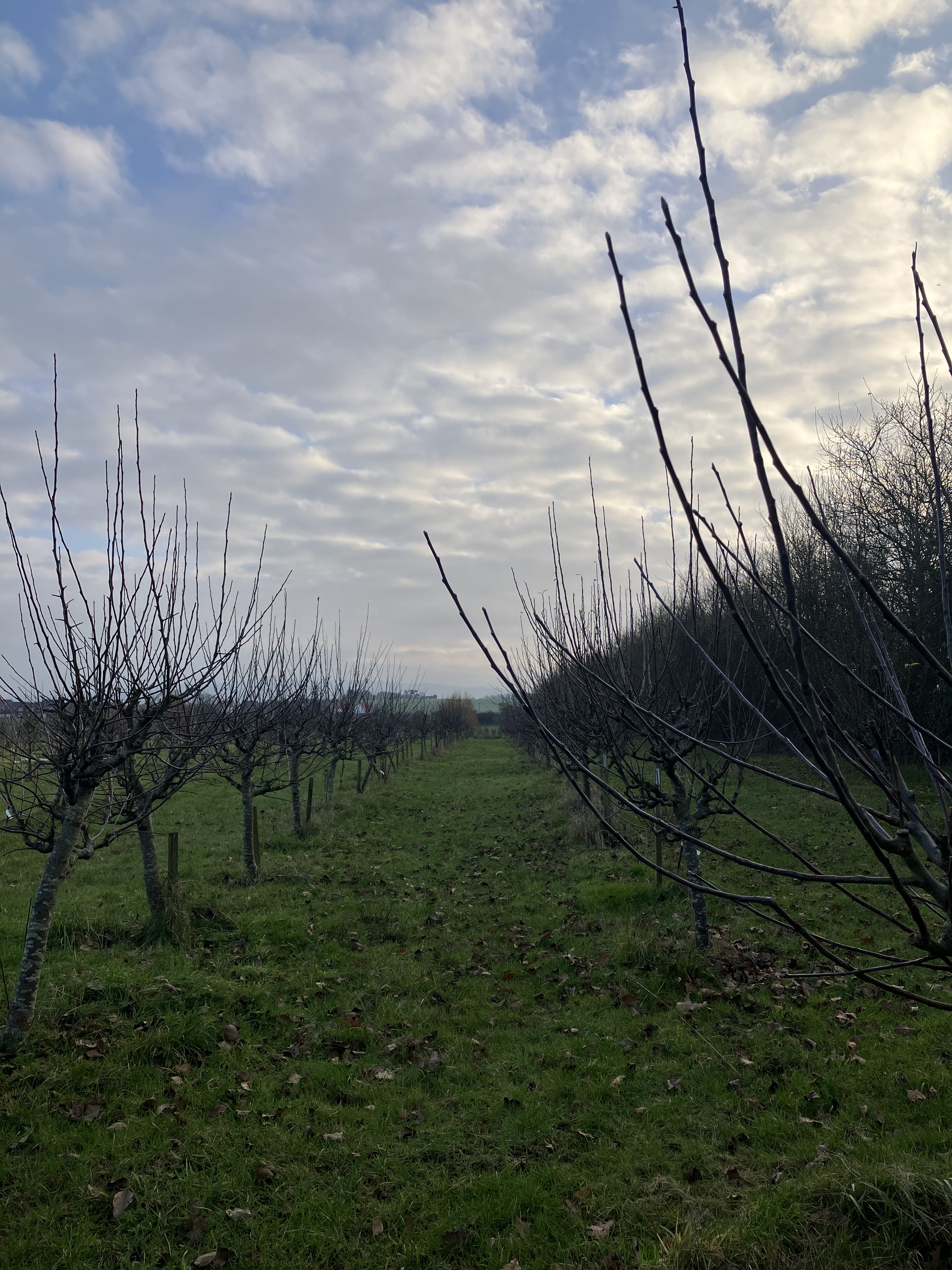
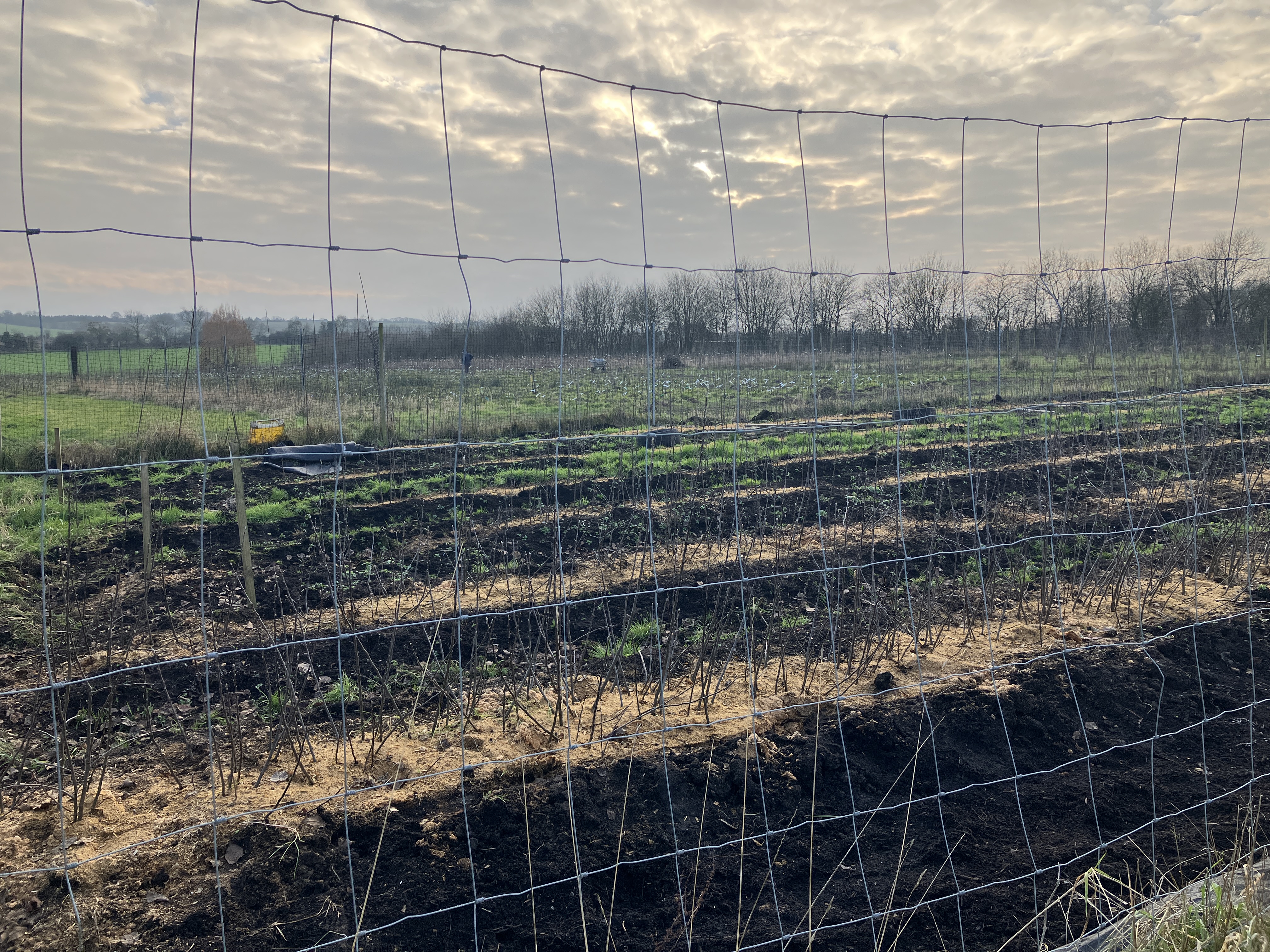
The “Mother trees” have straight shoots taken from them each year – and these shoots are grafted onto the various preferred rootstocks. These are then planted out into the nursery fields to grown on for sale. Generally the tree saplings are sold as one year maidens – we’ve bought a mix of one and two year. Our saplings will have been dug up yesterday, bare rooted for collection, ready for us to plant out on the project plot.
*If you are interested in finding out more about Food Forests, there are plenty of detailed resources online, including this from the Agroforestry Research Trust, which is a good place to start.
 Urban Allotment: climate resilience & community
3 thoughts on “Tree Nursery”