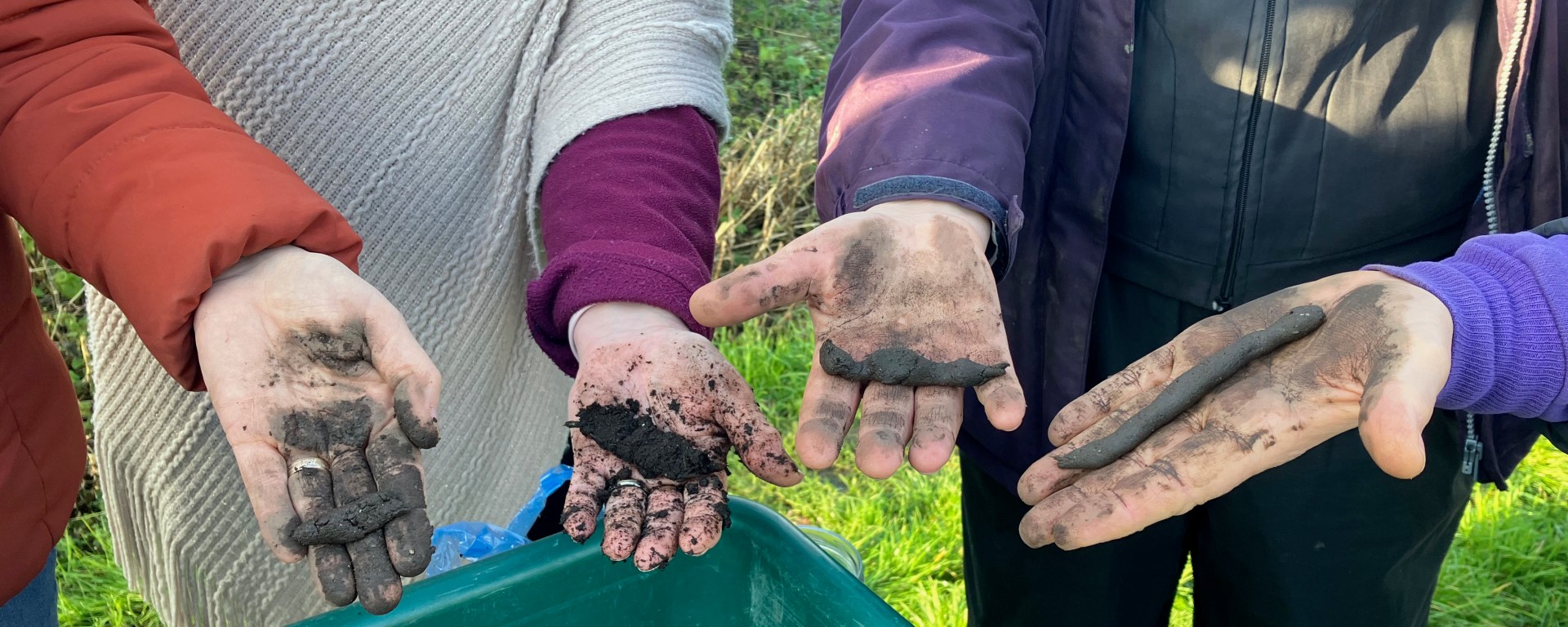
We were lucky with another dry, bright (but chilly!) day for the second of our workshops led by Garden Organic. Anton joined us on site to talk about Building Soil Health.
He began by digging a couple of holes in two different areas of the site – one through what had once been a compost heap, and another in an area of cultivated land that has been regularly rotavated. This was to show us the layers of soil (slightly less ordered layers than the school geography diagrams would have you believe!) and, on the rotovated plot, a hard ‘pan’ at the depth of the blades. Anton showed us how we can learn quite a bit about the soil type by the plants that are growing there. For example, chickweed & nettles indicate rich soil; clover can indicate poorer soil because – as a legume it can take in nitrogen from the air and effectively feeds itself; creeping buttercup grows in compacted, and often waterlogged soil; and creeping thistle often indicates a clay soil.
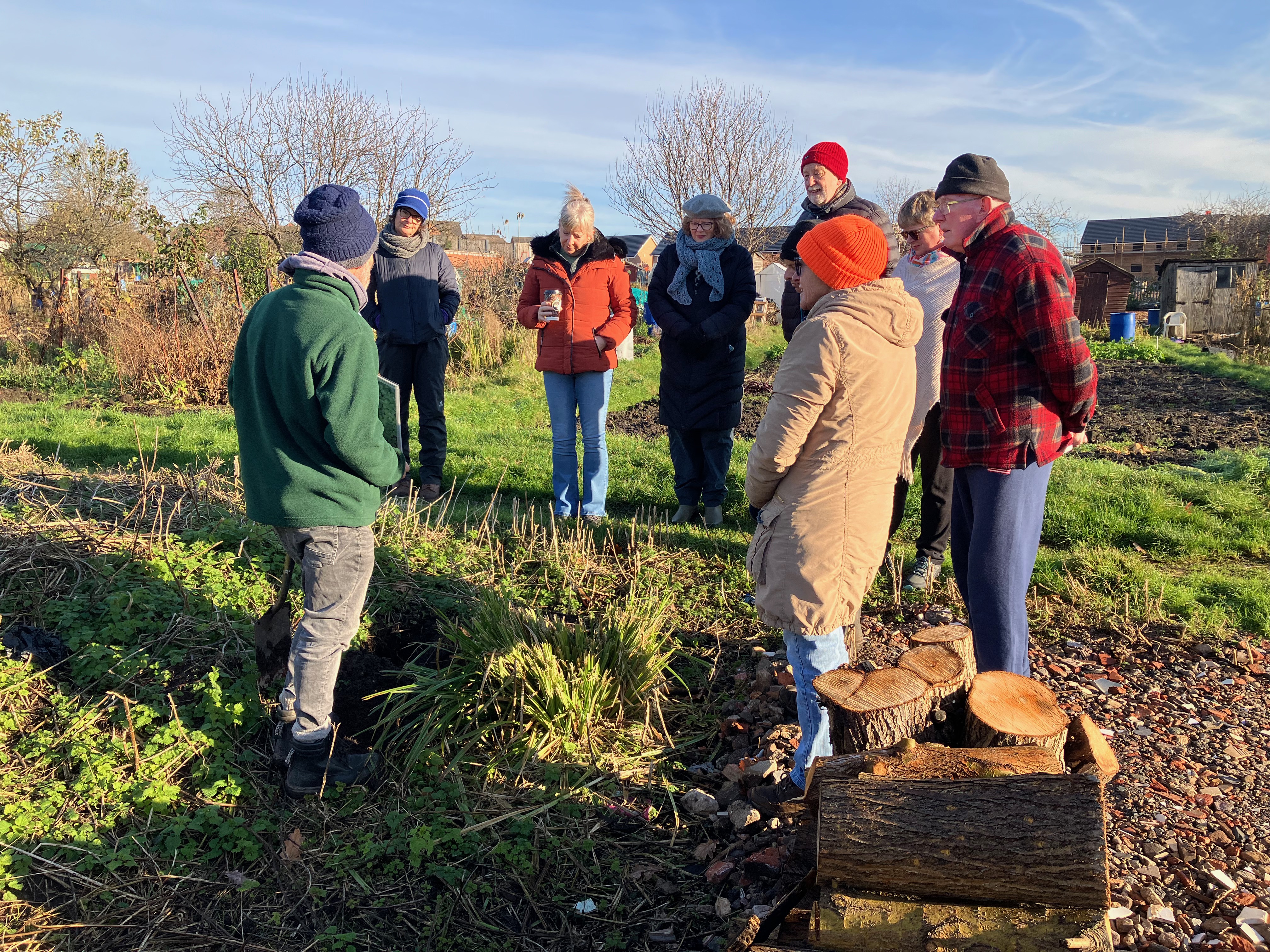
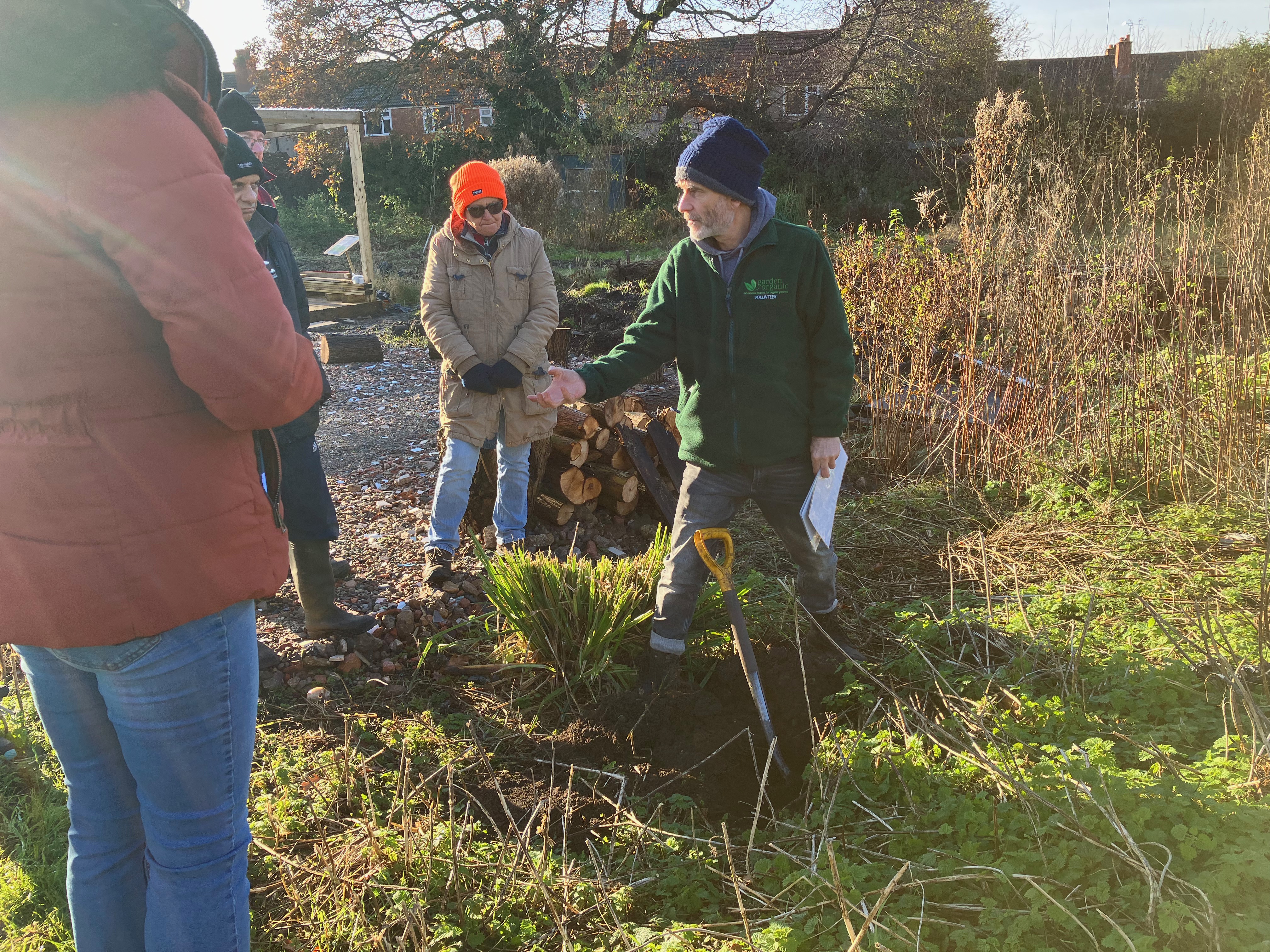
We learnt about soil structure and how this relates to resilience, since healthy soil is one of our best defences in the face of climate change. Healthy soil is more able to sequester carbon and will be more likely to hold the necessary air/water/nutrients that plants need. Finer soil structures (with less organic matter), or compacted soils, are less resilient – they are unable to absorb moisture and so are not good in the face of either drought or flood.
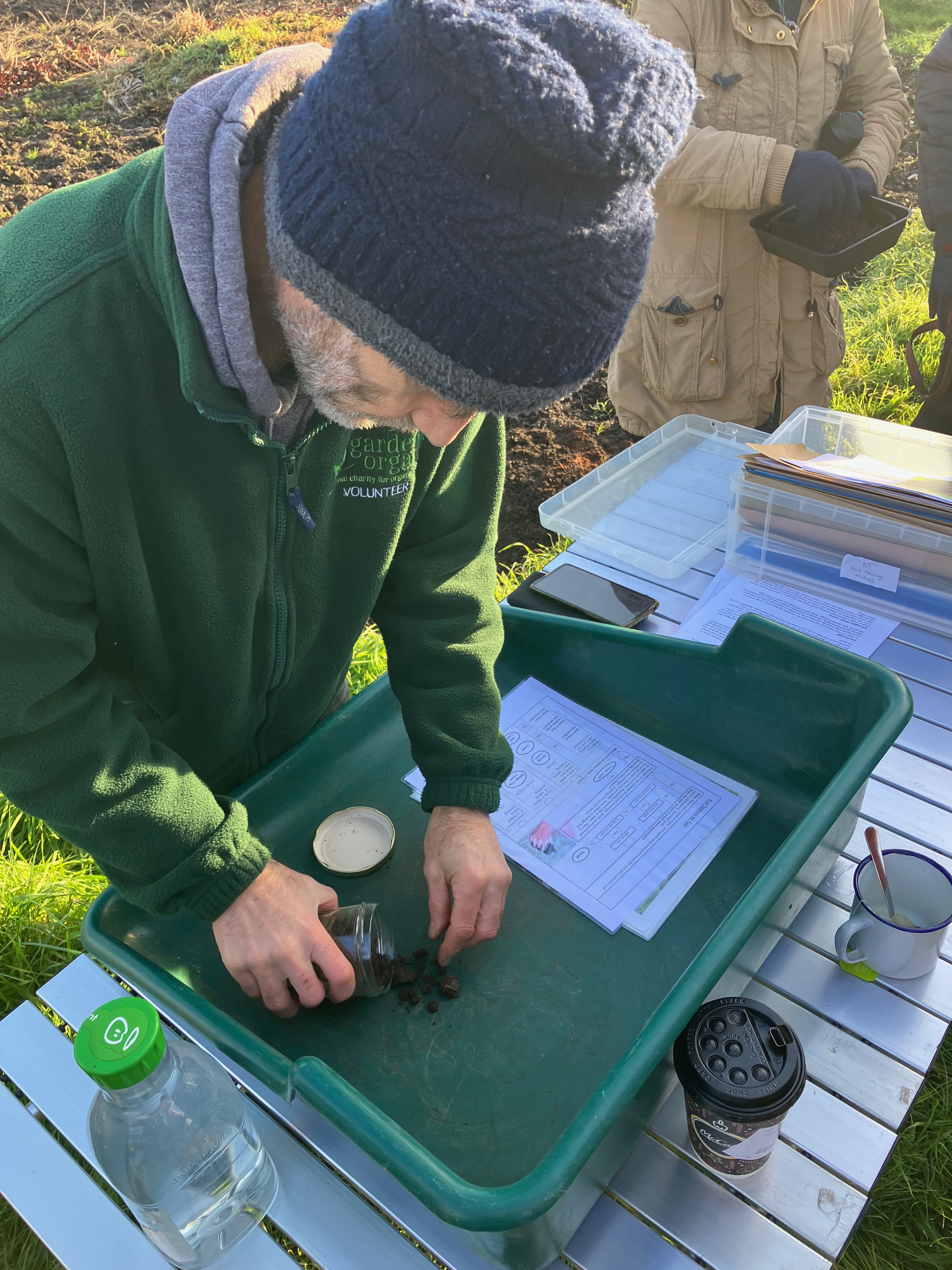
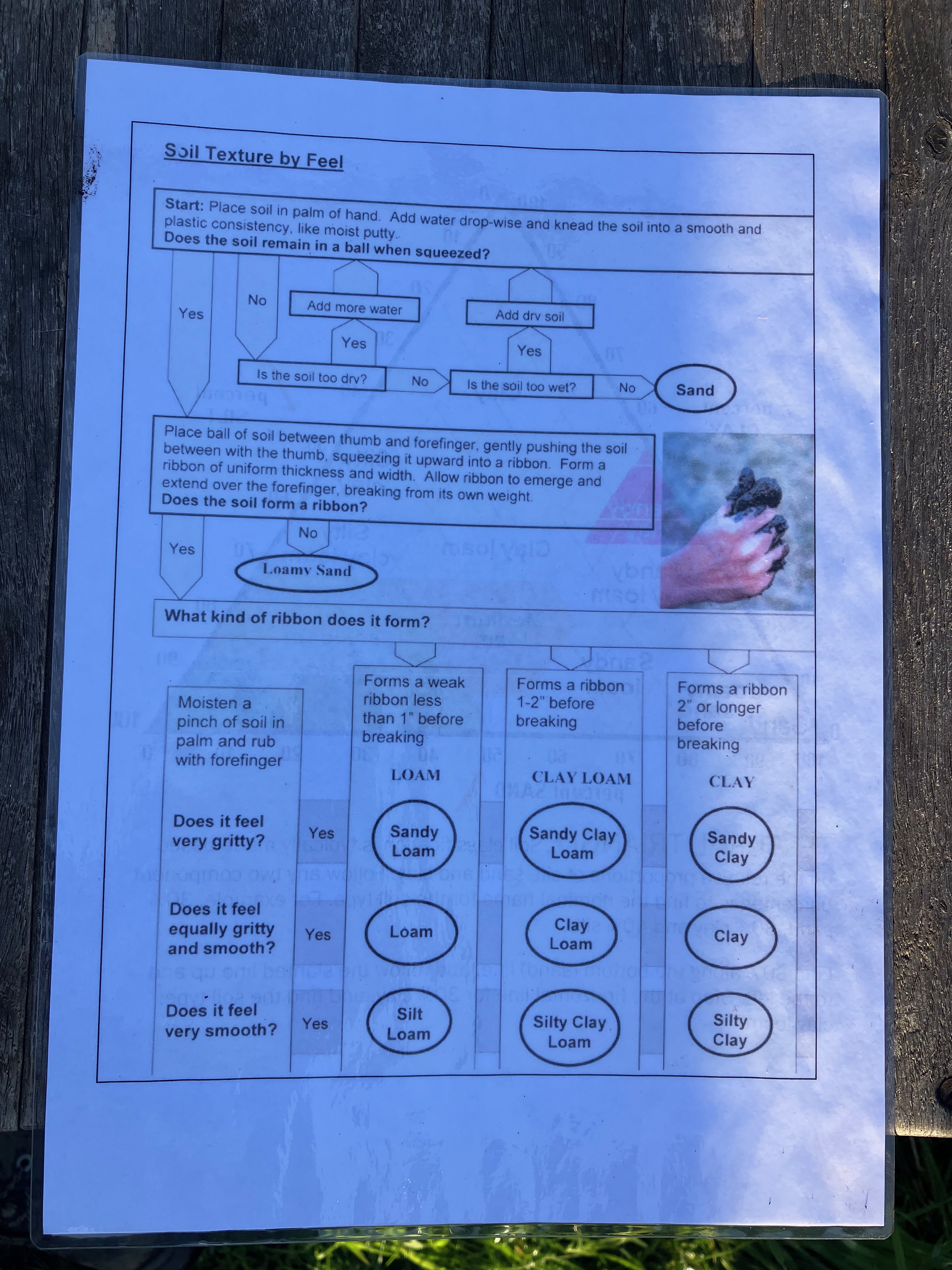
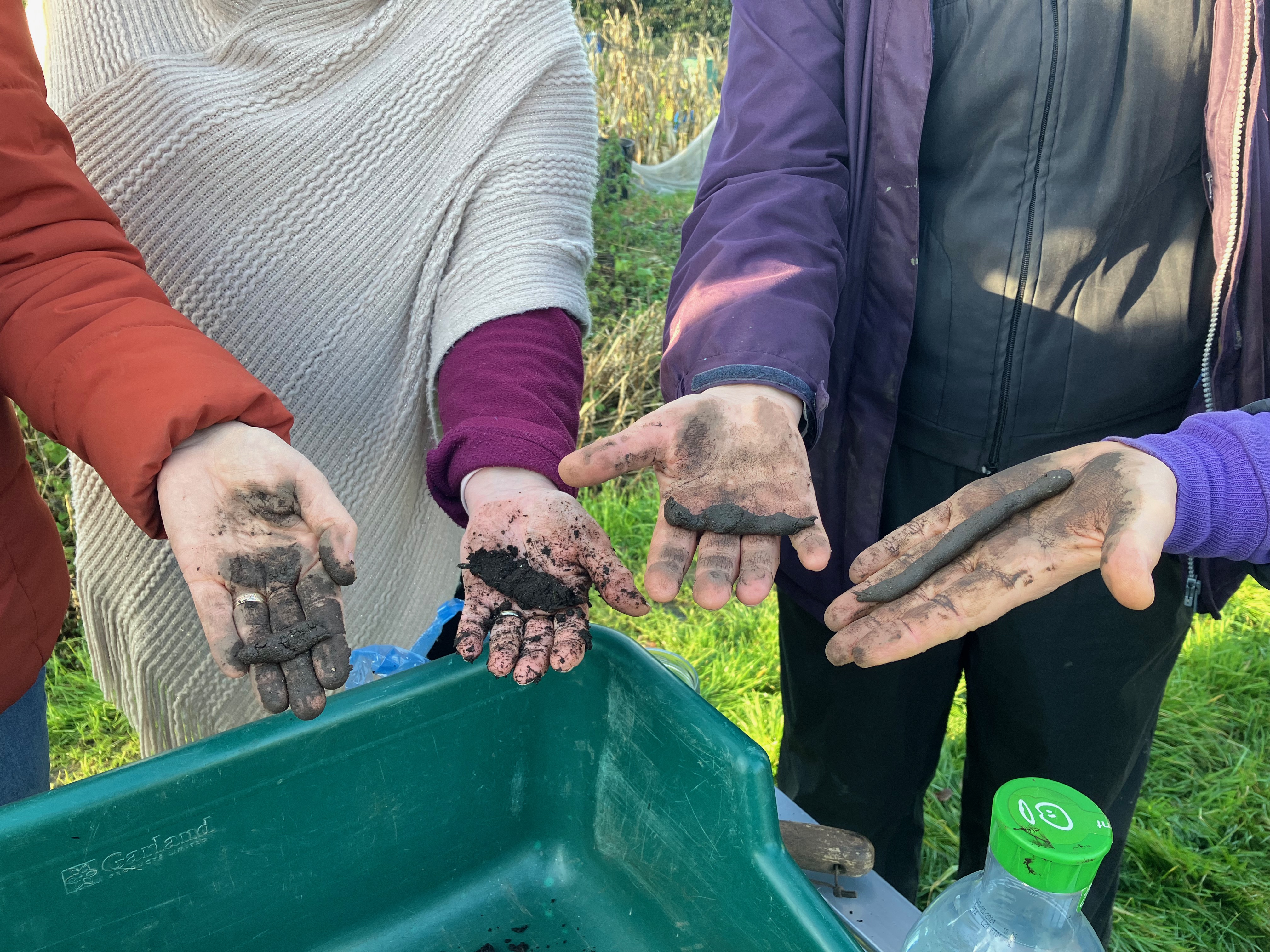
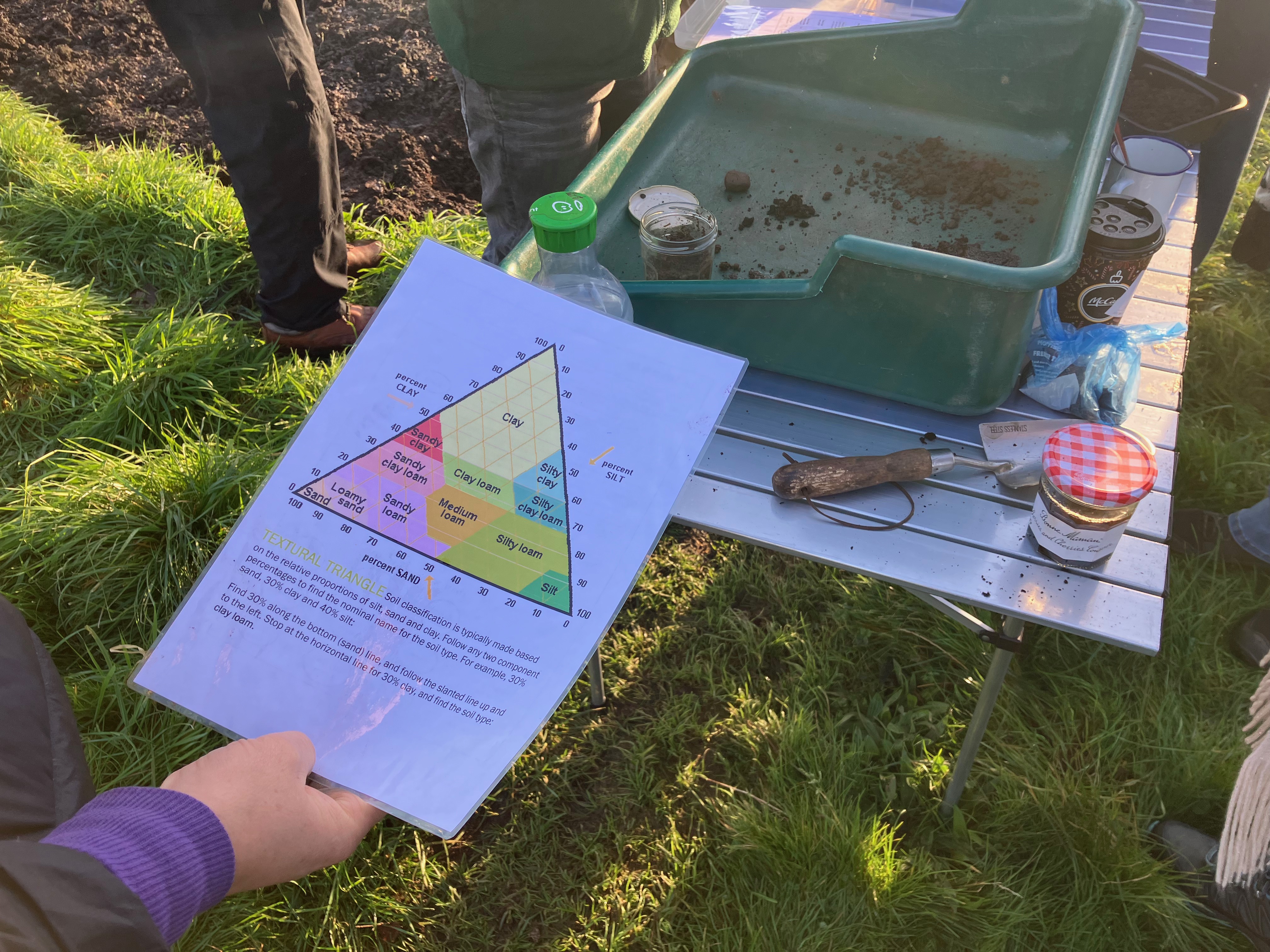
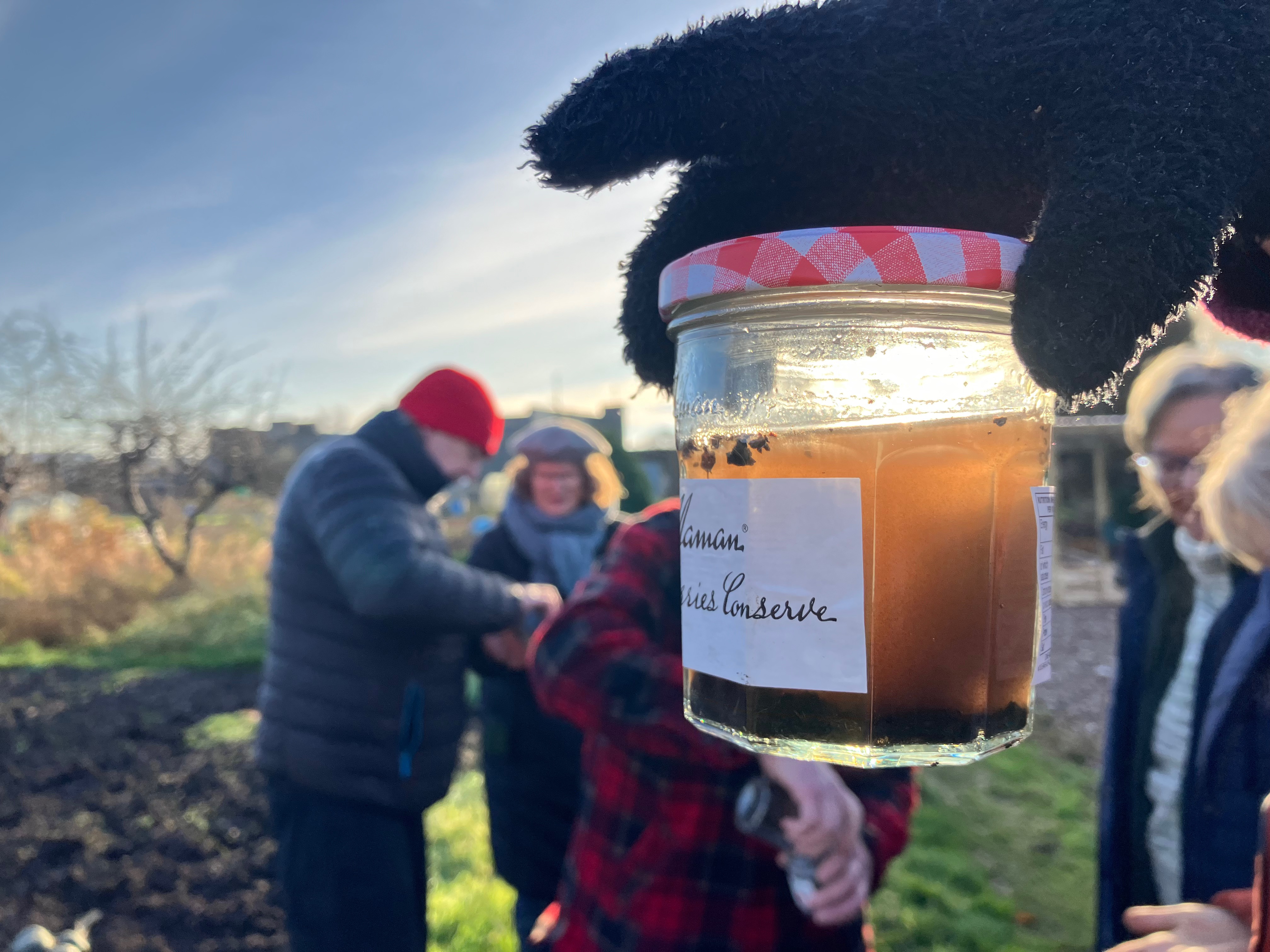
Putting a bit of our soil into a jar with some water can also help indicate soil type. If the soil sinks/the water is clear, this indicates sandy soil. Cloudy water indicates a clay soil, because it takes longer for those finer particles to sink. Organic matter floats.
Building soil resilience to combat flood damage
Flooding and waterlogging are increasingly problematic for many allotmenteers as climate change brings heavier and more frequent rain – and there were many questions about how to improve soil health in this situation. Obviously we can’t stop the heavy rains, but by improving soil health we can build the land’s resilience and help it to bounce back more quickly after flooding.
Anton explained that often flooding occurs (or is worsened) because the soil is compacted, so it cannot absorb, hold and slowly drain away the water. (Another sign of compacted soil is that the surface might be cracked in the summer, and unable to absorb moisture – this is ‘capping’, often caused by heavy winter rain falling on bare soil). He recommended dealing with soil compaction by adding organic matter (compost) to bind the aggregates in the soil and help it to become more sponge-like/absorbent. One of the easiest ways to do this is to grow green manures over Autumn/Winter to avoid leaving soil bare, and to then dig in the green manure in the spring – adding organic matter to the soil and helping the structure. Alfalfa or chicory are Anton’s top tips on green manures for land prone to flooding, because they have tap roots which will break through the soil pan/cap. This might not sound like much, but Anton assured us that over time it will make a huge difference.
We talked more about green manures, and about integrating them into the growing year as ‘fallow’ beds, or under faster maturing crops – for example sowing yellow trefoil/white clover under beans (in may/june once the bean plants are established so the green manure is not competing with the beans). The clover fixes nitrogen from the air into the soil, which will feed the growing bean plants and then, once the beans are harvested, the green manure will continue to grow over winter and protect the soil against battering winter rain. In spring it can be dug in, to further improve the soil structure – or ‘chop and drop’ the green manure and cover it with compost, which will help it to break down more quickly.
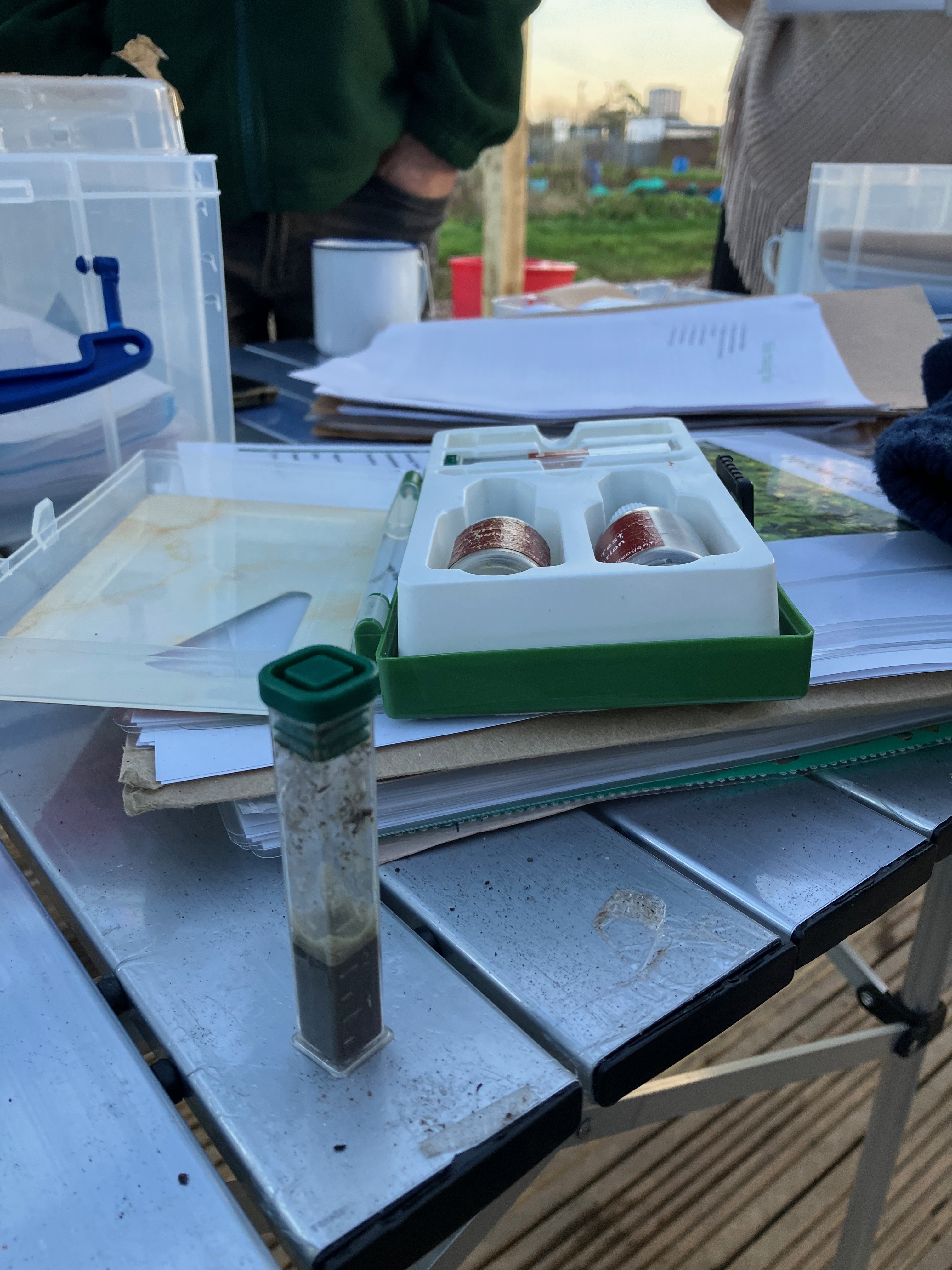
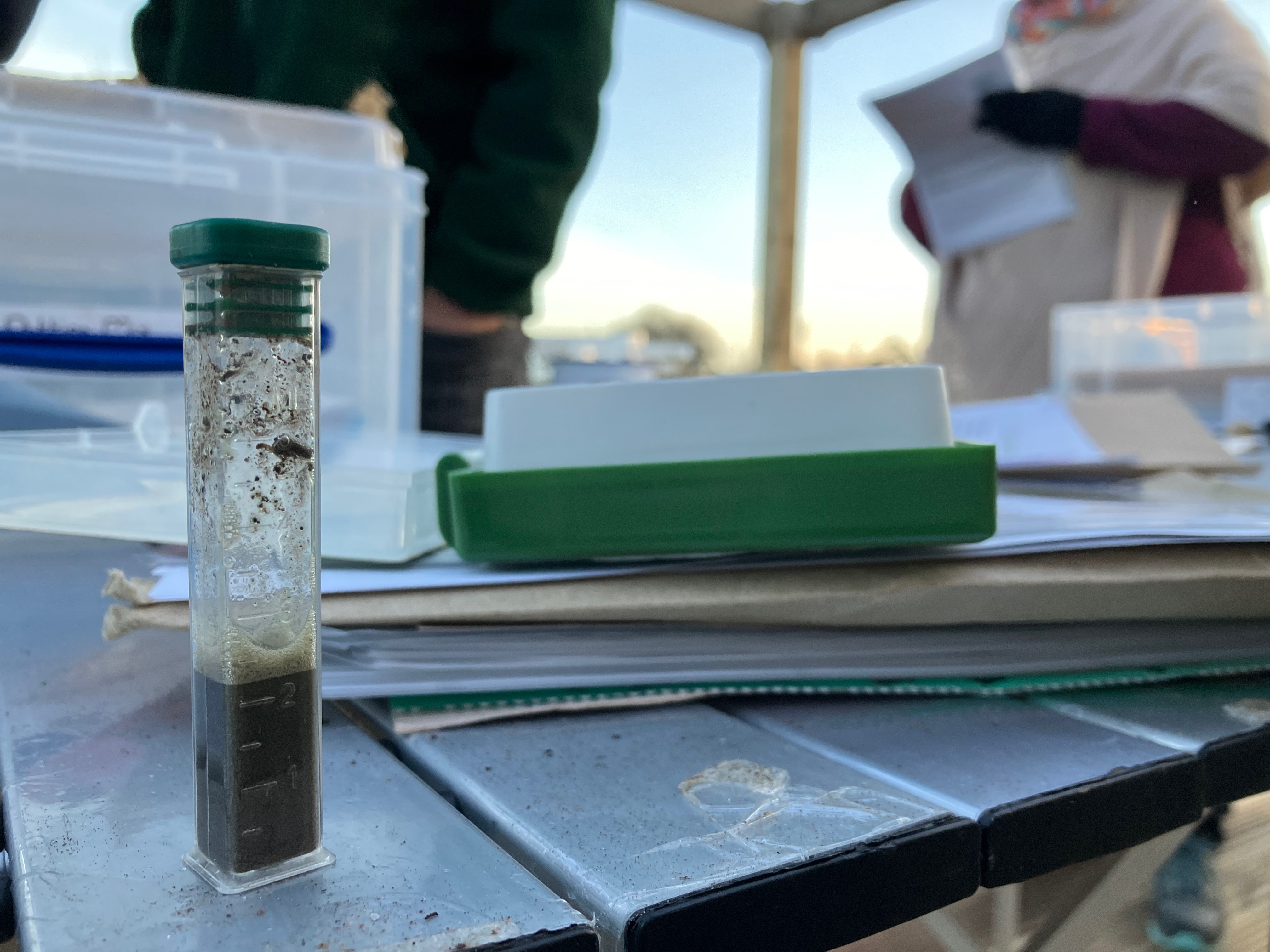
Finally, we tested the Ph. This is to do with the amount of hydrogen ions in soil and it doesn’t change much if you’re gardening organically/not adding chemicals. It is the application of Nitrogen & Phosphate fertilisers that makes soil more acidic, hence need for lime, because the acidity affects how well the soil can access nutrients. This is another reason why growing organically and building soil health is a better way to grow – not only is it better for the planet, but it is better for the pocket too, as you don’t have to spend money on fertilisers!
Finally we talked a little bit about how organic growing cultivates beneficial insects and animals that help deal with your pest problems without needing pesticides. Farmers are now able to buy a ‘Beetlebank’ mix of seeds to sow to attract and make habitats for beetles who will keep the slug population under control. Anton noted that slugs really prefer rotting vegetation, but if we tidy all the rotting stuff away, they have no choice but to come for the fresher leaves. We consider ourselves duly warned!
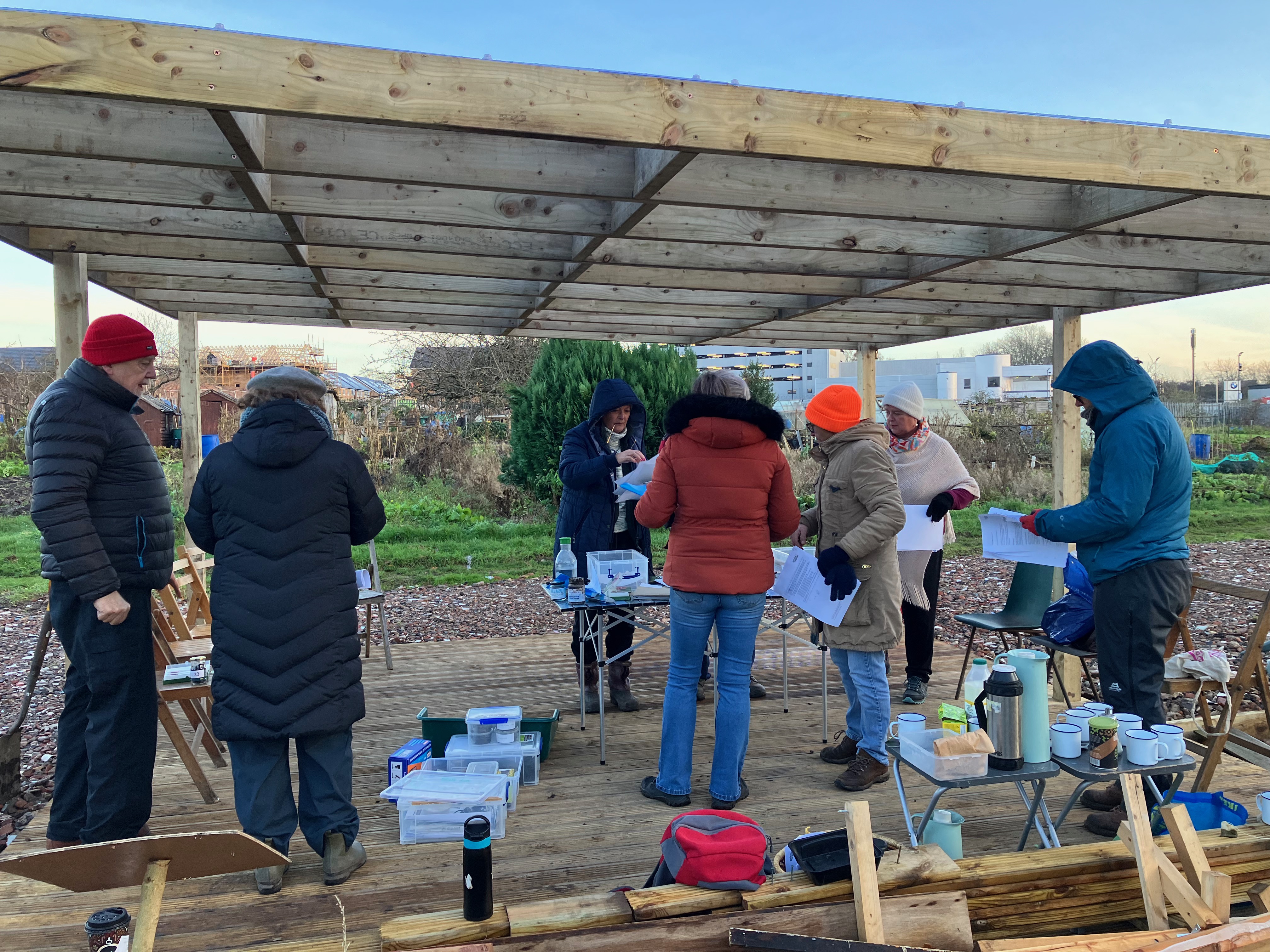
Huge thanks to Anton and Garden Organic for both workshops. If you are interested in learning more about Organic growing, their website is an excellent place to start. There are all sort of top tips, and they run many workshops all through the year. We’d also recommend becoming a member of Garden Organic to support their work. From next year, members will also get a discount on organic seeds from the very brilliant Tamar Organics in Cornwall.
 Urban Allotment: climate resilience & community
One thought on “Soil Health Workshop”