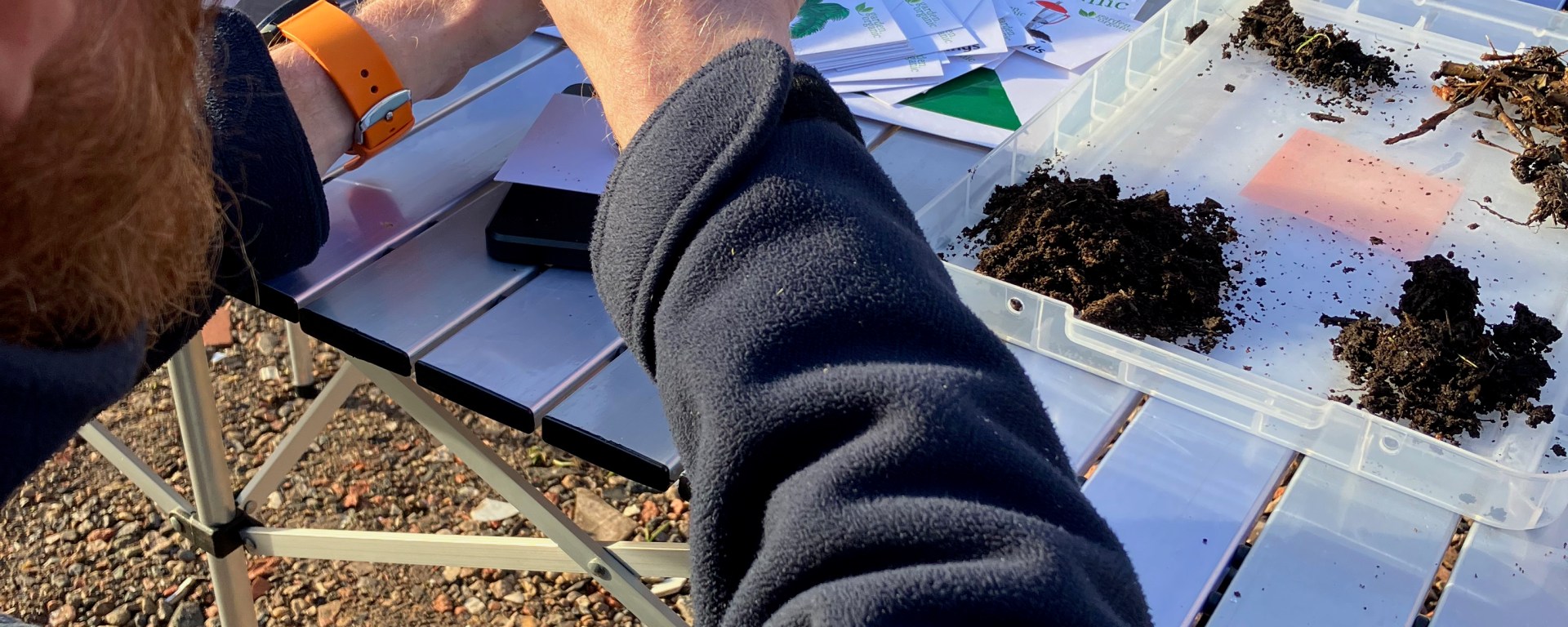
Allotmenteers are hardy types, so the freezing temperatures and ground frost today didn’t stop us from gathering for the Successful Composting workshop, led brilliantly by John from Garden Organic.
This was the first of two workshops we’re hosting on site as part of this Climate Adaptation project. Led by experts from Garden Organic, these workshops – on Successful Composting and Building Soil Health – are both aimed at helping plot-holders to build (climate) resilience into all stages of the growing process.
Taken together, these two workshops also beautifully illustrate the circular nature of growing – how successfully composting all the garden and kitchen waste generated during the year helps to feed the organisms that make up a healthy soil, that feeds the next year’s crops.
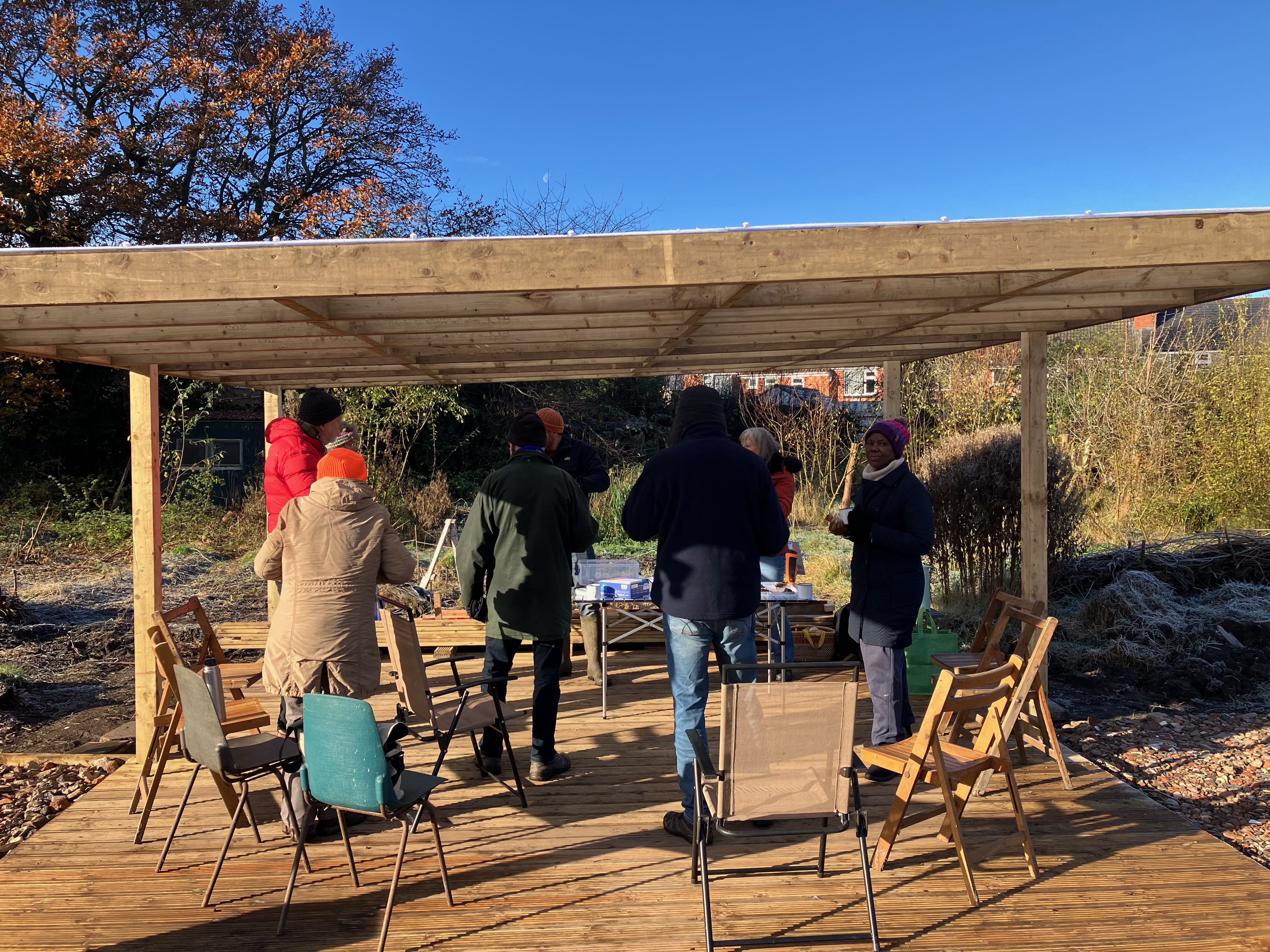
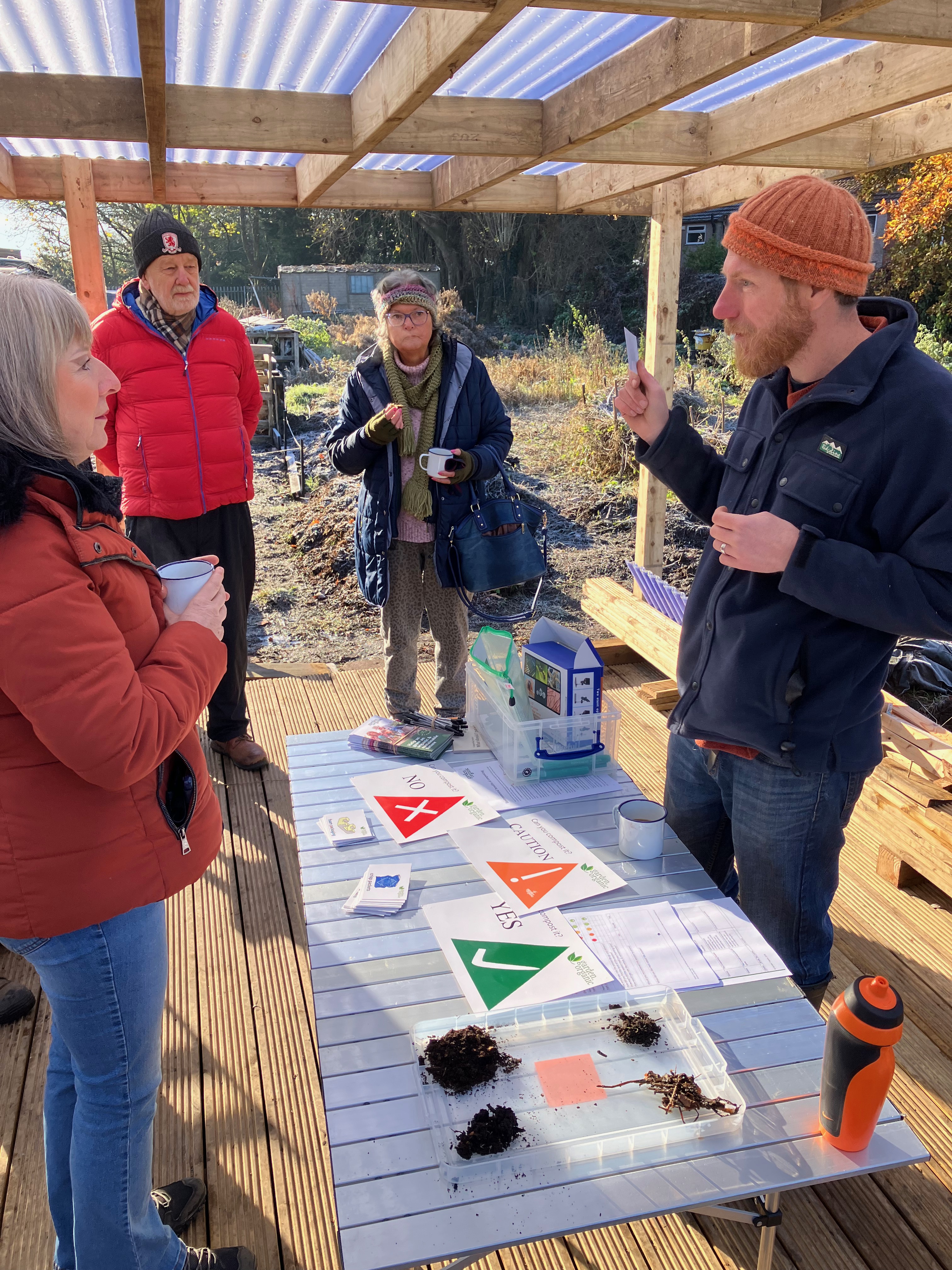
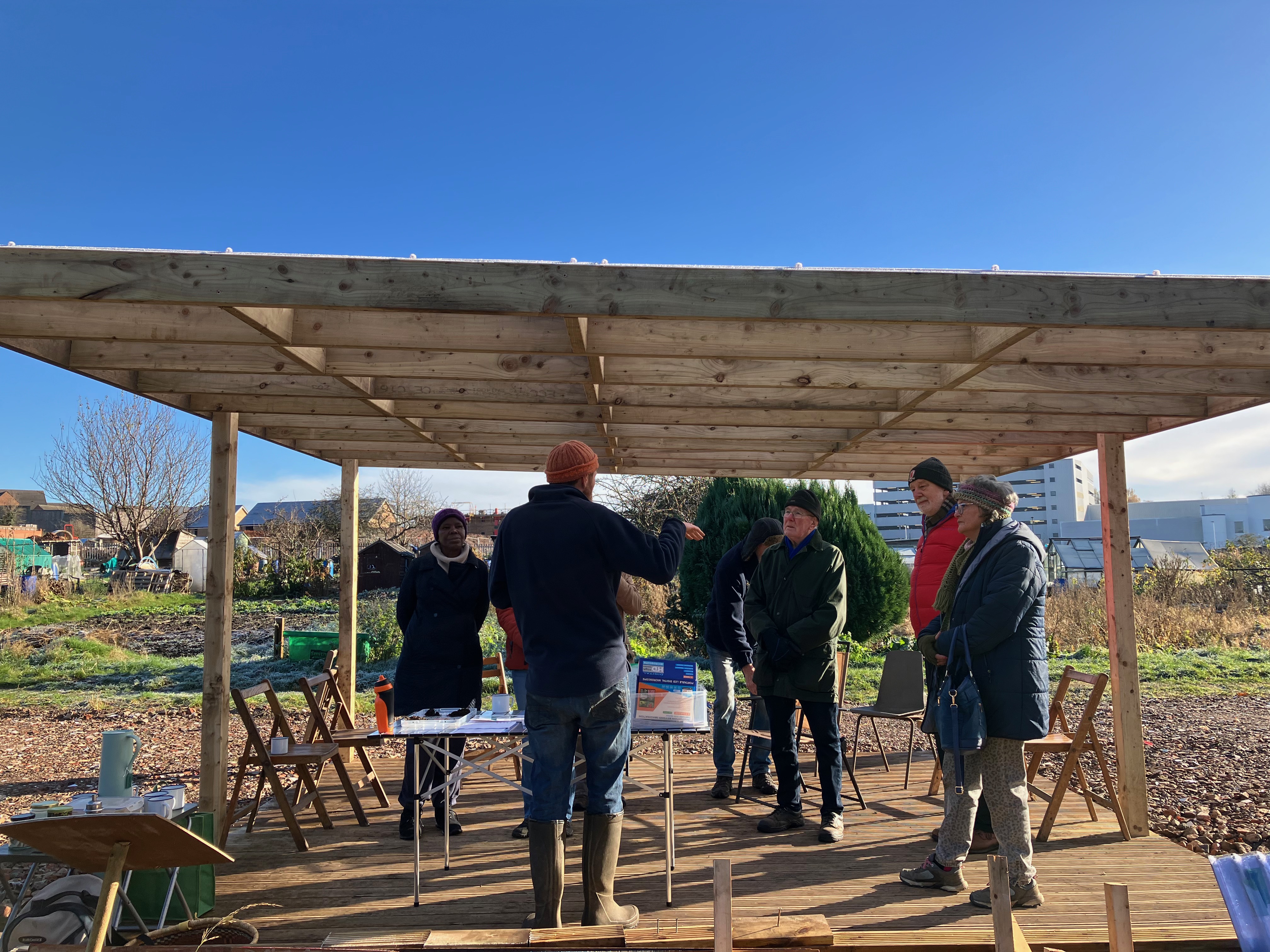
Today’s event was also the official ‘christening’ of our community shelter, which now gives us a space to gather and learn together on site. We spent the first part of the morning in there, cradling hot drinks and sharing our own composting habits (which ranged from methodical to haphazard!). John talked to us about how he views making compost as both a science and an art, and reassured us that successful composting is really about making sure you don’t have too much of one thing in your compost – but ensuring there is a mix of green (nitrogen) and brown (carbon) materials – and plenty of aeration.
There was a discussion about the comparative merits of compost bays, plastic ‘dalek’ bins and heaps (all good in different ways); how heat and microbes work; and what turning compost (and how frequently) can do to speed up the process.
The quiz on what can and can’t be composted threw up some interesting information and busted a few myths. Perhaps our top takeaway is a good rule of thumb for couch grass and other perennial weeds: anything above ground can go straight in the compost, but anything below ground can’t, until it’s been ‘killed off’. We talked about various methods for killing off the below ground portions – from drowning to drying; and about how effective it can be to just continue to cut off the above-ground parts of perennial weeds – weakening and gradually killing them off, over time.
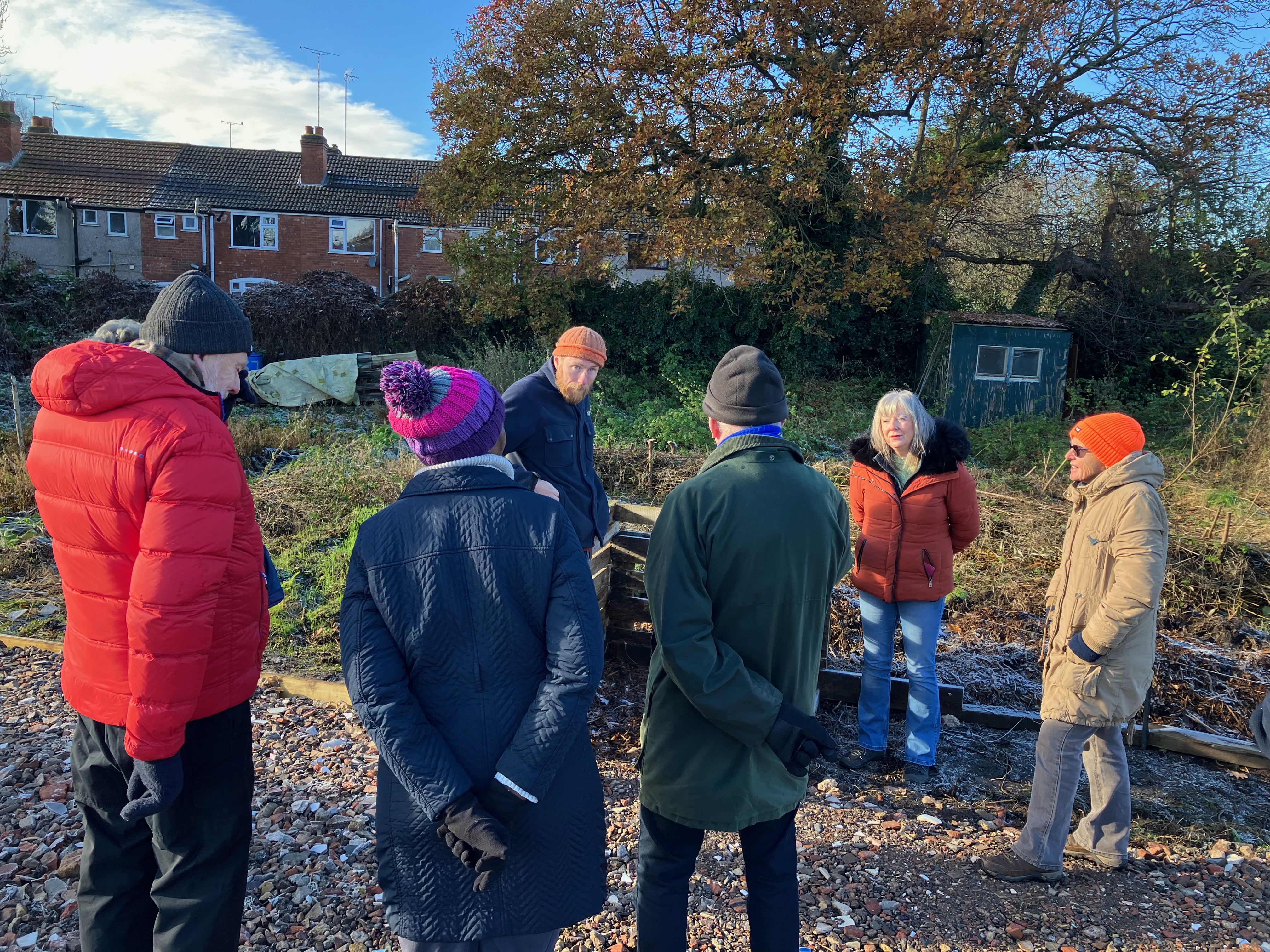
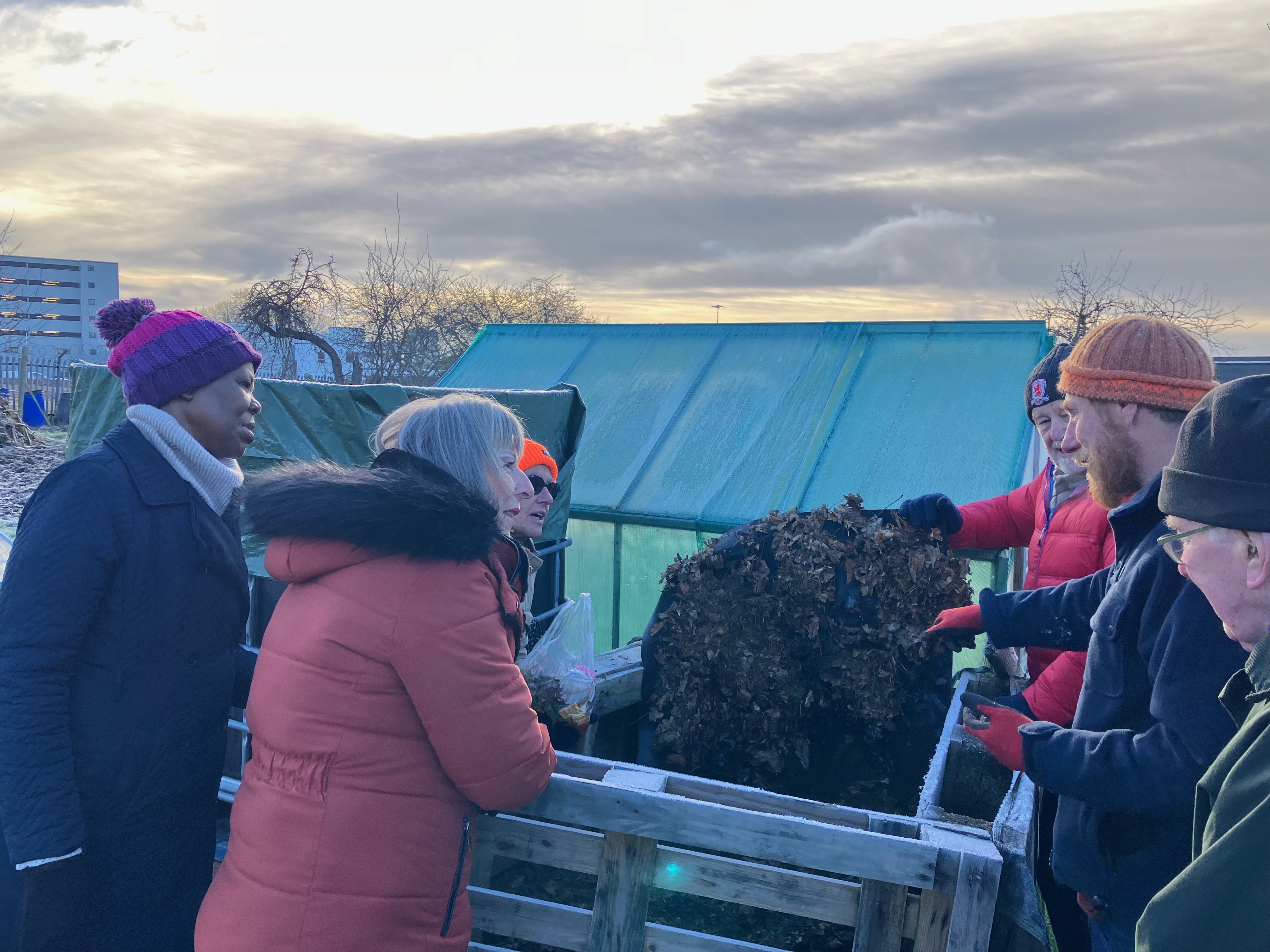
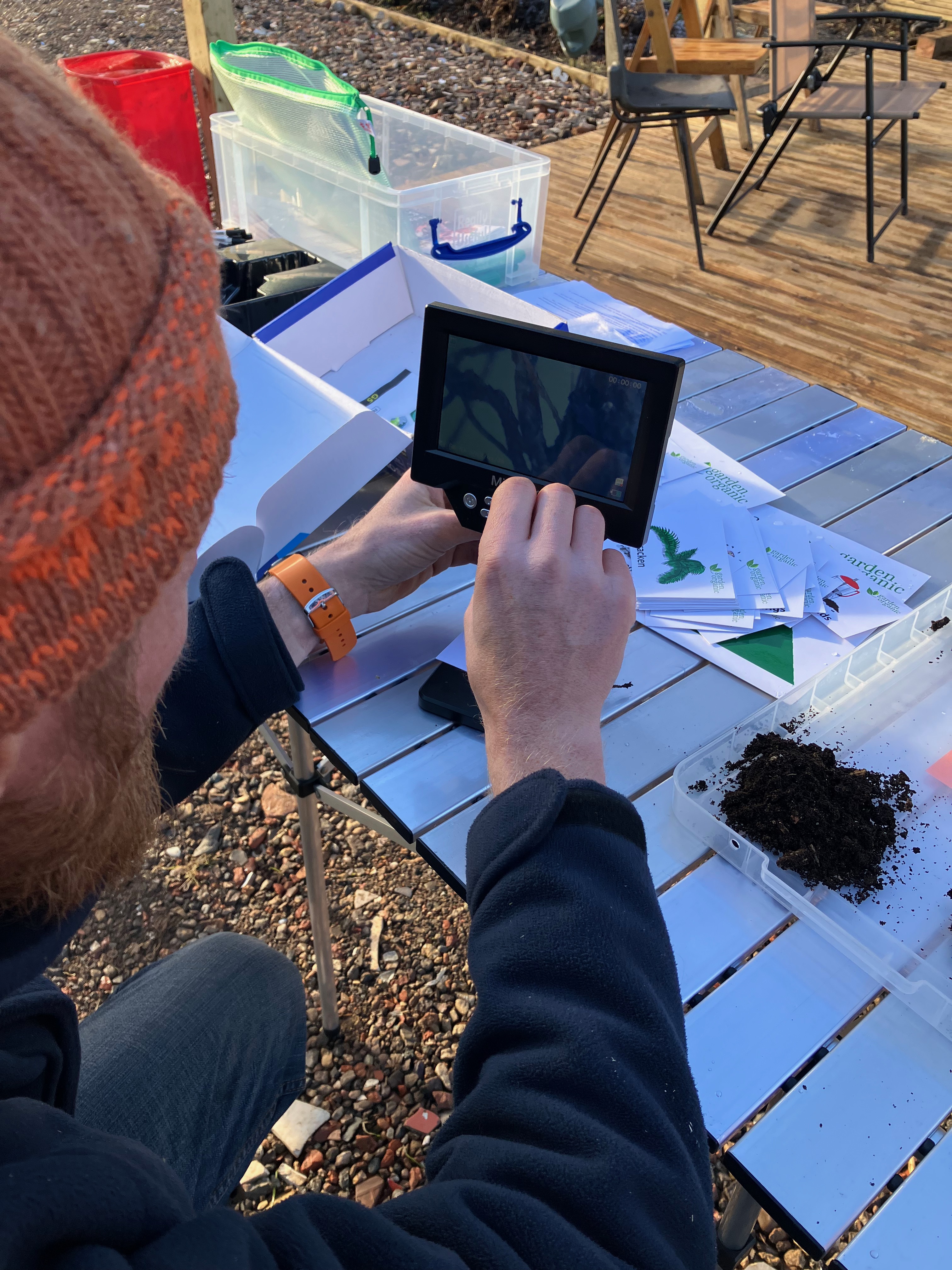
Partly to warm up, and partly because it’s much easier to demonstrate things with a look at real compost, we went for a walk around the site, poked our noses in a couple of compost bins, and collected a few samples which we then looked at under the microscope – although sadly (due to the cold) there wasn’t much activity to be seen.
The workshop was quite conversational, with a lot of opportunities to ask questions and get advice on specific aspects of your own practice. Bob asked about the timing for putting compost onto the plot, as many people like to top dress their vegetable patch with compost in the winter. John advised that spring is a better time to do this, so that the goodness from the compost is in place to feed growing plants – because there is a danger that winter rain can dissolve much of the compost’s goodness, washing it away before your spring plants can get the benefit of it.
Dave asked about bean trenches, and the practice of putting ‘raw’ compost into a covered trench at this time of year and whether the same danger of losing the nutrients applied to that practice too. John’s reply was that he wouldn’t do that personally, but if it works for you, you can carry on doing it – as long as there is enough aeration from earthworms, the material should be able to break down in the trench and hopefully not be as susceptible to leaching.
If you weren’t able to take part in the workshop, or just want a refresher, take a look at the really great resources about composting on the Garden Organic website.
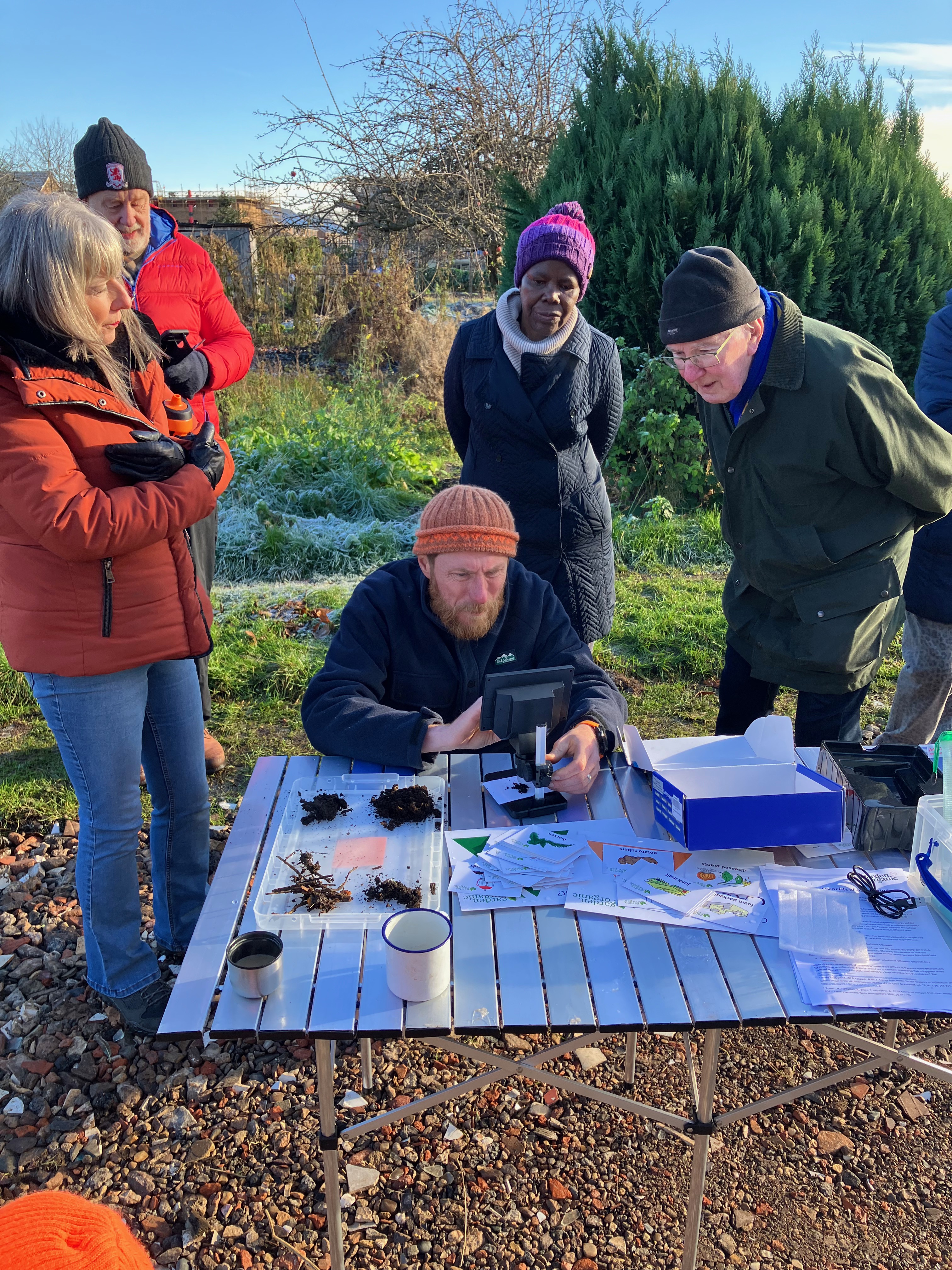
Huge thanks to John and Garden Organic for an excellent, informative and enjoyable workshop – and thank you to everyone who joined us this morning.
There are still a couple of spaces available on the second Garden Organic workshop “Building Soil Health” next Thursday, and you can find booking details here.
 Urban Allotment: climate resilience & community