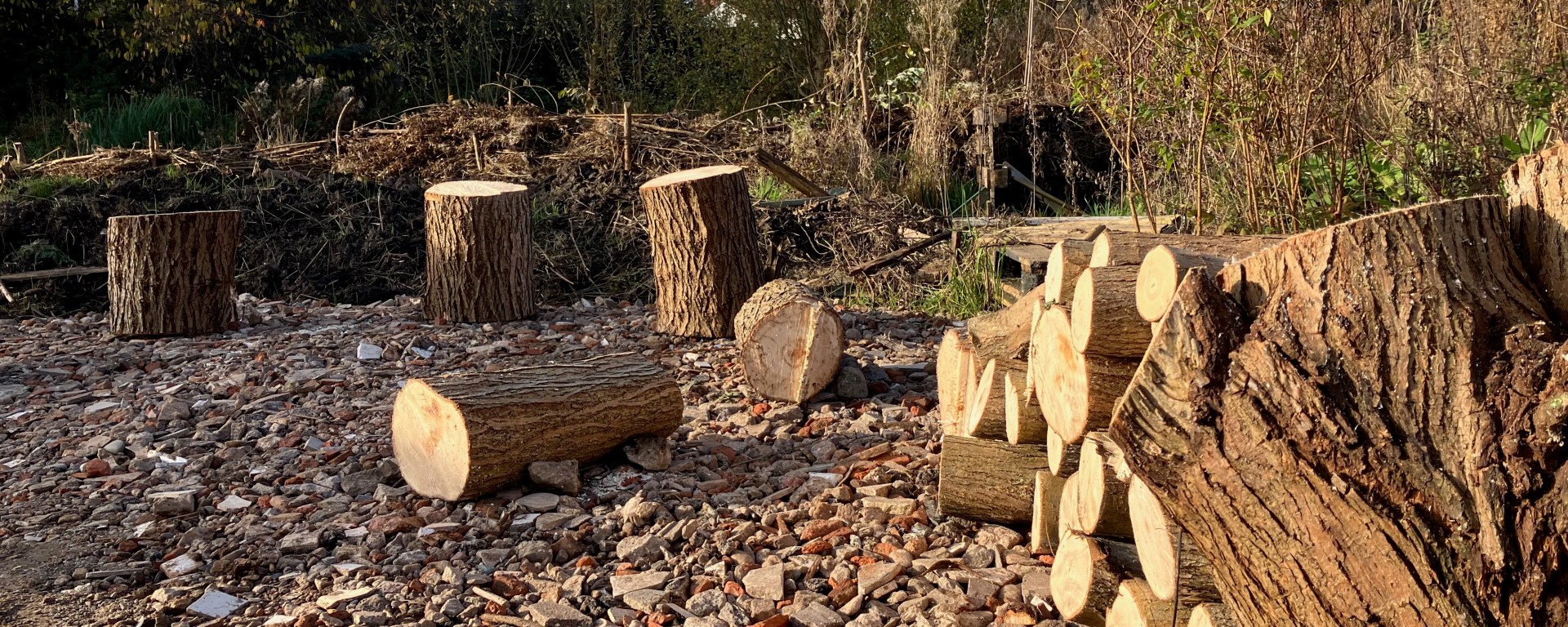
Using the wood cut on site, we have created two new habitats for wildlife:
Dead Hedges
For gardeners who want to encourage wildlife and would prefer not to set bonfires, making a dead hedge is a win-win solution. Dead hedges are like a less-neat, more wildlife-friendly version of the woven hurdles that you pay a fortune for at posh garden centres, and they create really great habitats for a wide range of insects, beetles, birds and small mammals – many of which are beneficial to the garden or allotment. The hedges also give you somewhere to put your garden prunings as they arise, saving the creation of lots of untidy heaps.

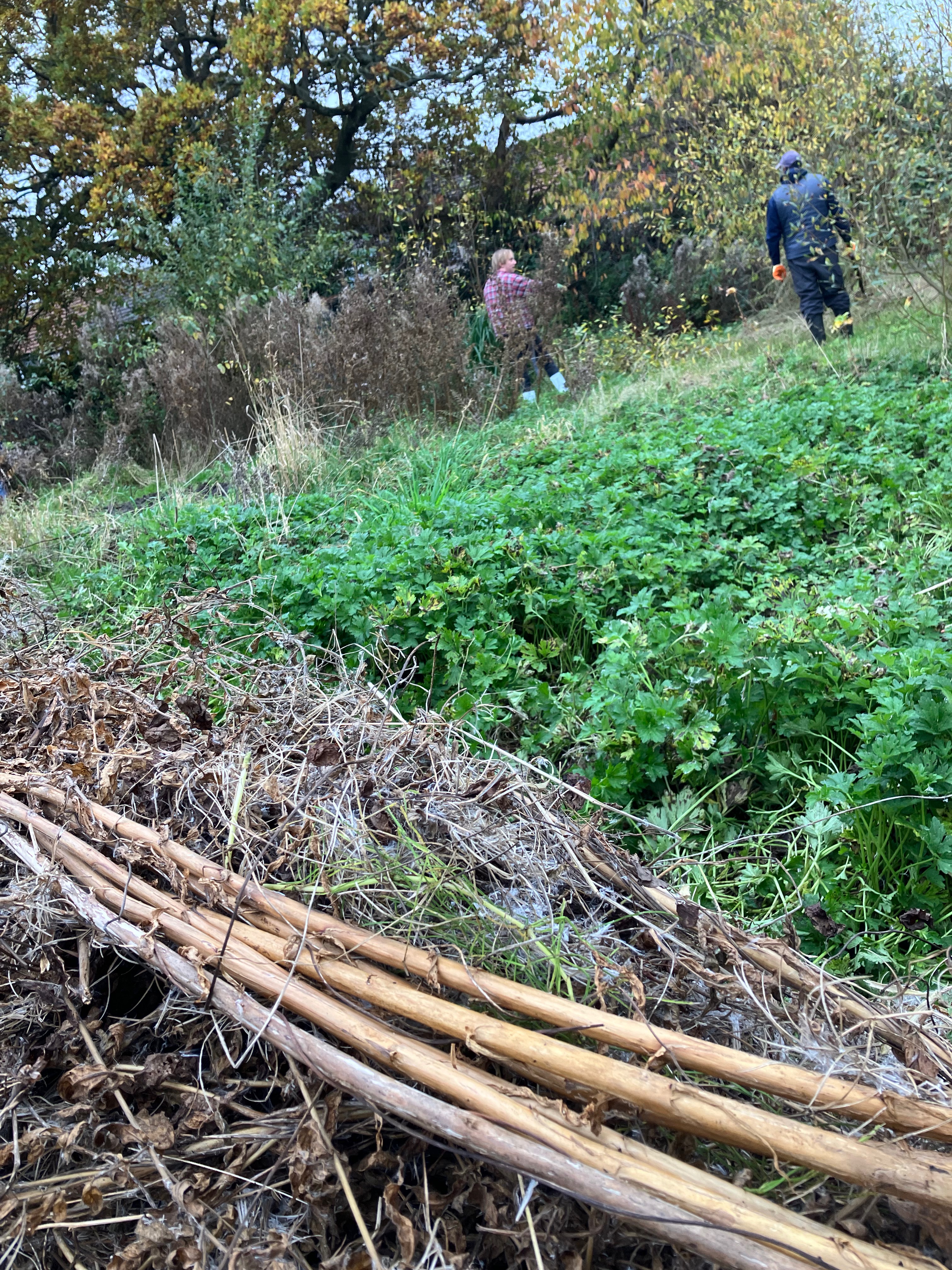
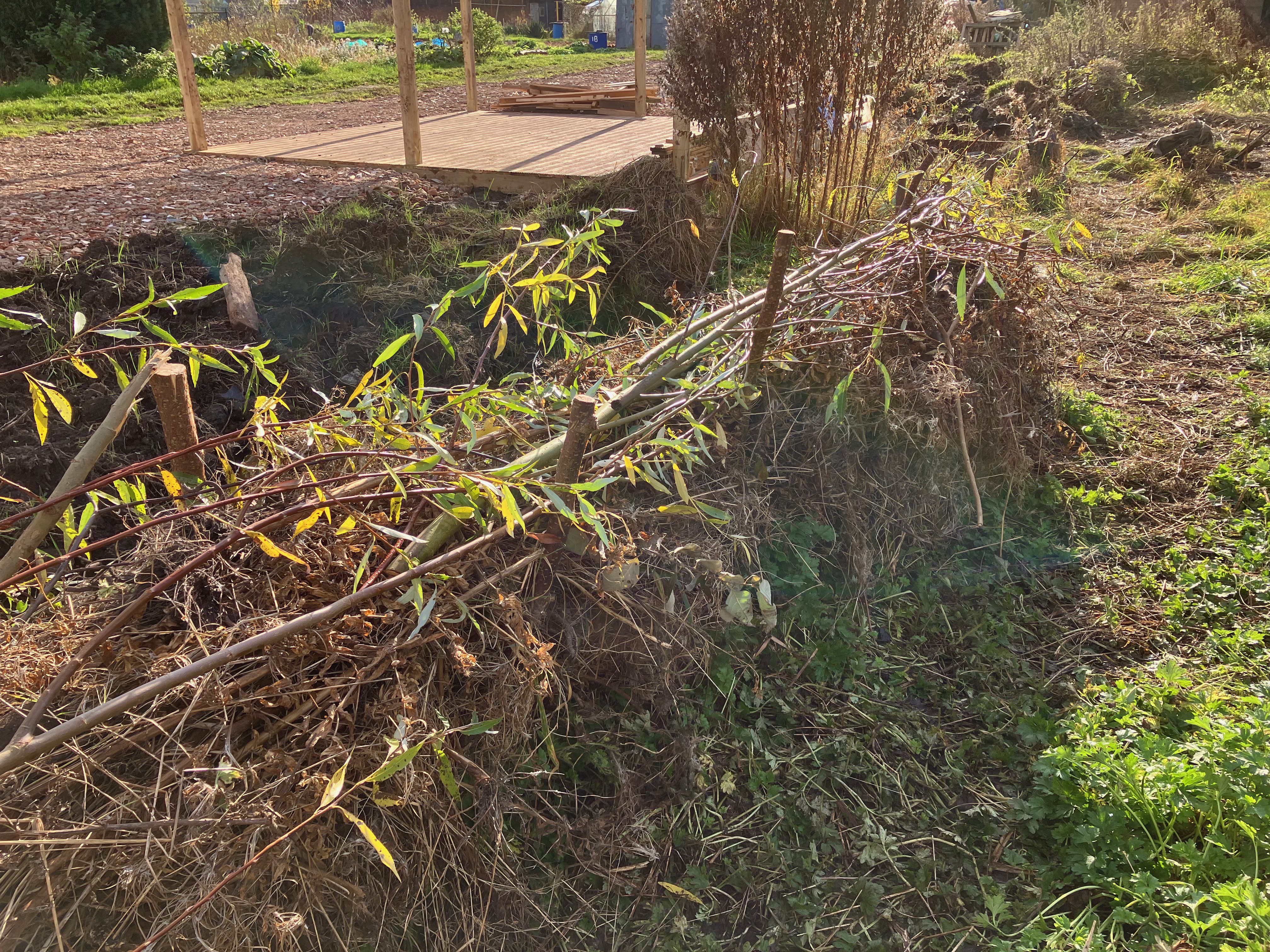
According to the RSPB, dead hedges “provide a tangled maze and a perfect hideaway for birds such as Blackbirds, Robins, Wren and Dunnocks to nest and forage within.” We made ours with stakes of hazel (which we can replace as and when they rot), packed with prunings and woody dried stems. As the stems rot, they can be pushed down and we can add more on top as and when we have more prunings to get rid of. We are really pleased with how our dead hedges have turned out – making them bend and meander a little bit seems to have given them quite a bit of character.
If you fancy making one for yourself, we recommend the RSPB’s really useful guide to dead hedges which you can find here.
Log Piles
With some of the wood from the tree felling we’ve made a log pile, which is another excellent wildlife habitat. This still needs some work, and we’ll add more photos when we’re done, but the plan is to drill some holes for solitary bees to nest, and to add some smaller sticks into some of the gaps between the logs.
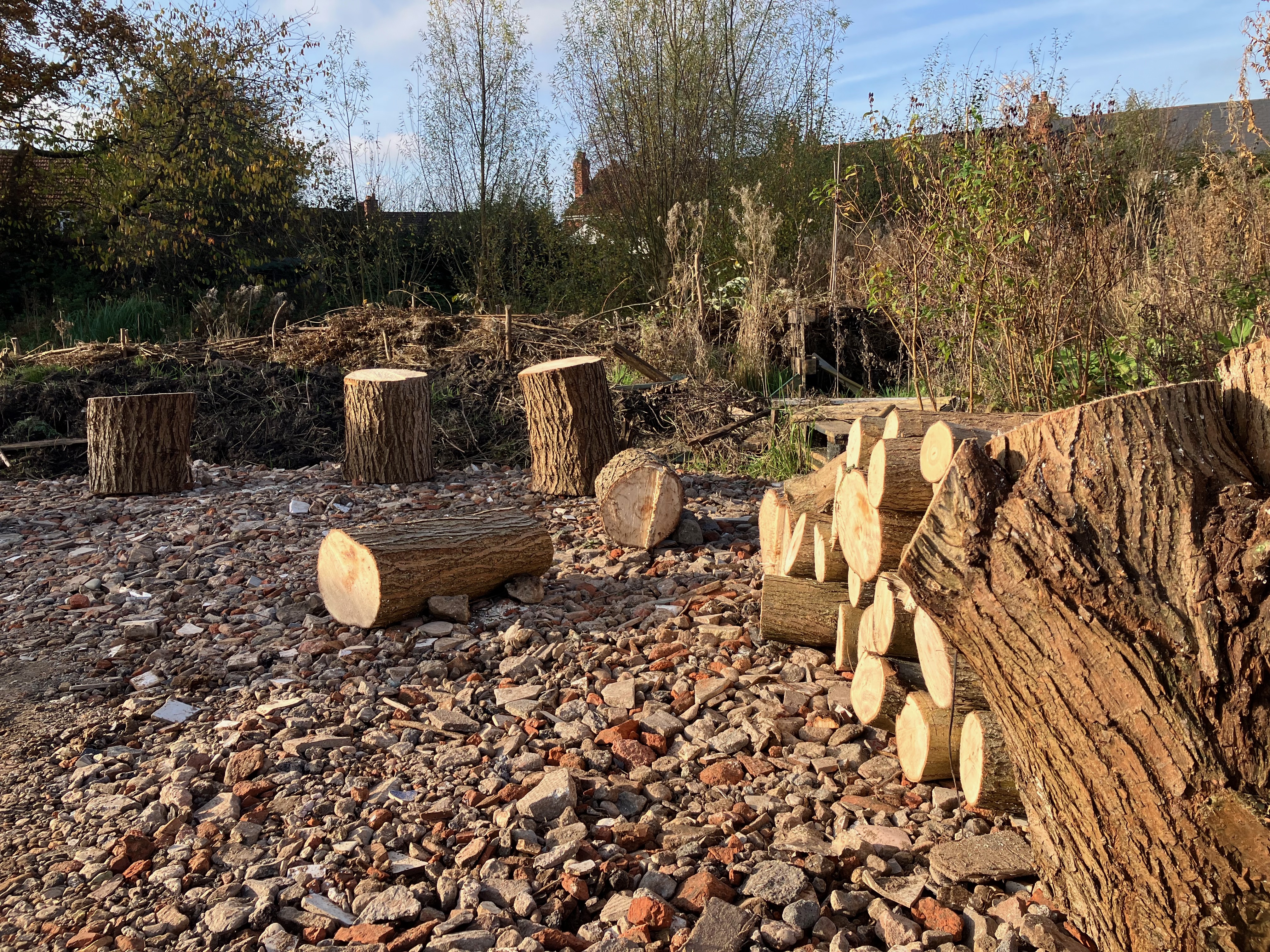
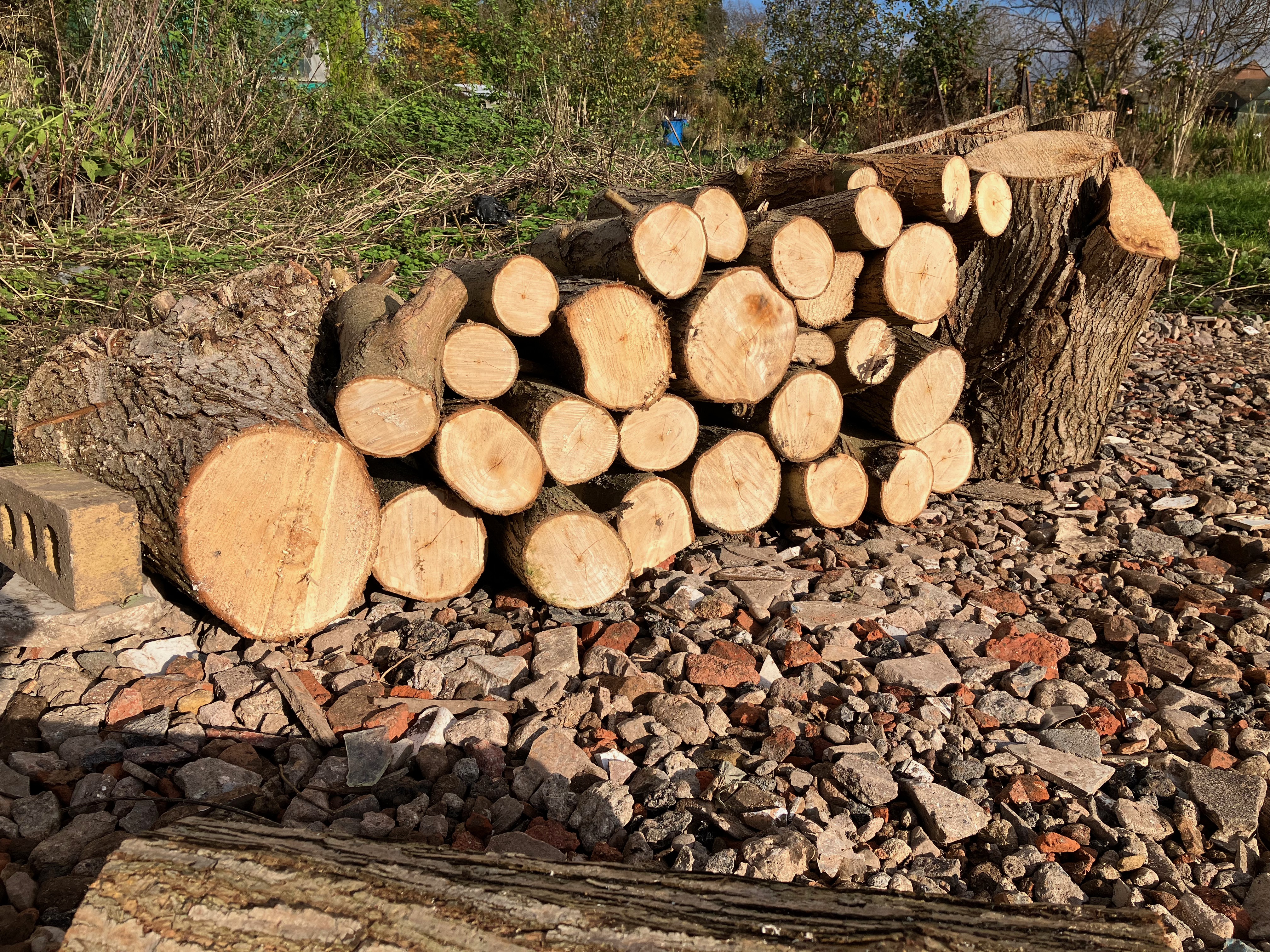
There are plenty of brilliant online resources with instructions for building good bug hotels – here’s one from the RSPB and one from the Wildlife Trusts.
At the moment, this log pile habitat feels a bit isolated, away from plants and other habitat, but there is a lot more work to be done in and around the nature reserve – including a lot of wildflowers to come – which should hopefully make it all feel more connected.
Older Habitat
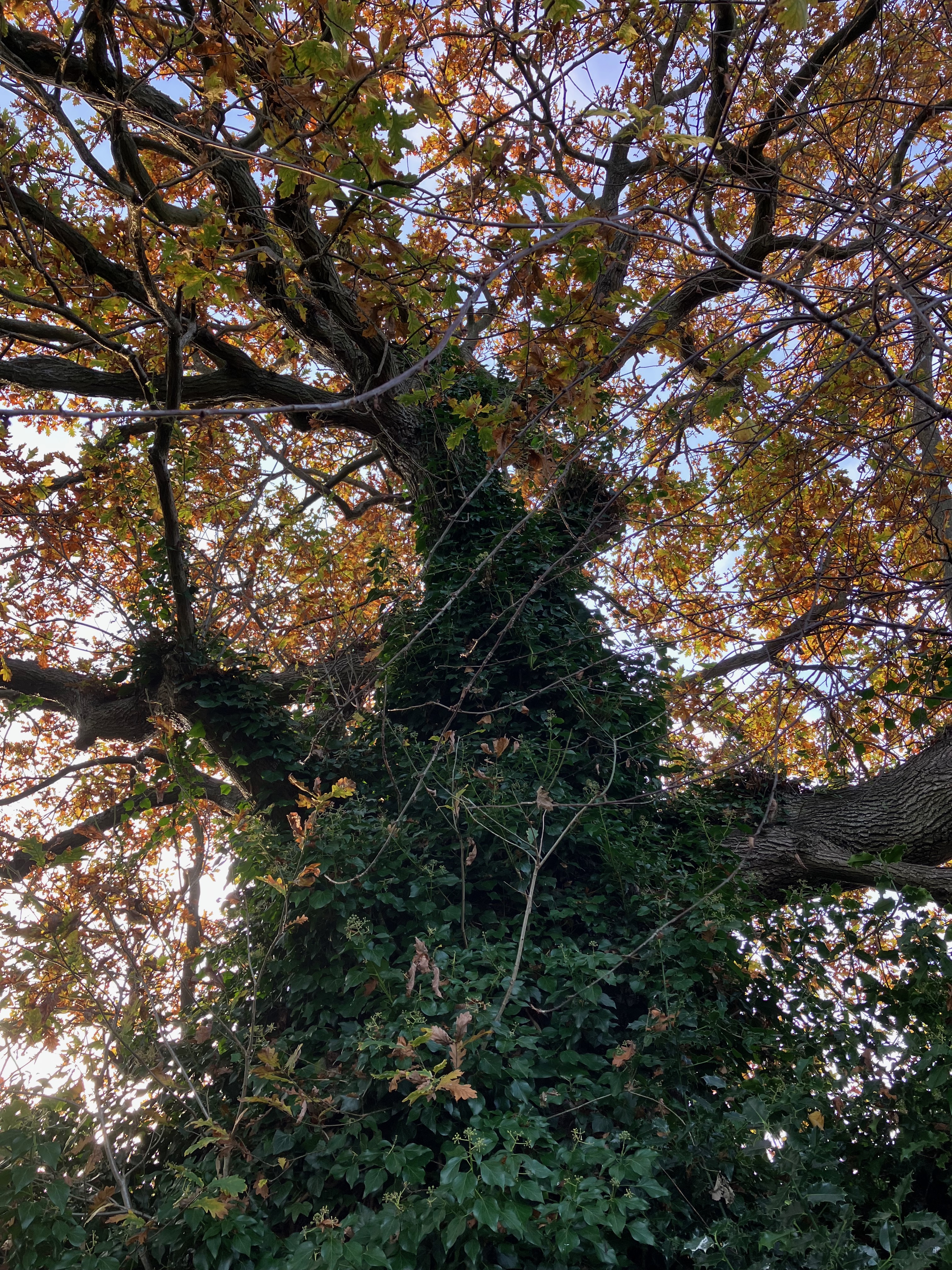
Also on the nature reserve site is a wonderful ancient habitat: this huge ivy-clad oak tree must provide homes for a multitude of different creatures – and it looked really beautiful in the late afternoon sunlight yesterday!
 Urban Allotment: climate resilience & community
2 thoughts on “Creating new habitats”