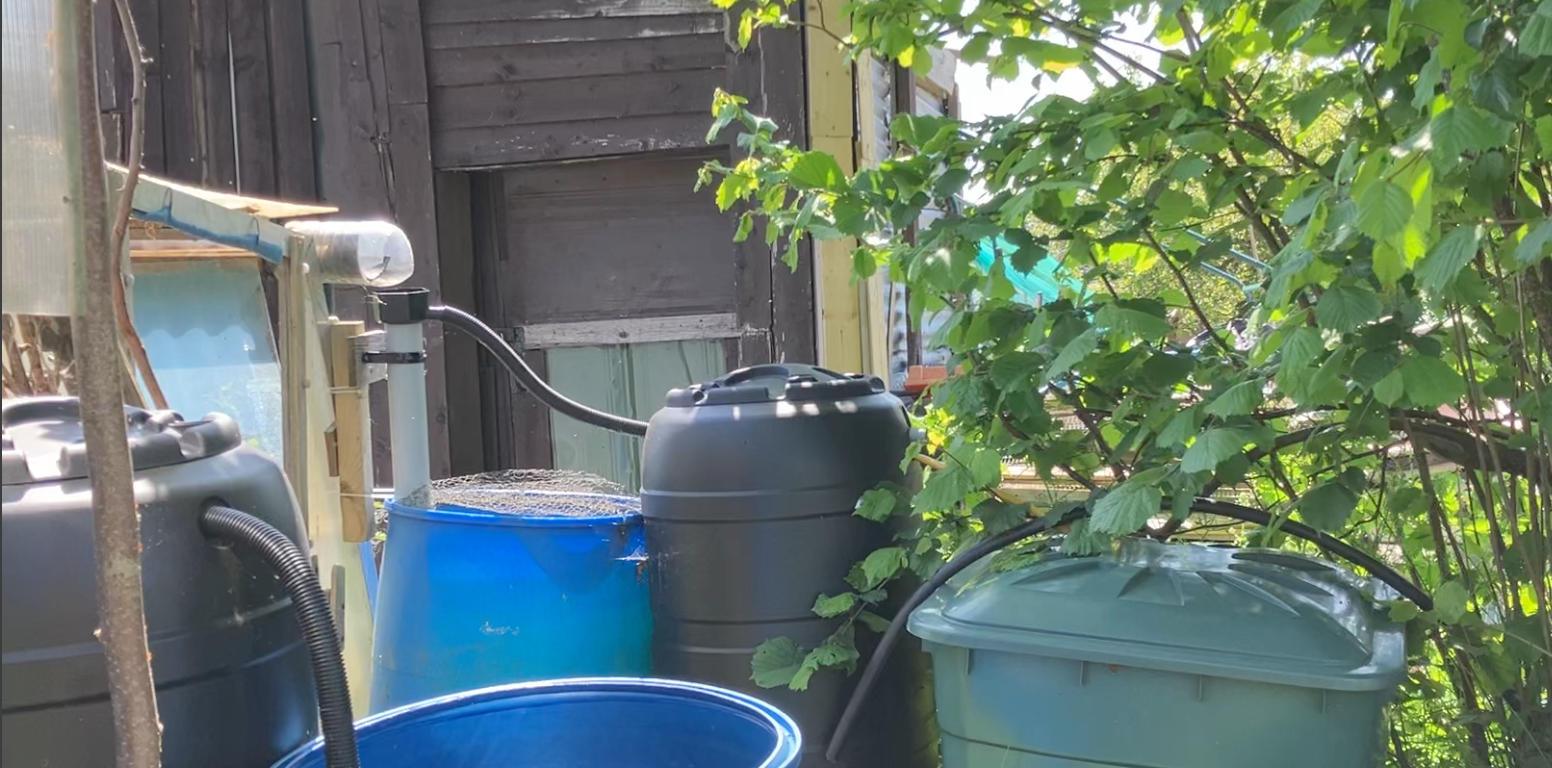
May 2024: The committee met to get started on the Rainwater Collection Survey. Since last Autumn, the weather has been pretty consistently wet – this has proved challenging in terms of growing, since everything is so behind a ‘normal’ year and the slugs and snails have been rampant. But, it also means there has been huge potential for collecting and storing water: who knows what the summer (if it actually ever arrives) might bring?
We found that, out of 41 plots (some of which are split into 2 x half-plots) there is a building (either a shed and/or greenhouse) on 35 plots. Of these, only about 5 plots are set up to collect and store significant quantities of rainwater.
Generally, there will be only one barrel on a plot that is collecting from a shed roof, and then other barrels will be sited at intervals down the plot for convenience of watering (to minimise the distance the plot-holder has to carry a full watering can from barrel to crop) but these will usually rely on being filled from the mains via hosepipe.
There are two issues here: one is the need to shift mindsets to favour rainwater over tapwater; and the other is to shift how we think about plots and how they are set up. The existing model (like with homes or personal property) that people are responsible for their own plot and have pretty much free reign on it – which, at the moment, means that there is a huge disparity between ‘well-kept’ and ‘falling down’ sheds, for example.
What if we were – once more – to begin to look at the site more collectively? We have tried to start to do this with rule changes which encourage people to see themselves as stewards of the plot, keeping soil in good heart for future growers, rather than extracting every drop out of the land, but – clearly – this is not yet having enough of an effect.
It seems obvious that, if you take on an overgrown plot in a state of abandon, there’s a huge job to do before you can even begin to think about feeding yourself from it. We want to try and shift the responsibility – and, yes, we could do this with a stricter policing approach, but wouldn’t it be better if people felt the desire to take good care of the plot for its own sake? If we approach the site as a collective endeavour then, when a plot becomes available, it is in a good enough condition for a new tenant to start growing some food right away. If you can see the structure (and possibilities) of the plot without having to remove a load of grass and brambles, maybe you’re less likely to frame your relationship with that land as a battle?
There’s still a huge gap between plot holders who can/will volunteer to help on projects that benefit the whole site and those who can’t/won’t. We hope to begin to entice people to join in with the offer of free guttering and barrels – hence the rainwater collection survey…
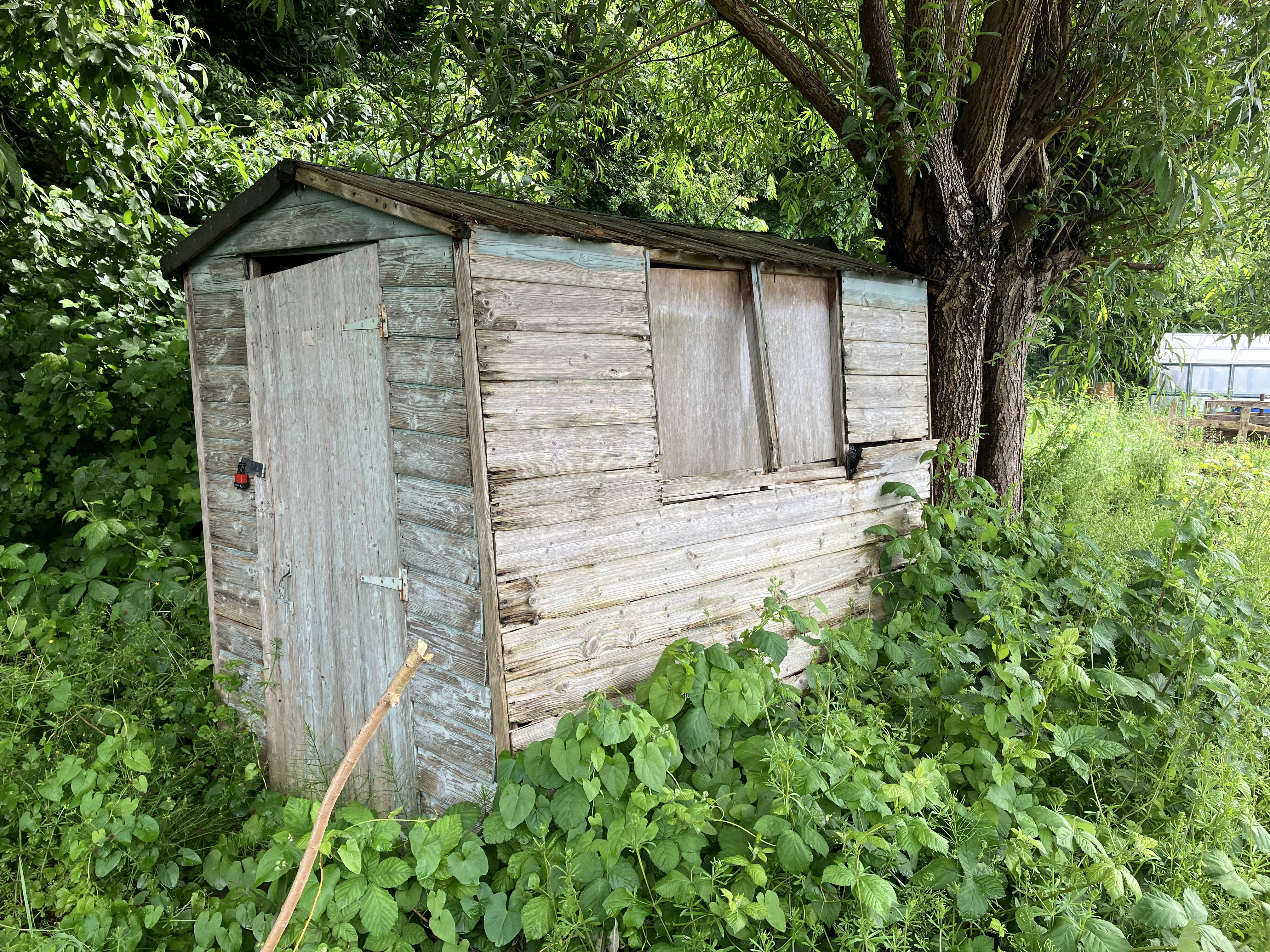
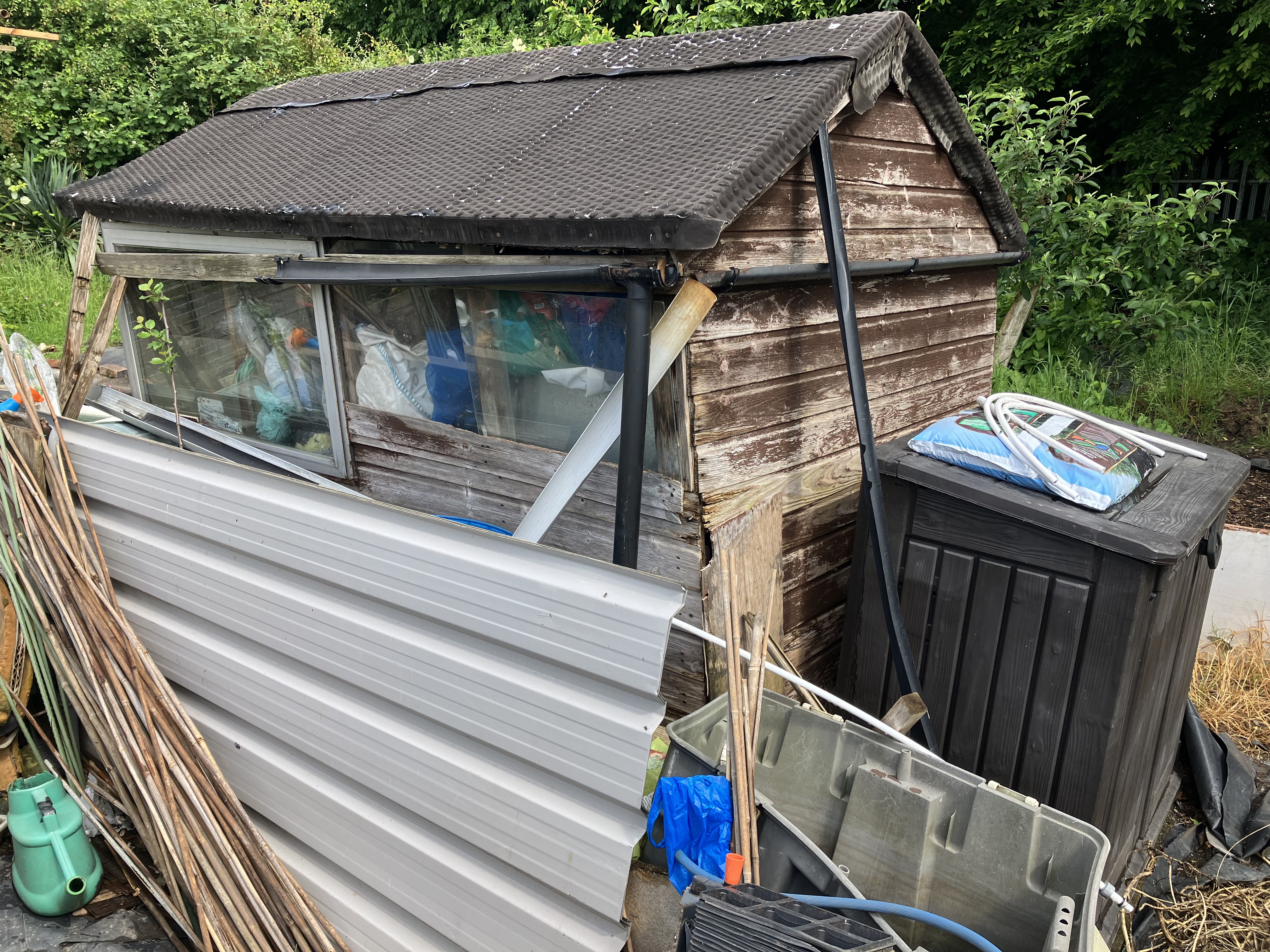
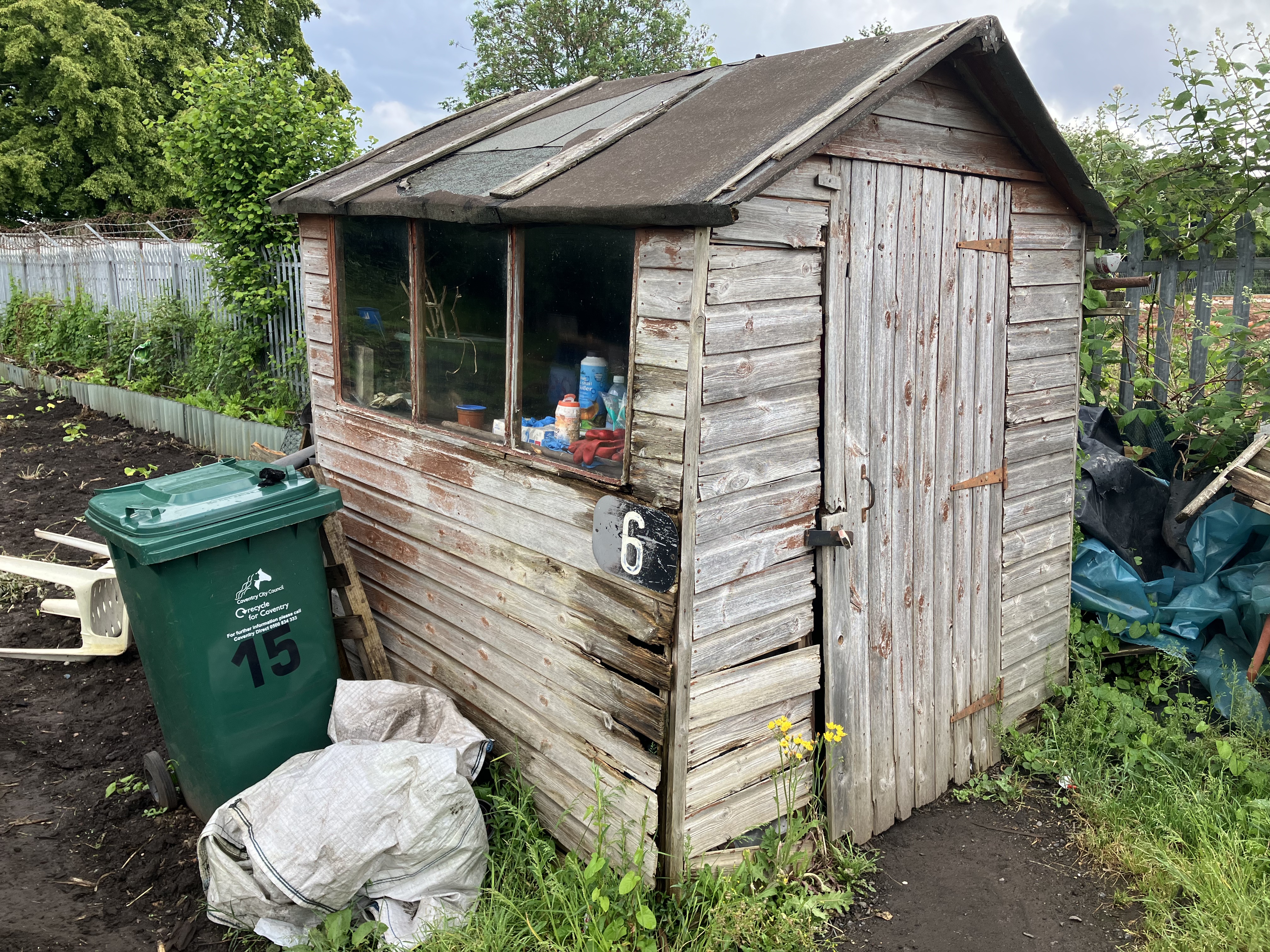

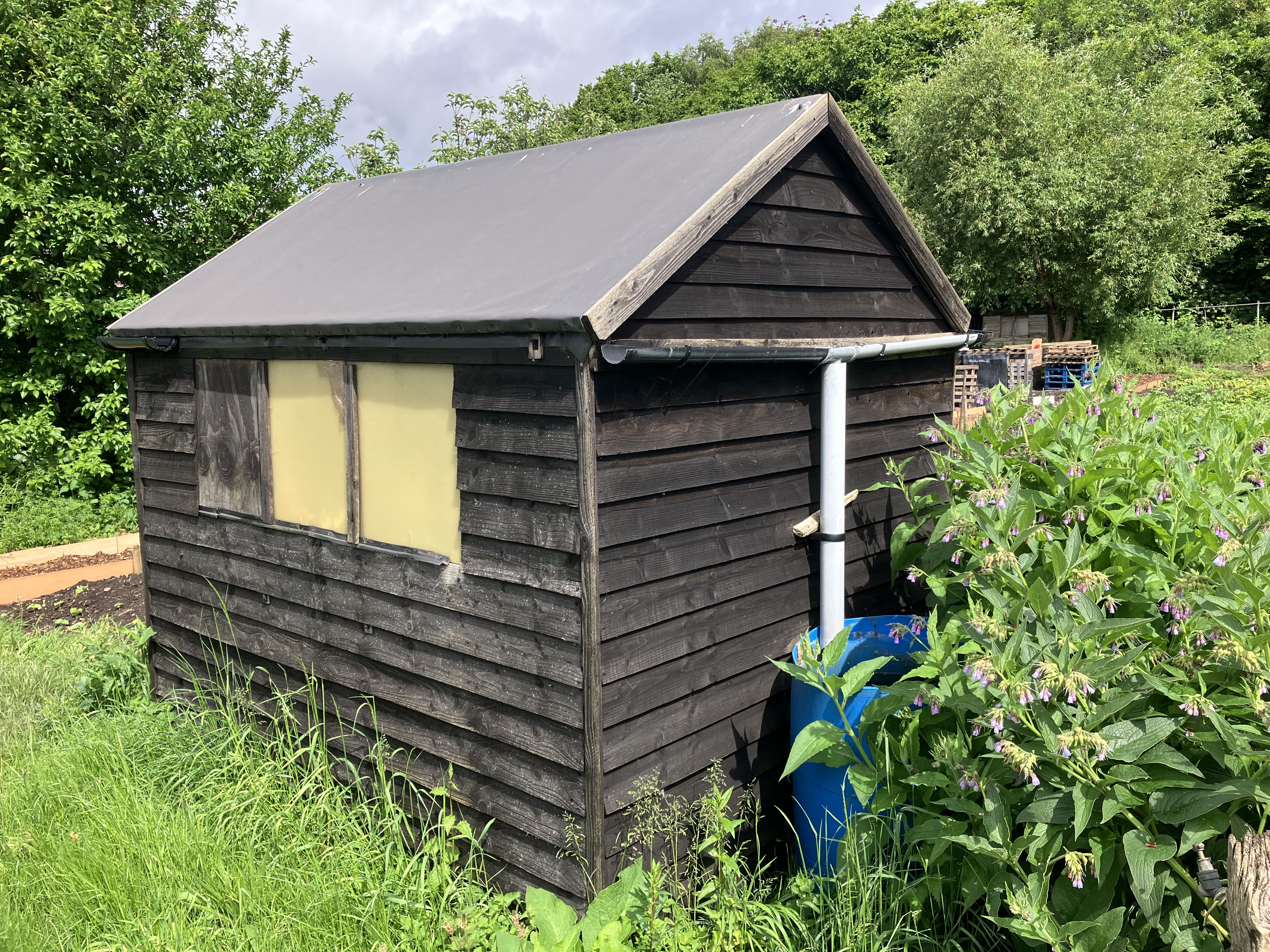
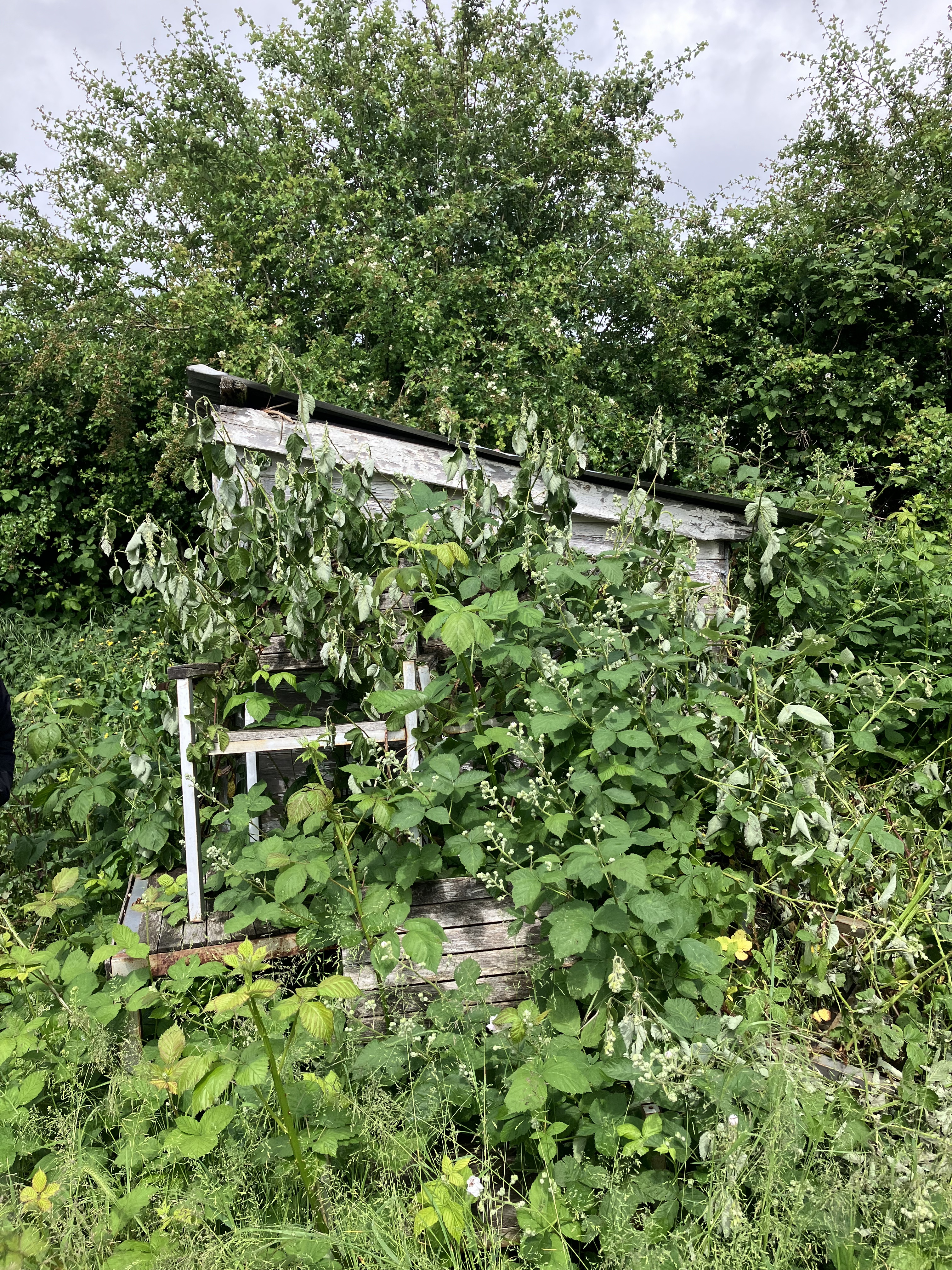

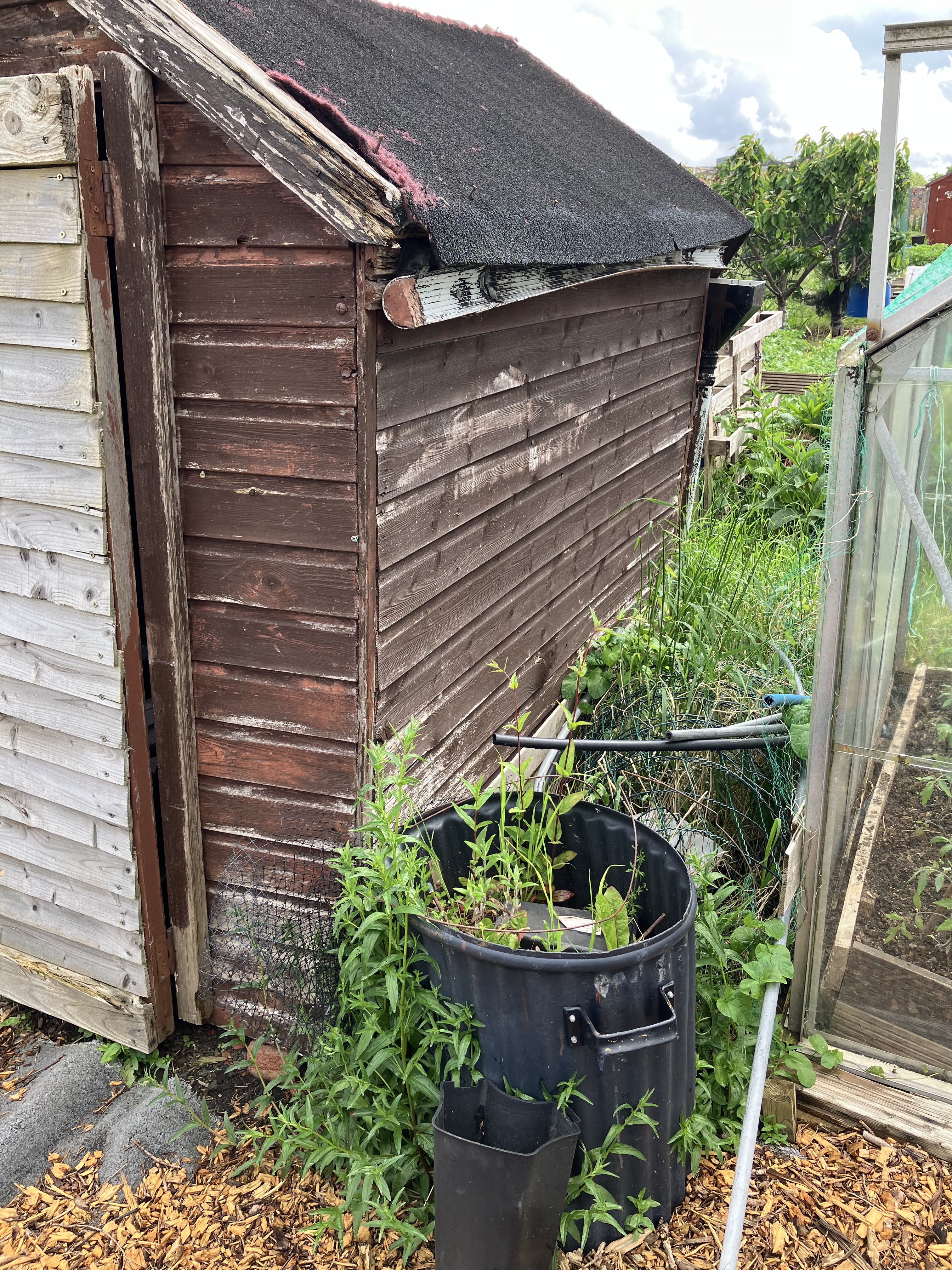
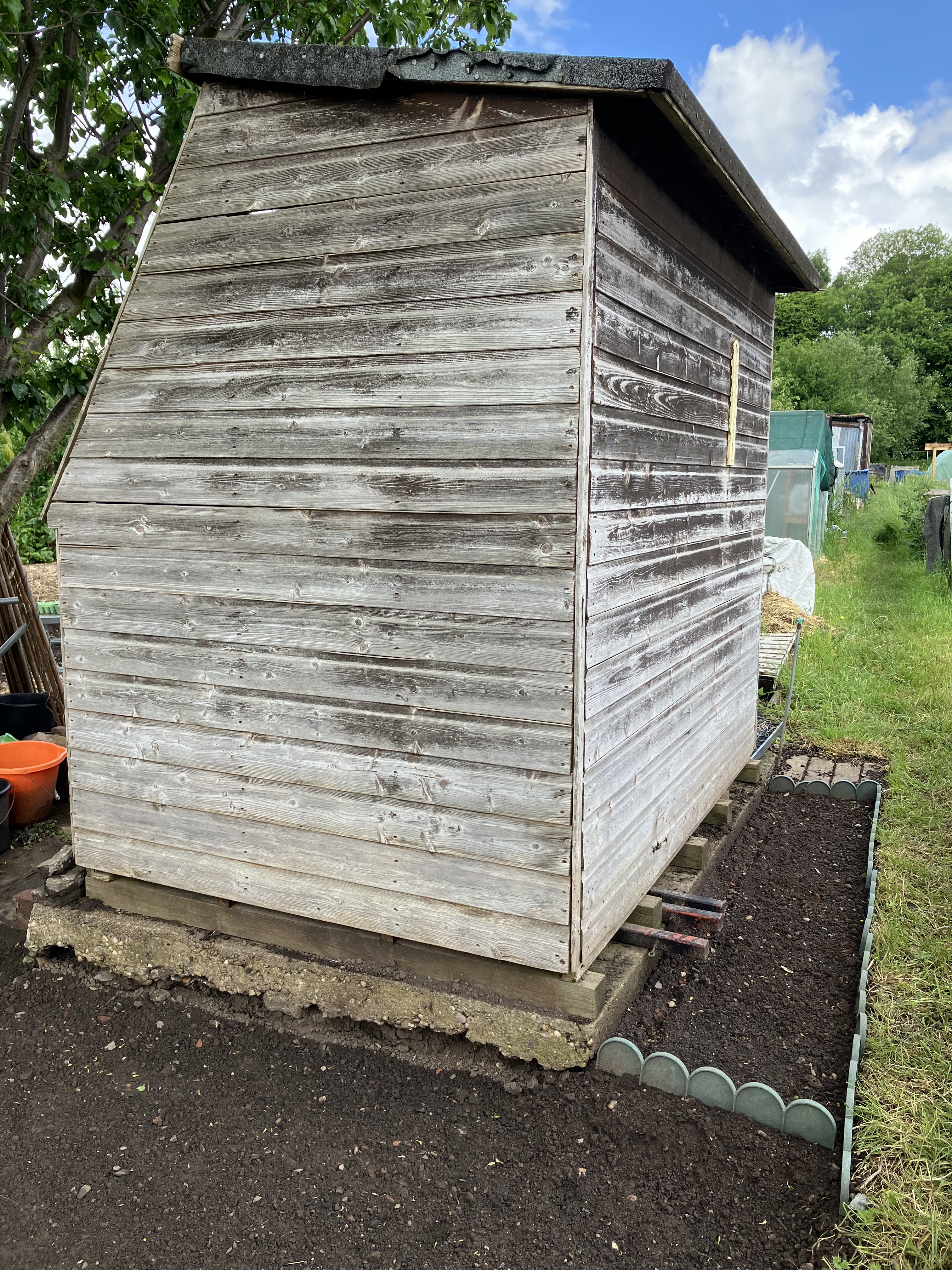
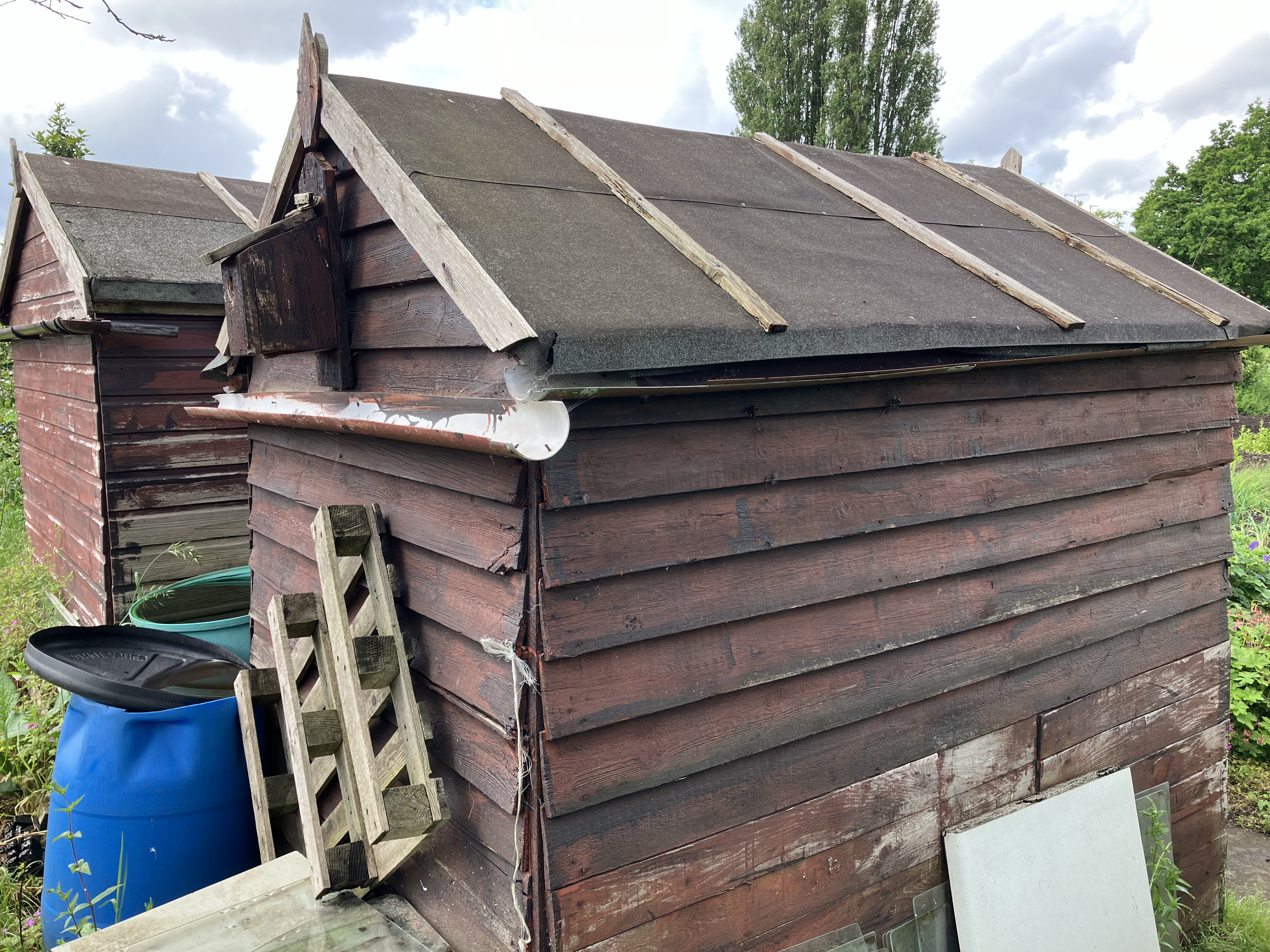
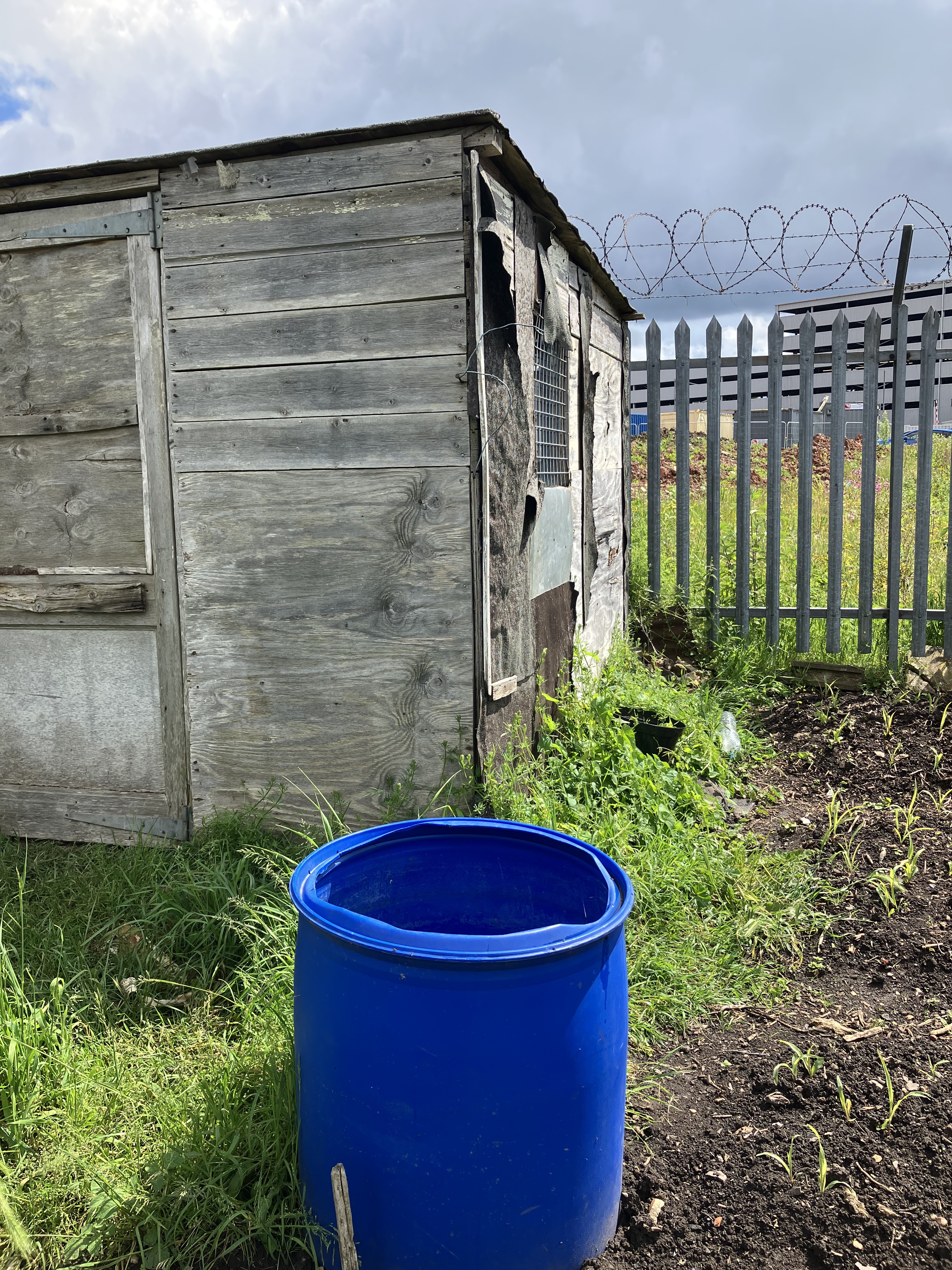

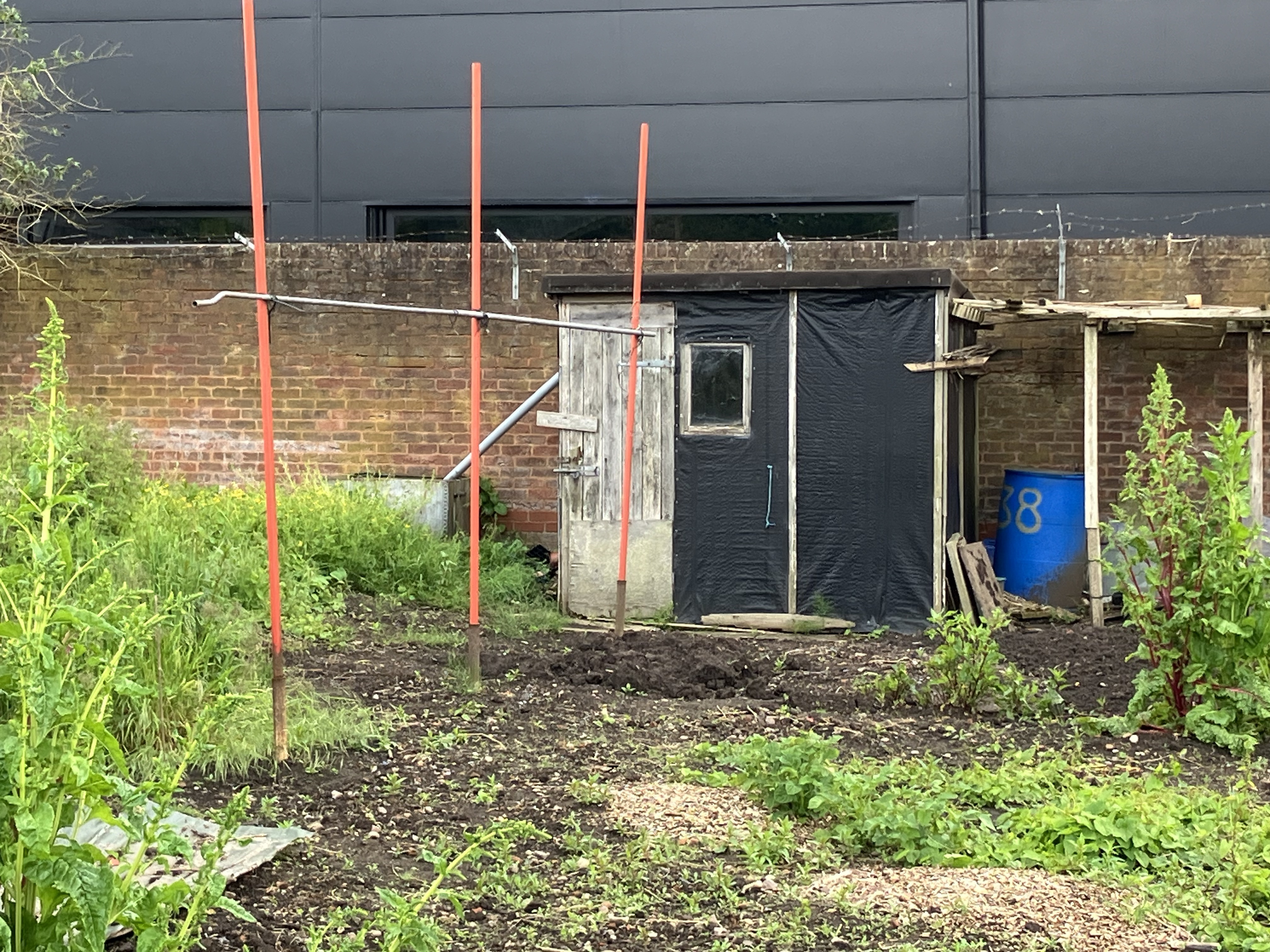
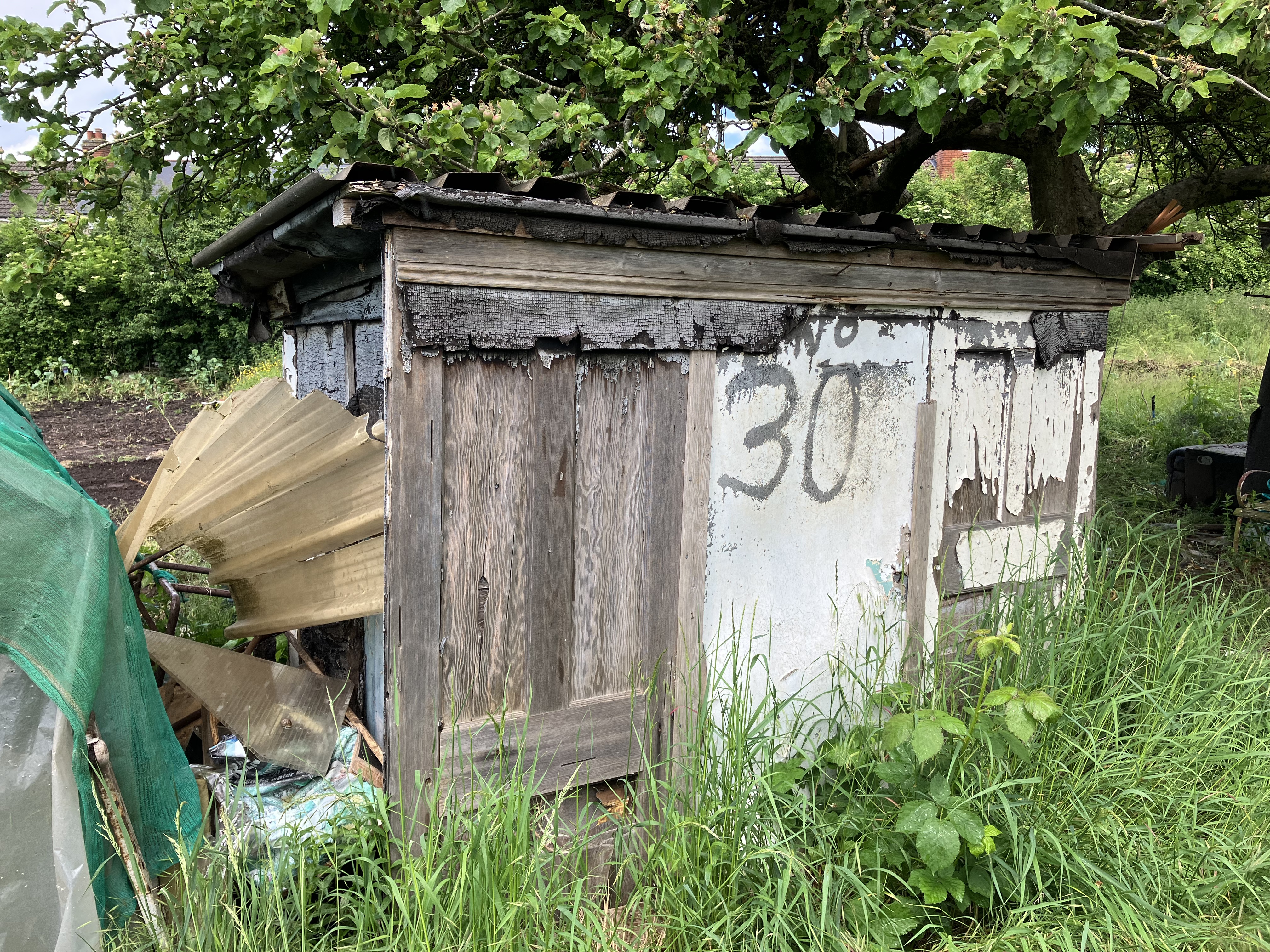
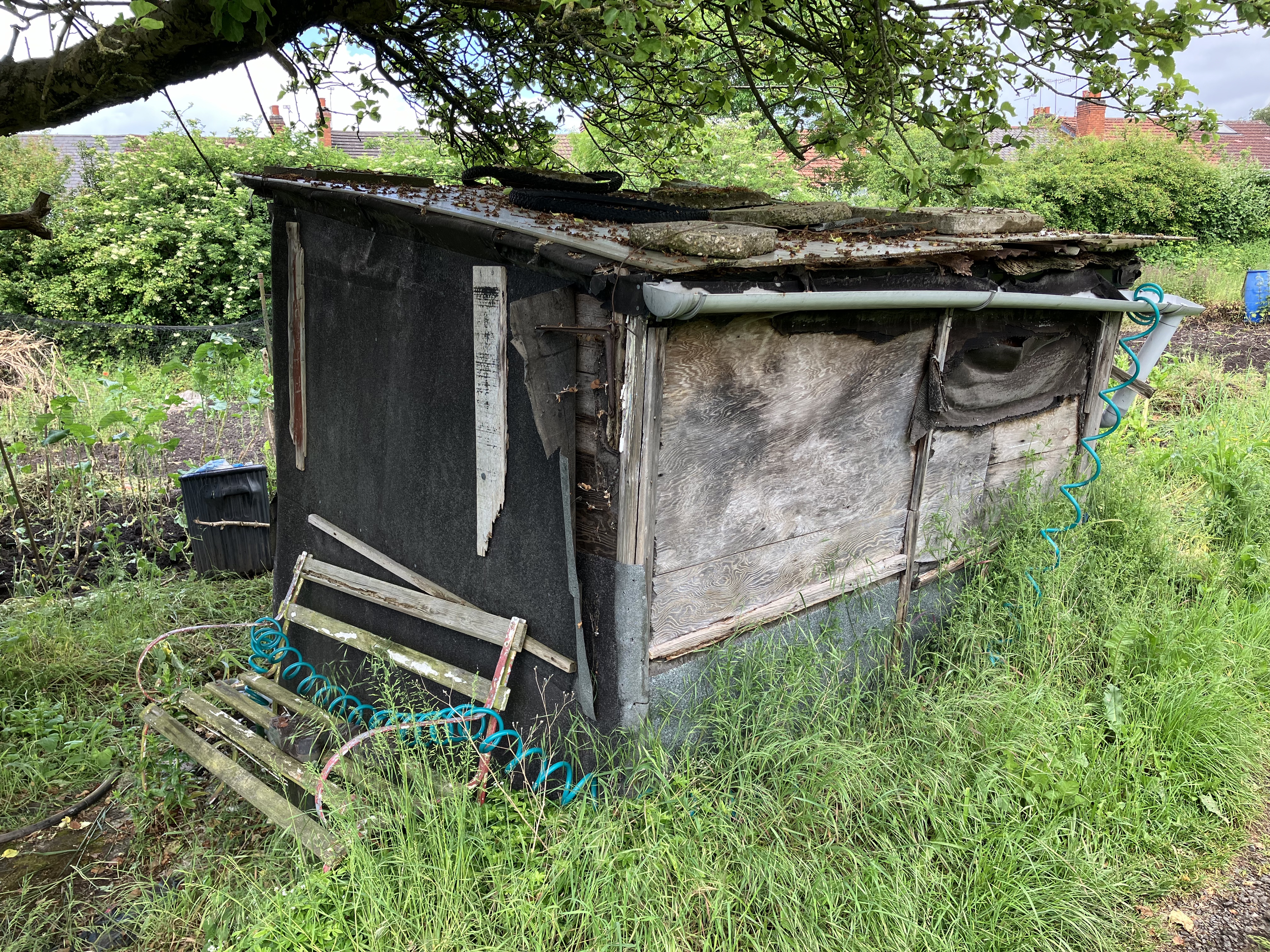
We noted:
- 5 sheds are in need of serious repair work before they can be fitted up with rainwater collection!
- 5 sheds have guttering that needs minimal fixing to enable it to do its job properly.
- 10 sheds need new guttering, downpipes and barrels.
- 5 plots have enough barrels, but should relocate them in order to collect rainwater from a shed or greenhouse.
- We need about 15 new barrels to ensure that every building is feeding at least 2.
- For plots that have no shed/greenhouse, we want to experiment with other collection methods – please send us any good examples of simple rainwater collection structures!
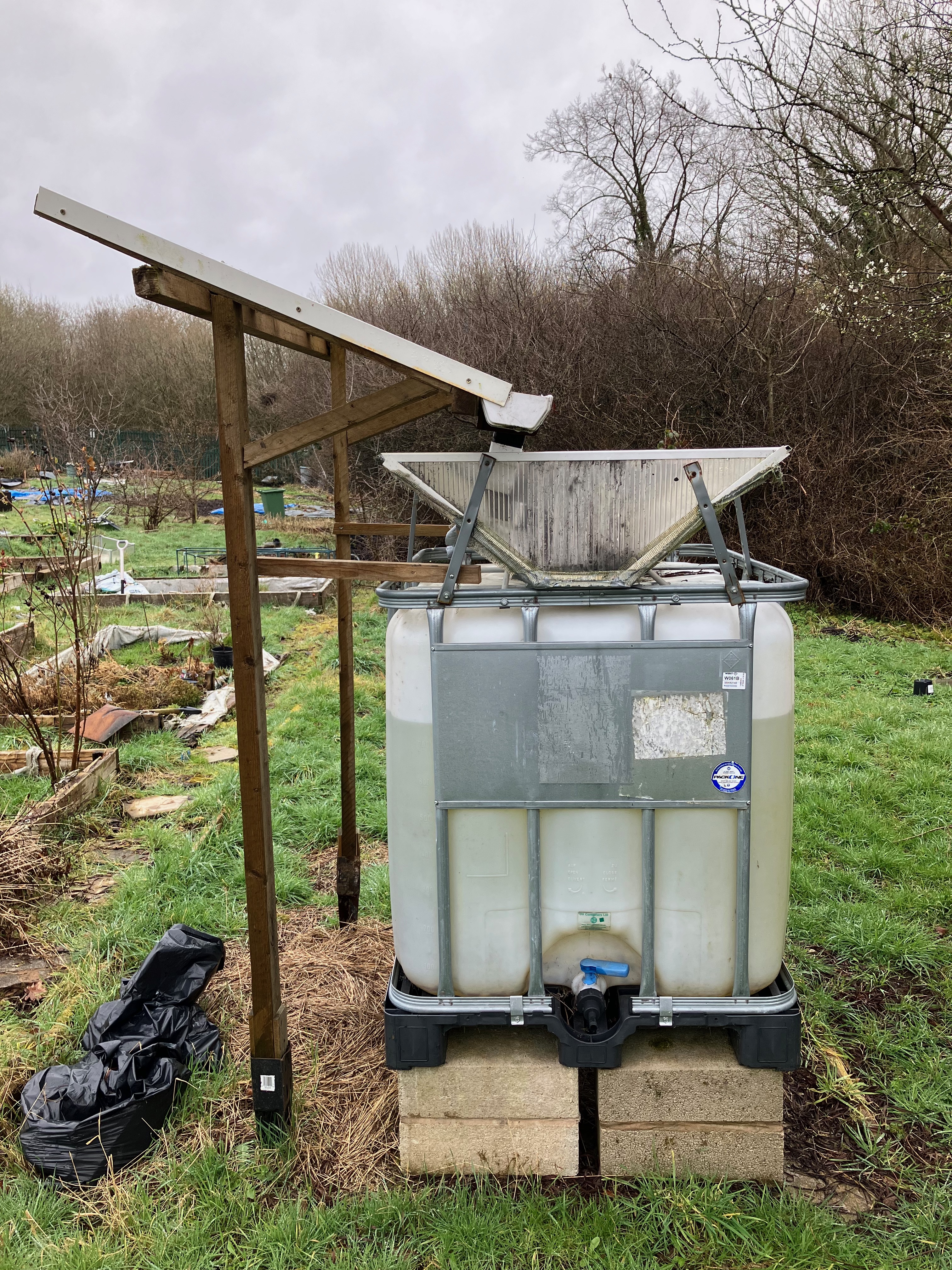
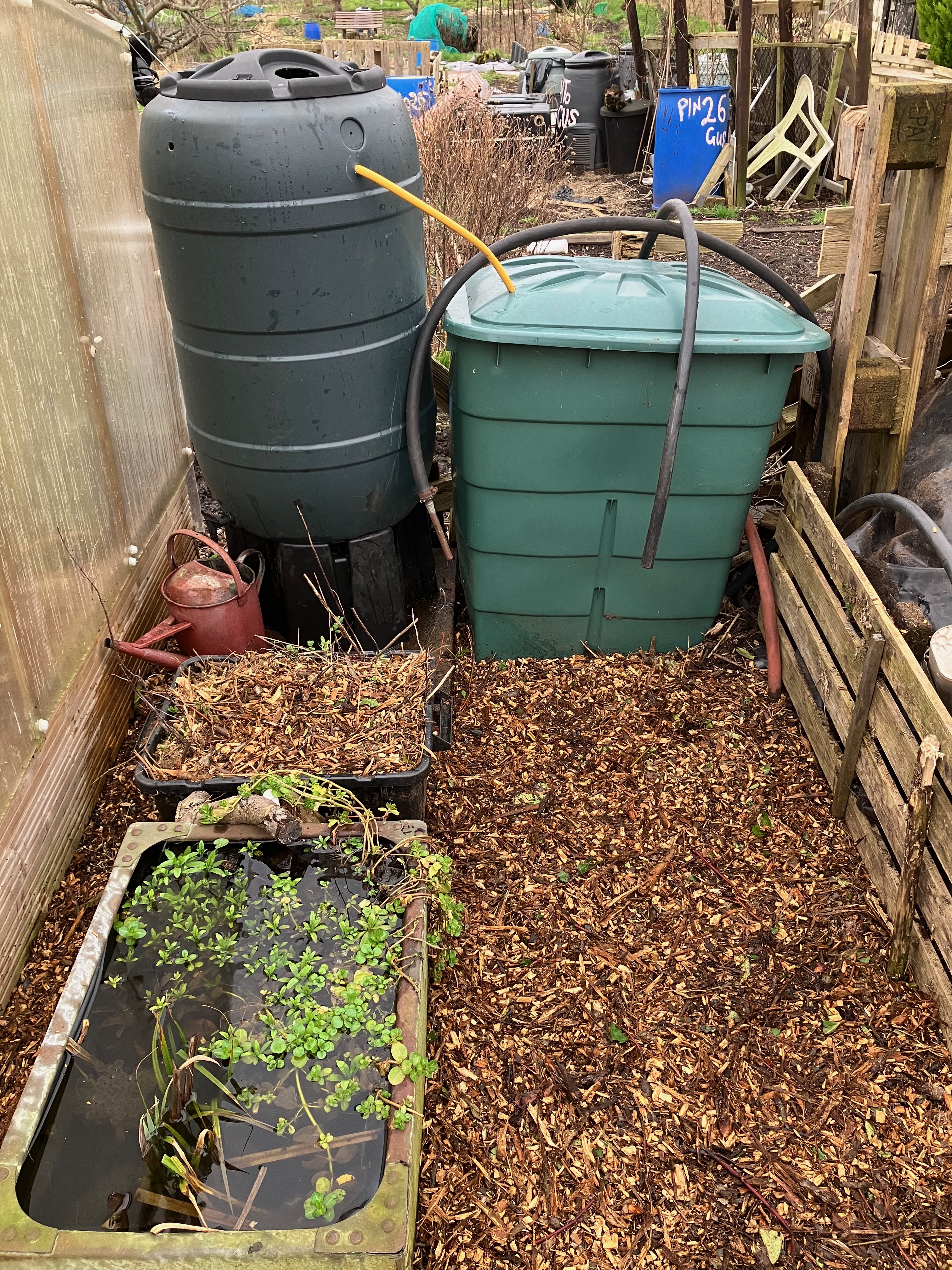
The project will also include building a larger communal rainwater collection and storage facility, and we are hoping to visit Elizabeth Way allotments to have a look at their system (pictured below right).

 Urban Allotment: climate resilience & community